Daksha Patel brings her artwork Tree Against Hunger to the SEE HERE NOW exhibition. This post describes the context for this piece, which was created during the project A Sense of Flora.
A Sense of Flora was an artist-led project delivered in partnership with Manchester Museum and Rainbow Haven, a charity which supports asylum seekers and refugees. It explored the inter-relationships between a sense of place and flora – particularly food crops which are intricately connected to cultural memories, traditions and practices. Themes of food security and climate change informed the artist’s research process.
Crops for the Future
During the first phase of the project, Daksha explored botany collections at Manchester Museum with curator Rachel Webster, focussing upon ‘crops for the future’ – important varieties which scientists have identified as having remarkable versatility such as drought resistance, flood tolerance or disease tolerance. The artist’s early sketches of collections were eventually developed into large-scale digital drawings of three key plants: Sesbania grandiflora, Sechium edule, and Ensete ventricosum. Ensete ventricosum is widely grown in small holdings in Ethiopia and known as ‘The tree against hunger’; researchers at Kew Gardens point to the importance of protecting indigenous knowledge to support food security in the face of climate change. Crops such as Sesbania grandiflora not only provide food for humans and livestock, but also have potential to be used for medicinal purposes. Sechium edule is very vigorous in growth, and the whole plant – leaves and pods – are edible, proving a very versatile food source.

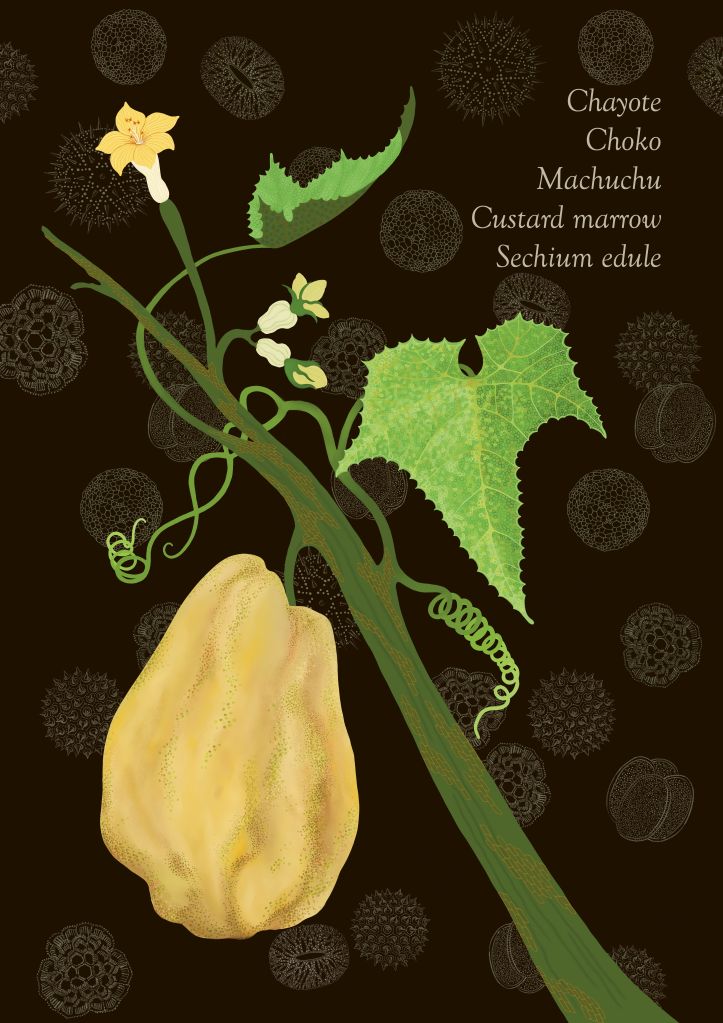

Daksha’s digital prints include a list of names for each plant – its classification under the Linnaean system as well as its local names, which vary across different regions. The local names are wonderfully evocative of each place. In the background to each print, clouds of microscopic pollens allude to the ongoing scientific research into the genetic diversity of food crops and its potential to strengthen food security.
Participatory workshops
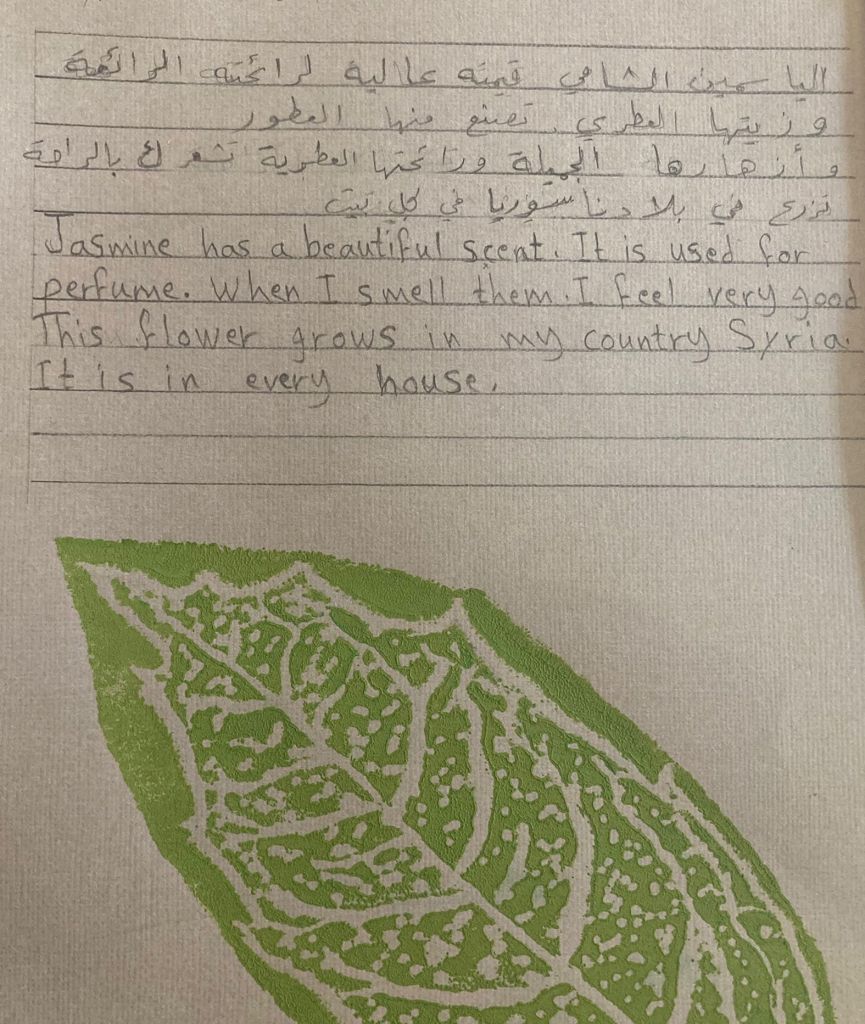
During the next phase of the project, Daksha delivered a series of art workshops at Rainbow Haven, focussing upon flora. Participants shared their stories and memories of favourite fruits, vegetables, trees or flowers from their countries of origin. They made colourful prints and added hand-written texts in different languages (Amharic, Arabic, English, Farsi, Kurdish, Tigrinya and Urdu) with English translations, giving wonderful insights into how a sense of place is intertwined with flora. The workshop aims included addressing barriers of isolation & social exclusion, encouraging self-expression and well-being through creative activities exploring sense of place & identity connected to flora & the natural environment.
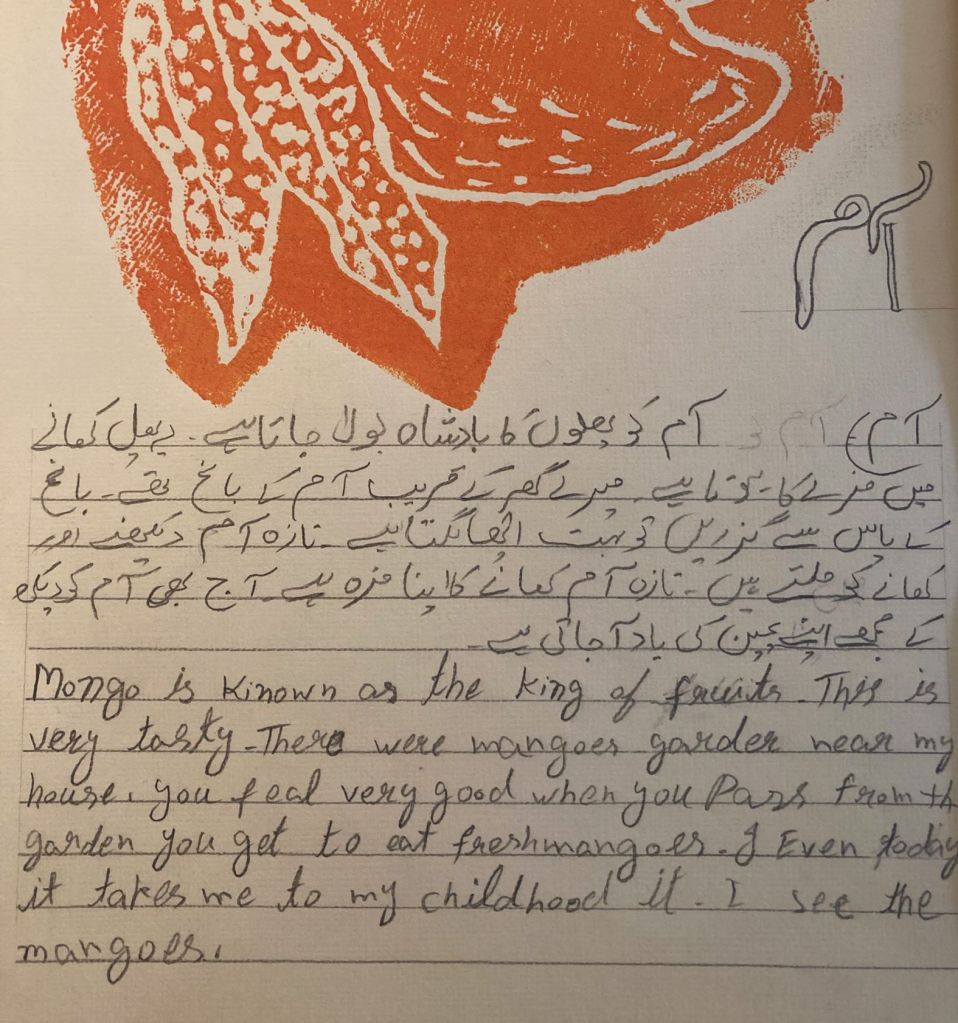
Mango is known as the king of fruits. This is very tasty. There were mango gardens near my house, you feel very good when you pass from the garden [and] you get to eat fresh mangoes. Even today it takes me back to my childhood if I see the mangoes.
Jasmine has a beautiful scent. It is used for perfume. When I smell them I feel very good. This flower grows in my country Syria. It is in every house.
Exhibition
The final stage of the project was the opening of A Sense of Flora exhibition at Manchester Museum in August 2024. It comprised of a large-scale print installation of all participants artworks alongside three new digital prints by artist Daksha Patel. On the opening day, participants and their families were invited to language specific tours of the museum – it was a very enjoyable day for all! There was a tremendous sense of pride and empowerment as participants visited the exhibition of their artwork in a public cultural space in Manchester. Museum visitors were fascinated to read the hand-written texts which accompanied prints; they helped to raise public understanding of the diverse experiences of asylum seekers and refugees through the language of plants, which we all share.

Watch Daksha Patel explain the project further in this video:
Read more about Daksha Patel here.