On November 26th 2024 the Resonance project launched at Bolton Fell and Walton Moss National Nature Reserve. This remarkable peat bog, a lowland raised mire that covers almost 900 hectares, offers a positive story of restoration; and it’s a bog that several PLACE artists have come to know well, through the Moss of Many Layers project. Around the edges of the bog, where the peat is shallow and relatively dry, birch trees grow in their thousands. And it’s from these trees that 49 have been selected to be relocated in the 7 circles of 7 trees. These will together make up the Resonance sculpture – one element of the Resonance project that has evolved as part of the PLACE Collective’s involvement in the UK-wide LUNZ Hub.

To collect the trees, just over 50 people gathered on the bog. Attendees came from local areas and from across England and southern Scotland, from specialisms including hydrology, farming, peatland restoration, forestry, woodland creation, soil, government policy, ornithology, ecology, communications, and community sustainability groups; with representatives from Natural England, Nature Scot, National Trust, Lake District National Park, RSPB, Friends of the Lake District, DEFRA and Centre for Ecology and Hydrology (CEH).
Watch the film of the Big Dig Day here.
“Spending time on the land together changes the conversation to be more open, reciprocal and embedded. Thank you for the inspiration!”
Out on the Moss, and gathering trees
The event was co-covened by Harriet and Rob (PLACE Collective) and Ros and Emma (Natural England). Beginning on the bog, we all followed the boardwalk out onto the peatland, and heard about the restoration from specialists including Deborah Land. Deb is currently Peatland Action Project Manager at Nature Scot, and was instrumental in managing the Moss’s transition from a site of industrial extraction, to restoration under the ownership of Natural England.
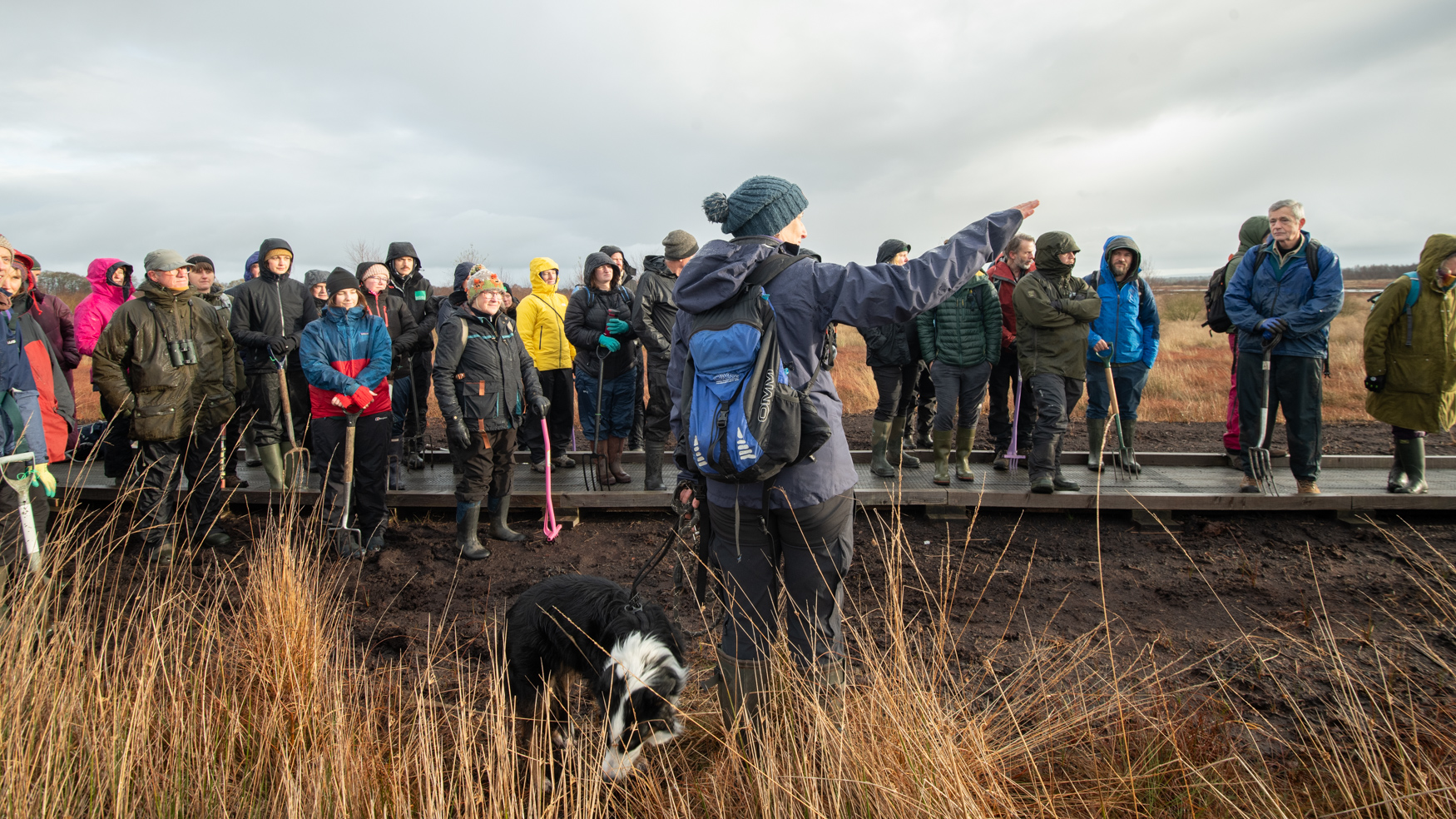
Deborah Land talks about peatland formation, the impact of extraction, and the journey of restoration.
We then walked away from the boardwalk to reach the trees that had been marked for removal, and in groups, we turned our attention to gently removing some of the young birch trees. There was teamwork, problem solving, close investigation of mosses, and plenty of laughter. In moments of quiet, some of the moss’s residents revealed themselves: a frog in a sphagnum pool, a hare bounding through pale grasses, snipe bursting out from the sward.
“Having a physical morning being in the landscape was a really wonderful way to meet and start the conversations off gently before heading into the afternoon discussions.”
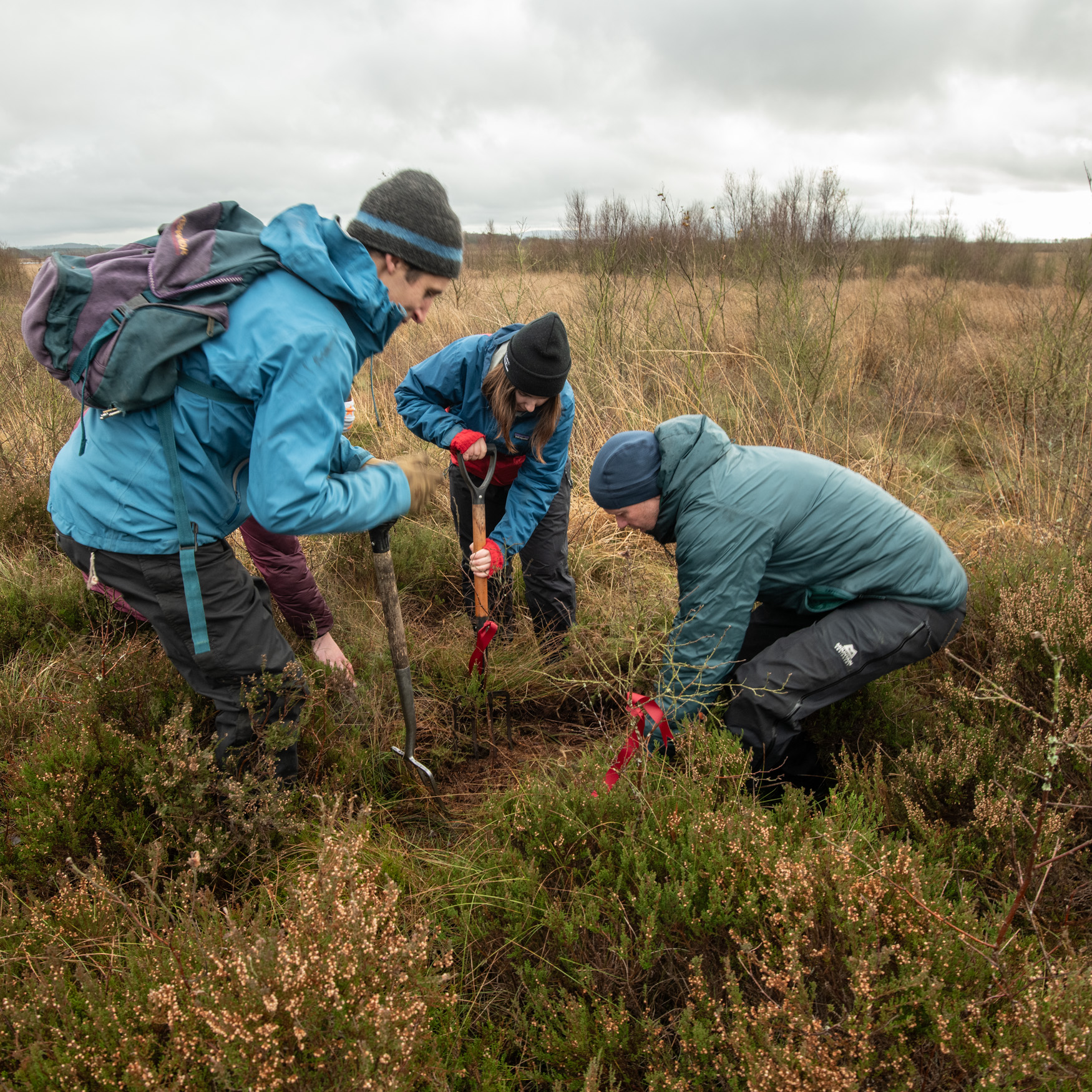
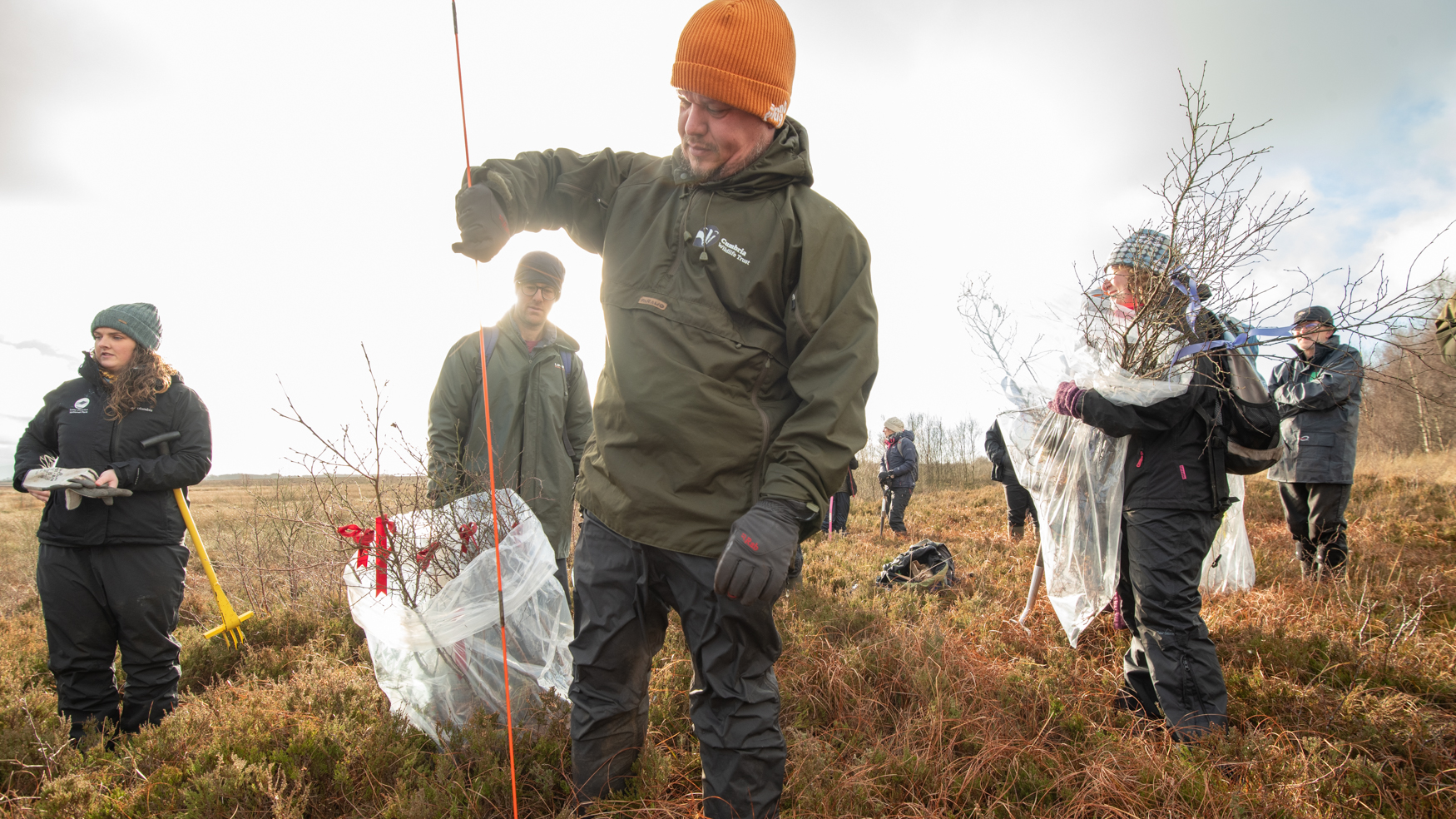
Trees collected and bagged up – and there’s time to use a measuring rod to measure the depth of the peat.
Focused discussions
Back in the village hall, there was a hearty lunch, and lots of chatter. People were asked to map their position on an optimism chart, and also had time to look at the beautiful map that Helen Cann created as part of the Moss of Many Layers project. We then kicked off an afternoon of discussions with micro-talks, given by:
- Martin Phillips, Director of the Centre for Critical and Creative Geographies at the University of Leicester, and LUNZ Hub co-lead of the Transdisciplinary Community and Capacity Building work package
- Jack Brennand, PhD student in peatland science, researching carbon accounting of peatland restoration, and regularly monitoring greenhouse gas emissions from Bolton Fell Moss
- Andrew Weatherall, RSPB Principal Policy Officer, Trees and Woodlands
- Richard Leafe, former CEO of the Lake District National Park Authority
- Jack Hannam, LUNZ Hub England co-lead and president of the British Soil Science Society (Jack’s contribution was delivered on her behalf due to a last-minute change of circumstances)
- Eliza Hodgson (Farmer, and Lake District National Park Authority assistant farming officer)
- Fran Ryfield, Environmental Improvement Plan Social Research and Evaluation Lead, DEFRA
- Anita Lazurko, Scenario developer at UKCEH, and LUNZ Hub Early Careers Research Board Lead

Anita Lazurko giving a presentation in the village hall
The afternoon continued with small groups delving into four provocative questions. Attendees also shared their views on topics they’d like to see addressed at the Resonance gathering at the end of March, which will be co-run by the LUNZ Hub and the Centre for National Parks and Protected Areas at the Ambleside Campus of University of Cumbria. This will focus on Land Use for Net Zero, Nature and People in the context of Uplands and Protected Landscapes.
“It’s a big challenge that no-one can solve on their own. Partnerships, collaboration, flexibility, understanding and communication are key. And persistence.”
meeting new ground: a poem to close
To close the day, Harriet read a poem written for this occasion. To read the poem, click here.
The Resonance film and illustrations
Throughout the day, filmmakers from the PLACE Collective were in action. Matt Sharman, with support from Juliet Klottrup and Reuben Hibbert, captured activity during the tree removal and filmed short interviews with attendees. The team will be sharing short clips from the day and will be building a film in the coming months.
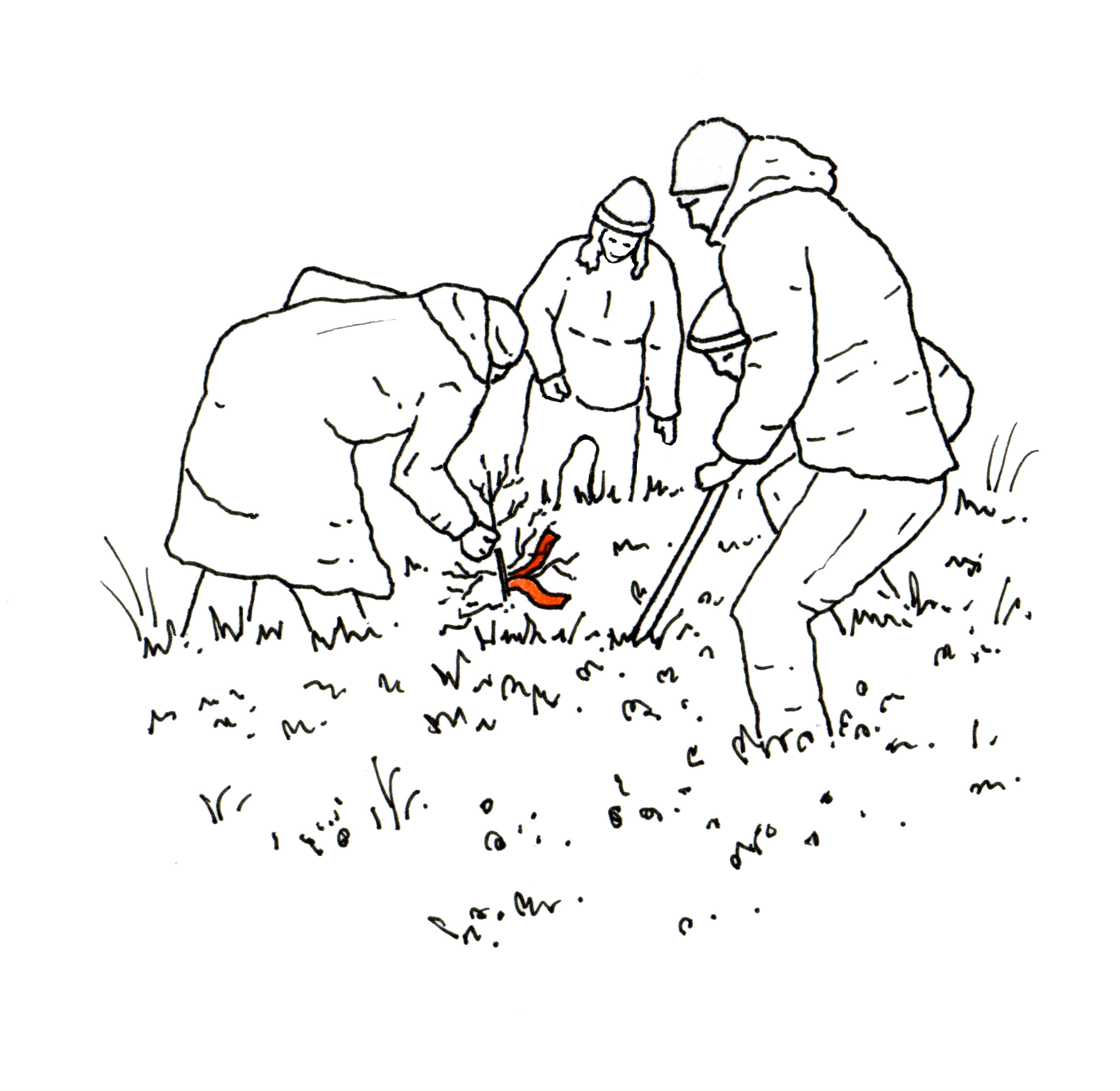
Another member of the PLACE Collective team, illustrator Ali Foxon, was equipped with pencils and paper. Ali will be documenting the project through illustrations – and there’s a taster below.
Key Take Outs – more detail
After some analysis of the written comments, presentations and filmed interviews, we’ve put together some key takeouts from the day. These are on the LUNZ Hub website here.
Trees in waiting …
And if you’re wondering what has happened to the birch trees, they are now safely ‘heeled in’ to soil in Rob and Harriet’s garden. They will rest here until being replanted in the circles at seven locations in February and March 2025. The collection and replanting of these trees falls within the window of time when trees are dormant, and can withstand being moved.
“I’ve been struck by the amount of creative energy in this field. This inspires me to work on closer connections between my specialism and the many others here today.”
**A note on restoration at Bolton Fell Moss
After decades of peat extraction, largely for horticulture, industrial extraction ceased in 2013. At that time, vast swathes of the bog were dark black, and in places as much as ten metres of peat had been removed. Eleven years later, after a process of complicated negotiations, environmental designation, and dedicated restoration, the moss is on the road to recovery. During discussions in the village hall, Ian Crosher (Senior Specialist Climate Change, Natural England) underlined that this peatland, like other degraded peatlands across the UK, may never be restored to its original state – it will take thousands of years for peat to accumulate. However, much of the previously bare peat here is now covered with vegetation. This not only reduces the emission of carbon dioxide and other greenhouse gases, it also provides the conditions for sphagnum mosses to grow, and for wildlife to return: return in spring and summer and you’ll see that the moss is home to butterflies, dragonflies and a host of ground-nesting birds.
To find out more about Bolton Fell Moss, browse through the ‘Moss of Many Layers‘ pages and blog posts.