
Three of Richard Bavin’s mixed media drawings of Black Poplars are included in the See Here Now exhibition at Grizedale Forest. In this blog, Richard discusses the context of his artwork and celebrates this wonderful, and now rare, native tree.
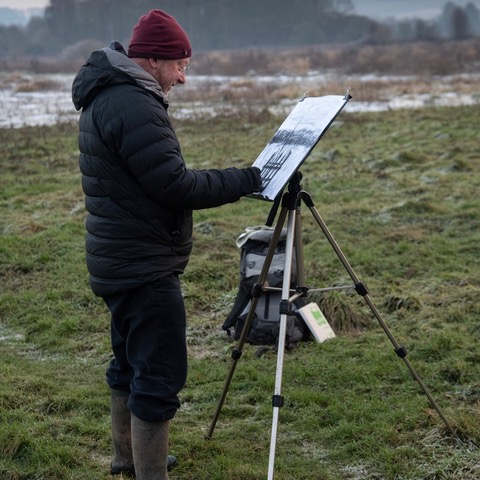
This year I am making a series of portraits, from sapling to ancient, in celebration of our increasingly rare Native Black Poplar…
As you wander by the river, can you see that single, towering tree leaning to one side? Pluck a glossy leaf, heart-shaped and tapering to a long point; scrunch it in your hand to reveal a faint smell of balsam. Run your fingers across the deeply fissured trunk to discover the knobbly bosses characteristic of this species. Look into the canopy to find the candelabra clusters of twigs and leaves.
These rugged and magnificent trees, loved by Constable, are our native black poplars (Populus Nigra subspecies betulifolia). I’m always on the look-out for them, but numbers have declined enormously through land drainage and intensified farming practices. This loss has been heightened by the cutting down of most female trees, which are vital for reproduction, but have been excessively felled because of the perceived ‘mess’ that is made by the fluffy white seeds in early summer. Only six thousand trees remain in the UK, of which a tiny percentage are female, leaving the species on the brink of extinction.
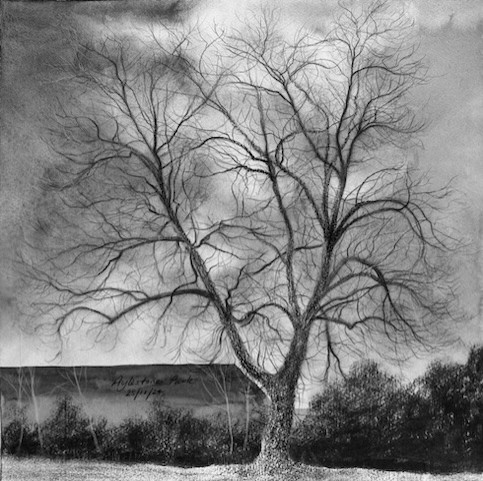
Aylestone Park (Hidden in full view)
Drawing Black Poplars
As artist-in-residence with Herefordshire Wildlife Trust I decided to spend time in 2025 making as many drawings as I can of individual native black poplars to celebrate and share their beauty and character, and to help raise awareness of their plight.
The Wildlife Trust network, along with other groups, is working hard to reverse this by recording and nurturing those we still have and planting more. Over five hundred have now been established across the county with more going into the ground every year.
The first trees I chose to draw are in public spaces. Young Barty is a much loved mascot of the recovering Bartonsham Meadows, a city nature reserve on the river Wye. The mature male pollard in Aylestone Park in Hereford is passed by many people every day but mostly goes unnoticed, while the very rare female is on a secluded, rural road up against a telegraph pole.

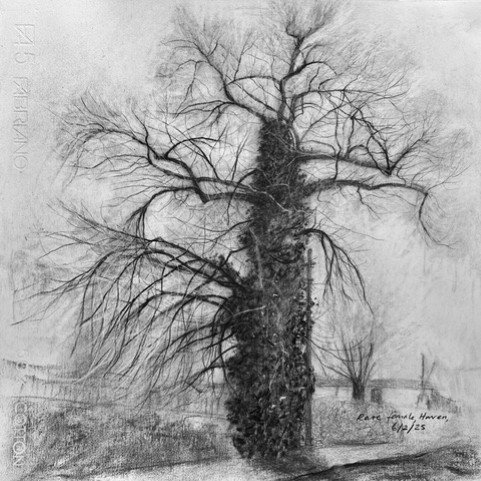
I love the process of searching for and spending time with each tree I draw. I begin by going up to the tree, touching its bark and asking if I can make a portrait! Every drawing is on 40cm square paper, using charcoal outdoors and then building up the work in the studio using ink, water colour, graphite, and chalk as needed. I want to display the portraits unframed and unmounted – exposed and vulnerable like the trees themselves. The series will be shown together next year as a fundraiser for the ongoing work to save our native black poplars.
