Becky’s contribution to the See Here Now exhibition emerged from her visits to Grizedale Forest, research into historical records of the forest and planting regimes, the collection of soil samples, production of chromatographs, and challenges to AI. Read on to find out from Becky about the process and the work currently on show.
World Soul
My practice explores different ways to communicate and collaborate with the other-than-human aspects of our world. I have spent much of my life in Aotearoa, New Zealand, a place where, in deep-time terms, humans only arrived yesterday.
Before settlers arrived from Europe, the first people were Māori, and they had a profound, reciprocal, and entangled relationship with soil, plants, animals, birds, air, and water. This had a huge impact on me; I saw the potential for our species to be truly re-woven back into the fabric of our ecosystem, where we belong.
Through my work, I am attempting to be a conduit for the “animus mundi,” or world soul, that was palpable to me in that landscape. After so many years, having returned to the U.K., the land of my birth, I struggled to find a similar sense of connection to the natural world.

Work for ‘See here Now’
Making work for this exhibition introduced me to the topography, history, and presence of Grizedale Forest. Through historical research and fieldwork, I have connected some aspects of Grizedale’s deep-time story with its present and possible futures.
The two pieces have been created in collaboration with elements of the Forest, computational design, and archival material from the Forestry Commission. My processes have included digital photography, silver nitrate chromatographs, and generative AI. In using these methods, I acknowledge and reflect on the intricate and interconnected nature of production and consumption in our time of ecological crisis.
The work suggests that, despite our current infatuation, digital technology cannot solve the loss of our soil or mitigate the climate emergency we inhabit.
I hope this work prompts us to return to the chaotic, generous abundance of our present-day planet with renewed urgency.
Yggdrasil. 2025.
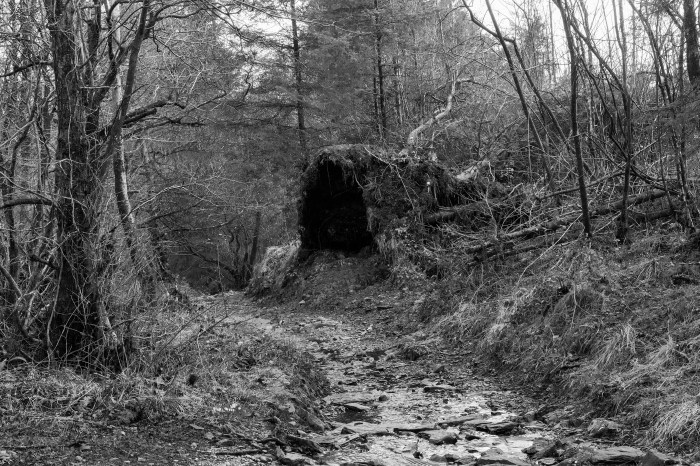
The mounted piece in the exhibition is a large-scale solar plate print, created in response to an encounter with a portal in the forest. A fallen tree reveals its root system and an archway to the underworld below. The Vikings named Grizedale Griss-dair or ‘the dale of pigs’ (Forestry Commission, 1951), and thus I have titled this work Yggdrasil, the name the Vikings gave to the Tree of Life, at the roots of which lies the gateway to the Underworld. (Crews, J.)[2]
1000 years per inch
The artist book, 1000 Years Per Inch, is constructed to suggest a manual or field guide pieced together from remnants and fragments of past abundance.

Online research introduced me to a wonderful resource from the Forestry Commission: a detailed report of Grizedale Forest between 1936 and 1951, detailing the geological, topographical, vegetal and meteorological conditions of the site, along with the various historical and contemporary approaches to forestry there. (Forestry Commission, 1951)[1] This knowledge of the site emerged from annual visits between April 1936 and October 1951 as well as a careful assembling of historical research; the notes by the State Forest Officer, J.S.R. Chard are poignant regarding the already-problematic practice of mono-culture in relation to species selection and planting:
Grizedale is a fortunate forest with a favourable climate and soil and with such variations of aspect, exposure and elevation, that in some part or other all the major tree species and many of the minor ones, could be grown to perfection.
It is, therefore, a pity that it has suffered through much of its history from unavoidably large planting programmes, which have operated against the detailed adjustment of species necessary to take the best advantages of such local variations.
(Forestry Commission, 1951)
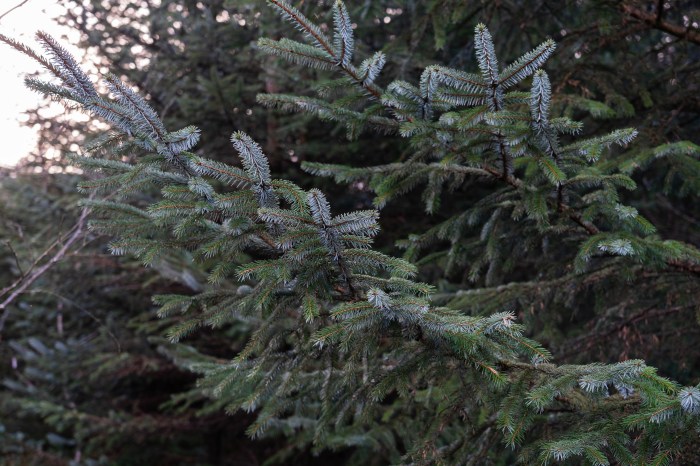
Key phrases from this report emerge in my own book, emphasising the ancient geology underlying the topsoil and the variety and specificity of the soil make-up. I have included photographs, made on the site, depicting the Sitka spruce and the otherworldly spaces beneath the canopy, where stumps of previous harvests create strange regular lines of mossy hillocks in the gloomy light.

I have taken some soil from specific sites at Grizedale and made chromatographs from it. I refer to these as soil-portraits, as I consider them to be a direct trace of the bio-dynamic state of the soil, captured through a light-sensitive chemical process similar in some ways to a photogram.
Images of the soil in my home-made “lab’ are included. These chromatographs have then been introduced to a generative AI programme, with the request to reconstruct or at least reimagine healthy topsoil. While compelling, the images and responses produced are not anything that could support life, as A.I. itself reports back to me.


Left: Carron Crag Chroma. 2025. Scanned chromatograph on filter paper.
Right: A.I. Topsoil Imaginary 2. 2025. Prompted synthetic image.
Past, present and possible futures
The solar plate print ‘Yggdrasil 2025’ and the artist book ‘1000 years per inch’ form a dialogue between the Forest’s past, present, and possible futures, seen through the eyes of our descendants. Standing on a planet devoid of the precious 5 to 8 cm of topsoil required to sustain our agricultural production (Cho, R. 2012,[3]), they might ask what we have lost and how we can remake it.
The work suggests that, despite our current infatuation, digital technology cannot solve the loss of our soil or mitigate the climate emergency we inhabit. I hope this work prompts us to return to the chaotic, generous abundance of our present-day planet with renewed urgency.

Visit Becky Nunes’ profile here to find out more about her work.
[1] https://cdn.forestresearch.gov.uk/1951/04/fcfh078.pdf
[2] CREWS, J., Forest and tree symbolism in folklore. UNASYLVA, , pp. pp. 37 EP – 43.
[3] https://news.climate.columbia.edu/2012/04/12/why-soil-matters/