An illustration of a group of people gathered on a flat, grassy landscape. There are clouds and sun rays in the sky. Some people have spades and forks. They all wear colourful outdoor gear, some have rucksacks, they are smiling and interacting with each other. The sky and landscape is black and white.

Ali foxon: RESONANCE ILLUSTRATIONS

Last autumn, geographer and green sketcher Ali Foxon joined Harriet and Rob Fraser at the LUNZ Hub event in Edinburgh. The ‘Land Use for Net Zero Nature and People’ Hub works at the interface between science, policy and practice, to support the UK in achieving Net Zero and other environmental and societal goals. This is a massive topic and a challenging task, involving many different stakeholders.

The PLACE Collective is involved as one of the LUNZ Hub consortium members (as we introduced in this blog here), working alongside other specialists within the Hub and stakeholders beyond the consortium. The Resonance project is one of the strands of work that has emerged from this – and in this blog, Ali reflects on her work within the Resonance team and shares some of the illustrations from the Big Dig Day.

Resonance and Illustrations – reflections from Ali Foxon

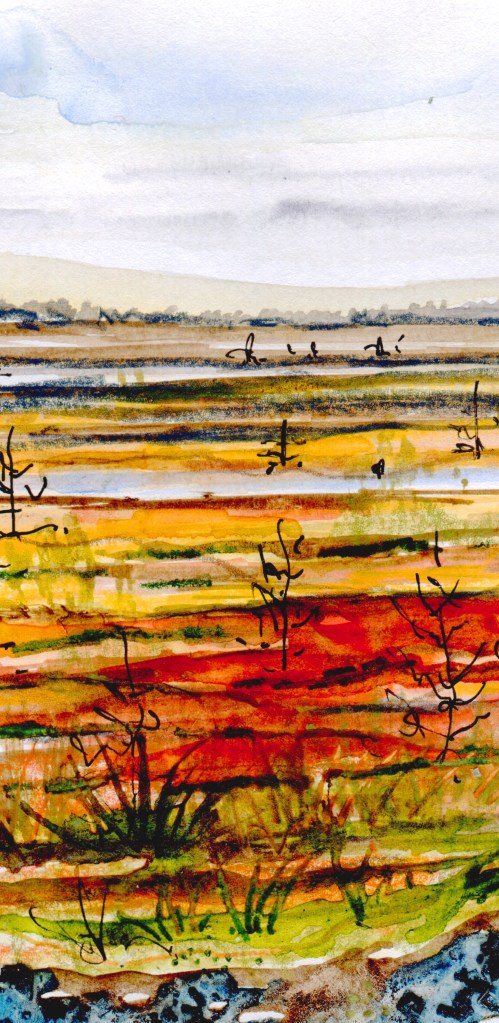
As an artist, geographer and founder of the green sketching movement, my practice is focused on observation and nature connection. I love opening people’s eyes to nature’s everyday beauty. That’s why I’m delighted to be participating in Resonance. The seven birch tree circles are going to become such beautiful living artworks as they establish and grow. At first glance, birch trees are quite unassuming. And yet, as you look more closely (with or without a pencil!), you soon see their striking bark, airy canopy, slender trunks, triangular leaves and spindly twigs; it’s hard to find a more elegant tree.

I believe real change depends on our hearts, not our heads.
When faced with so much fear, resistance and uncertainty, we must harness hope and possibility.
That’s why Resonance is so promising.

Five people are in conversation around a table. there are others behind them, sitting at tables in a village hall.

Ali in conversation in the village hall, at the Big Dig Day, November 2024

a boggy background

I’m participating in Resonance as an illustrator, albeit an illustrator with an unusually boggy background! As a young geographer, I studied peat bogs at Oxford and later I completed my PhD, funded by a consortium of UK conservation agencies, on the carbon consequences of habitat restoration and creation. I investigated the carbon impact of restoring afforested peatland among other things. LUNZ and Resonance have taken me full circle back to my boggy roots.

It’s been surreal and eye-opening tiptoeing back into an area of work I once knew so well. I’ve experienced so much deja-vu; so little seems to have changed. Obviously, we have made progress – not least the spectacular restoration of Bolton Fell Moss. Targets and ambitions have been refined. There’s much greater awareness about soil and forest carbon. And yet, we’re still bogged down in scientific uncertainty, regulatory frameworks, short-term projects, bureaucracy and lack of money; we’re still neglecting the importance of adaptation, wellbeing, social and behavioural change. This isn’t surprising. Land use change is such a hugely complex topic. But, at a time when we need rapid, urgent action, it’s hard not to conclude peat is accumulating faster than we’re making progress.

Hopefully, the LUNZ Hub’s work will speed up the process, bridging science and policy, generating the clarity and momentum necessary to accelerate change.

Yet, I believe real change depends on our hearts, not our heads. When faced with so much fear, resistance and uncertainty, we must harness hope and possibility.

That’s why Resonance is so promising. It’s already demonstrating the role nature connection and creativity can play in fostering the positive energy and conversations we need to collaborate and tackle the complex challenges of land use change together. I can’t wait to watch the magic and momentum of Resonance ripple across Cumbria and beyond in 2025. As for me, I’m looking forward to doodling more birch leaves, visioning beautiful futures and helping world-weary, nature leaders strengthen their creative resilience.

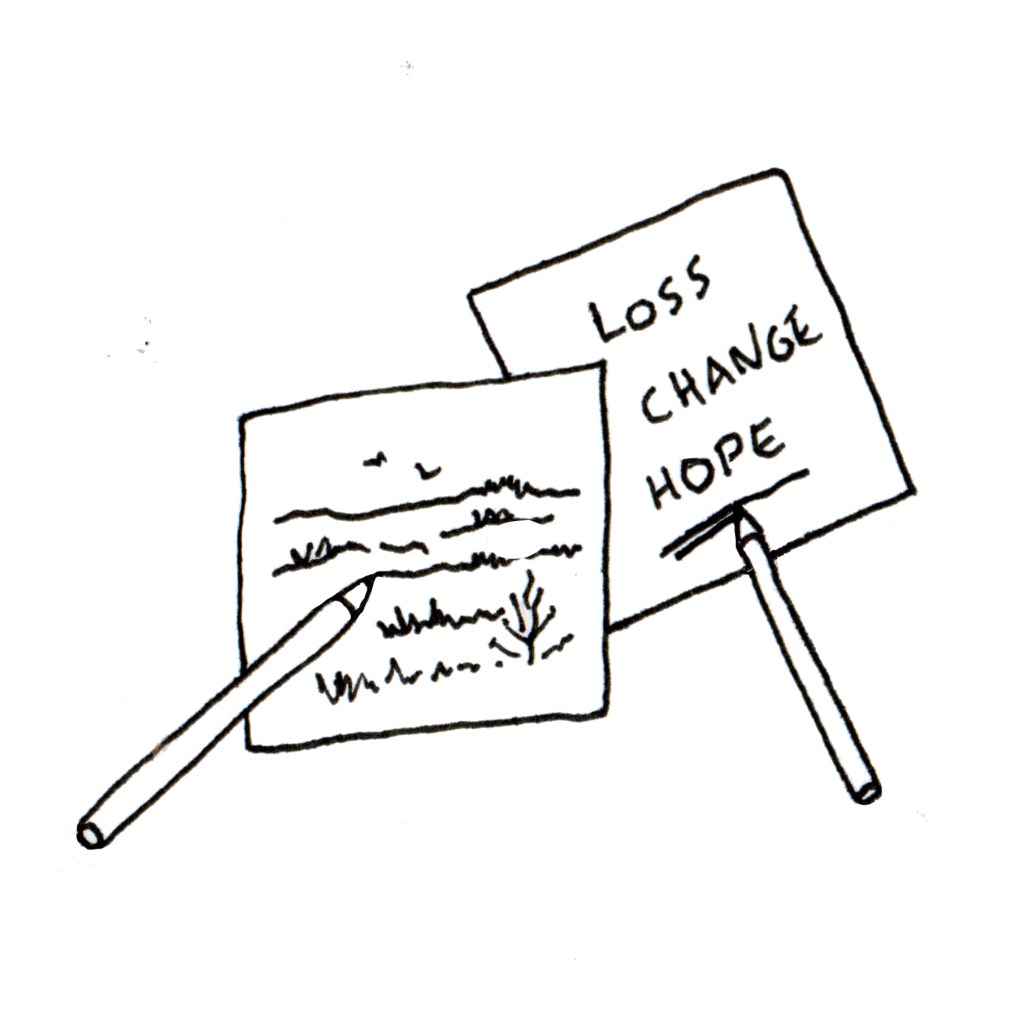
navigating challenges

For me, the beauty of Resonance, especially from a geographer’s perspective, is how the project’s heart and positivity extend through time and space, connecting so many different people and places. Resonance is drawing much-needed attention to peatland restoration, upland land use and the implications and challenges of meeting NetZero. But it’s also highlighting the immense value – intellectually and emotionally – of gathering outdoors, in-person, off our screens. As we navigate the challenging decisions that lie ahead, I hope the Resonance circles become treasured focal points for nature connection, symbols of care and gentle reminders that land use change can be positive, collaborative and beautiful.

Find out more about the LUNZ Hub here, and read about Ali’s practice here.


An illustration of a group of people gathered on a flat, grassy landscape. There are clouds and sun rays in the sky. Some people have spades and forks. They all wear colourful outdoor gear, some have rucksacks, they are smiling and interacting with each other. The sky and landscape is black and white.

An illustration of seven silver birch trees with golden leaves

Trees, Peat bogs, and seven circles of seven birches …

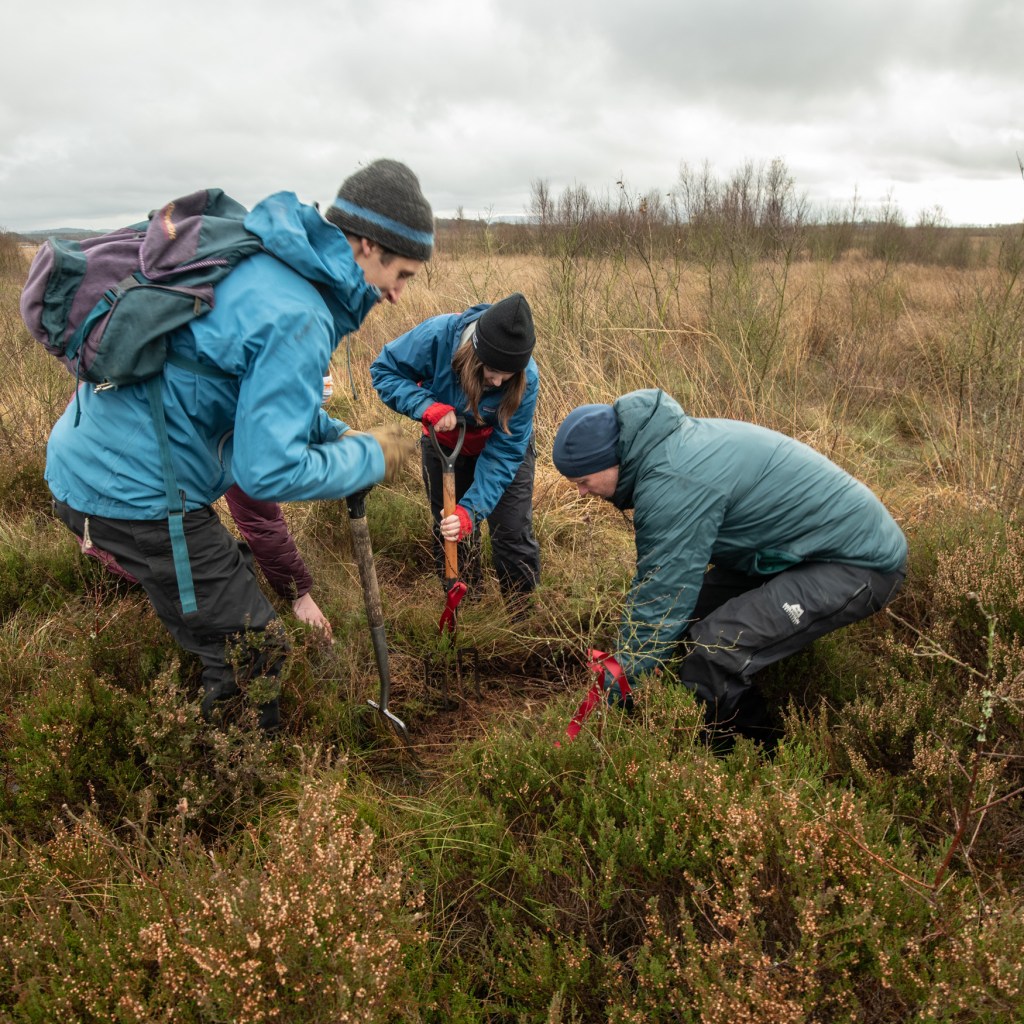
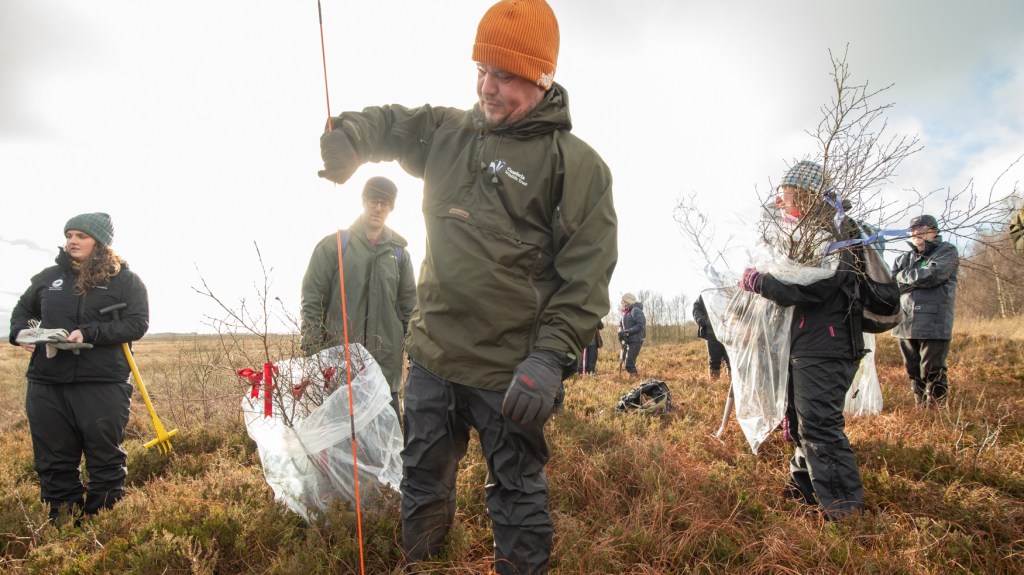
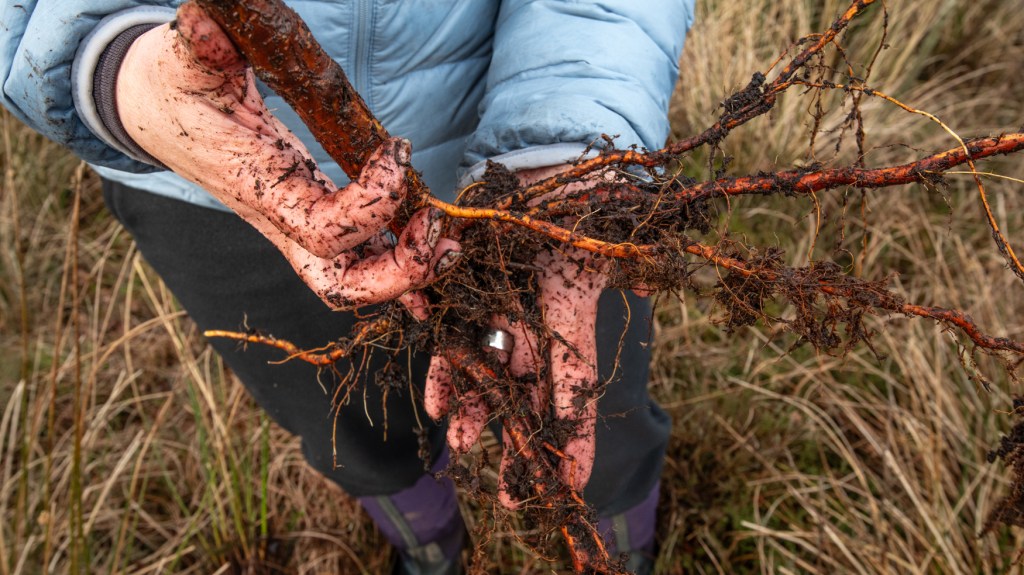
Since last November, the Resonance project has been moving on. It revolves around 49 silver birch trees, which have been collected from Bolton Fell Moss peat bog that’s in a process of restoration, and are being planted out in seven tight circles, each of seven trees, across the Lake District National Park.

This is part of the PLACE Collective’s work through the UK-wide Land Use for Net Zero, Nature and People Hub – or LUNZ HUb for short. Working within the LUNZ Hub team, we’re convening opportunities for people from across practice, research and policy to get together, share learning, and focus on actions; all part of a just transition in a time when changes in land management need to be big, and at scale, to mitigate impacts of climate change, nurture recovery of biodiversity and ecosystems, and embed resilience and natural regeneration in UK land use.

Head over to the project page for Resonance to find out more, and watch for updates – there are reflections on the Big Dig Day here, and a reflection on the key take outs from that event on the LUNZ Hub website.

Thoughts on the Moss of Many Layers film : Juliet Klottrup

Guest blog from Juliet Klottrup

From North America to North Yorkshire, the Moss of Many Layers film has been journeying to different cinemas and film festivals across the world. The first showing (and for me the most important) was in a village hall in Hethersgill, close to the Moss. The audience was made up of the local community and the many people included in the film: the school children, neighbouring farmers, researchers, artists and conservationists. 

But now the film is shared far and wide, telling the story of the moss beyond its neighbours and the scientific community.

A still image showing men with a tractor that is adapted for travelling over peat.
Still from the film

Art within science serves as a mirror: it can communicate ideas and data accessibly as different attention is required. Additionally, it acts as a versatile tool, allowing us to manipulate scale, delve into details, and expand our understanding of the landscape.

When recording or decoding science – as an artist – it’s important to include the human story that is connected to the Moss. That’s my motivation for including the ‘breathing portraits’ of subjects in the film.

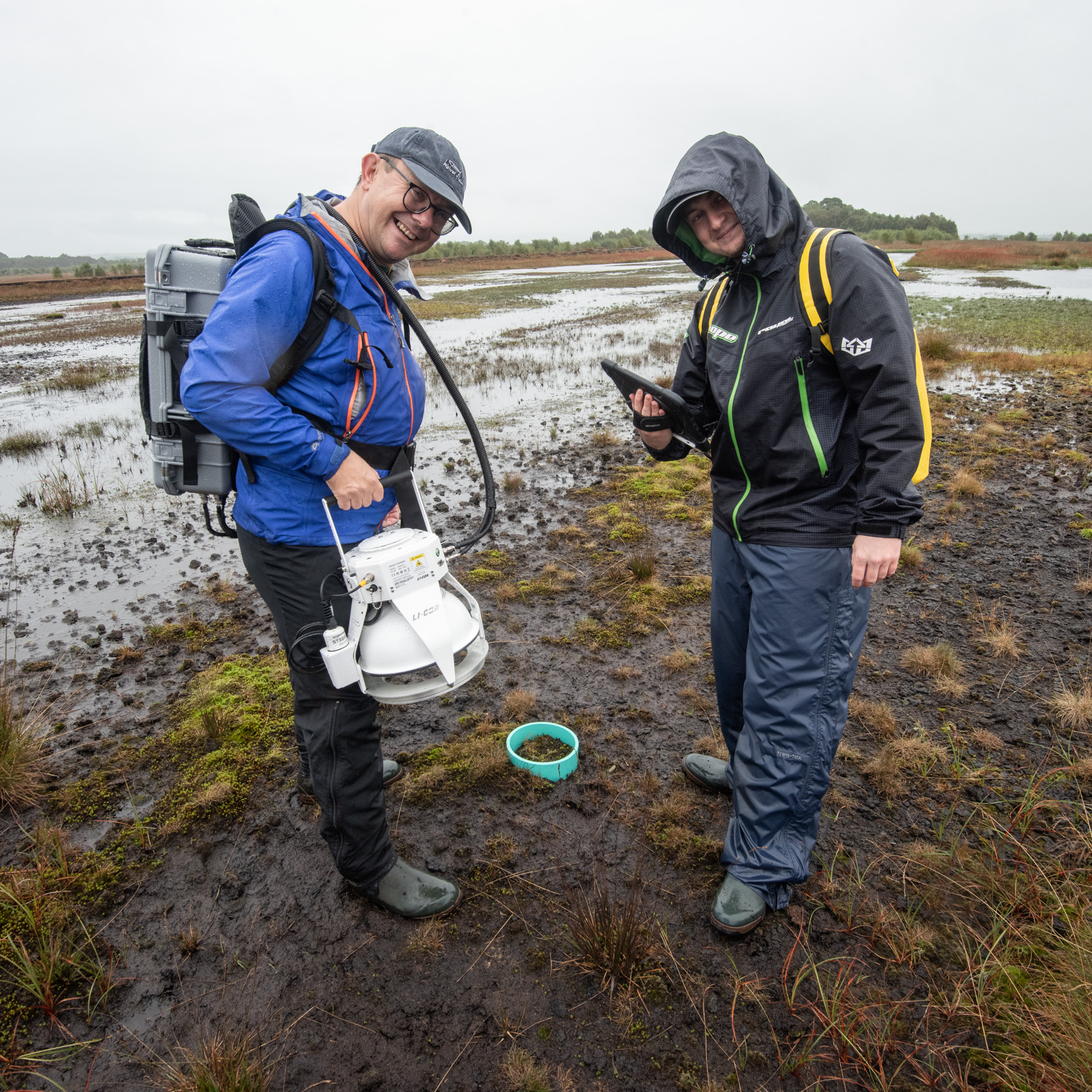
I certainly haven’t stopped thinking about Bolton Fell Moss, and am happy to keep going back. Here are two images from my last visit to the Moss, to see Harriet’s Poetry Signs and watch Dr Simon Carr and PHD Student Jack Brennan use a carbon flux monitor.

Two men standing on a bog look towards the camera; they are dressed in waterproofs.
Simon Carr and Jack Brennand with the carbon flux monitor, on Bolton Fell Moss; image by Juliet Klottrup (taken using real film)
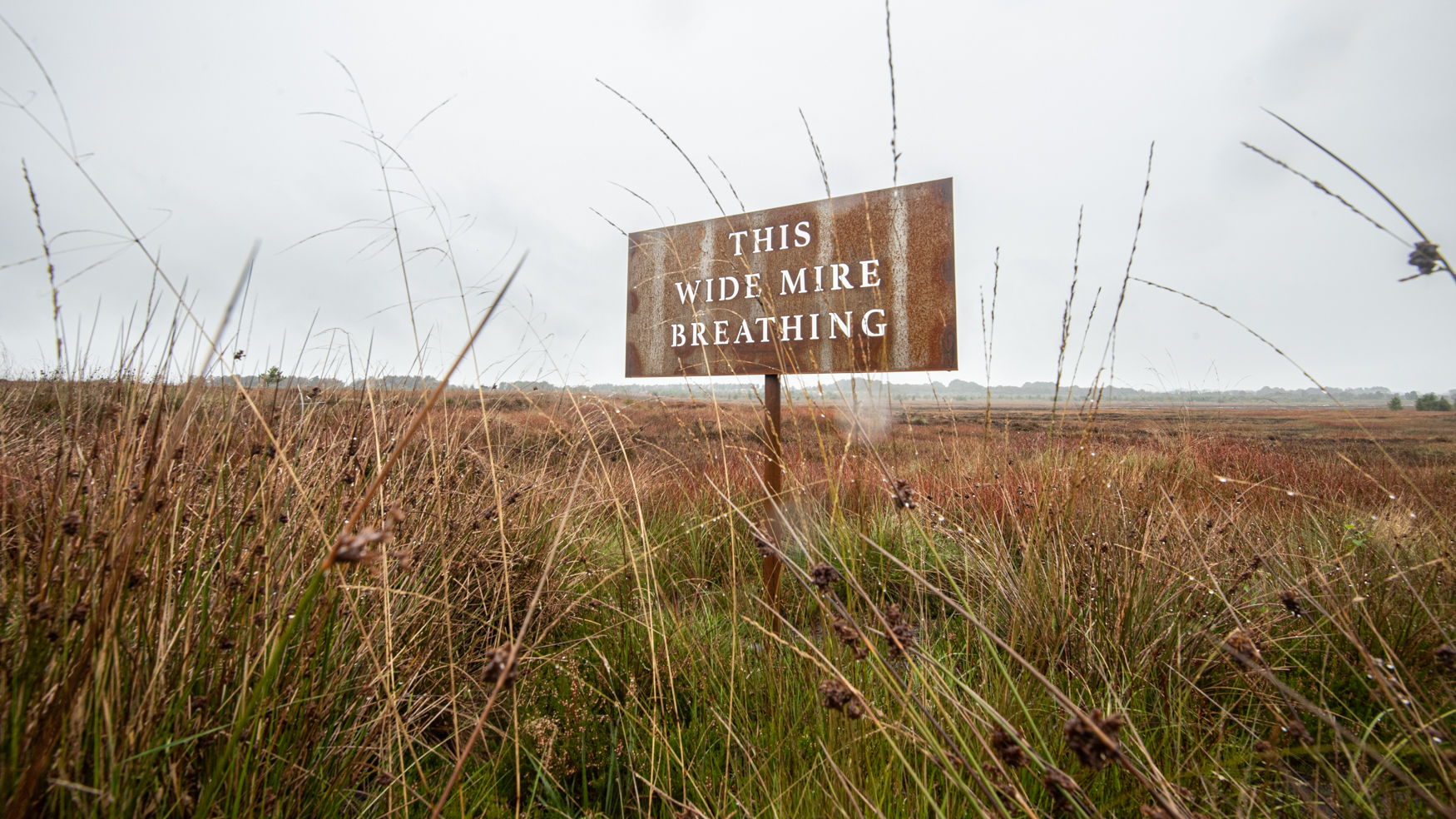
A rusted metal sign on a peat bog, with words cut into it: THIS WIDE MIRE BREATHING
Poetry sign on Bolton Fell Moss, image by Juliet Klottrup (real film)

View Juliet’s Moss of Many Layers film here.

For more about the Moss of Many Layers project, visit the project page here; and use the search tool for Moss of Many Layers and browse the blogs.


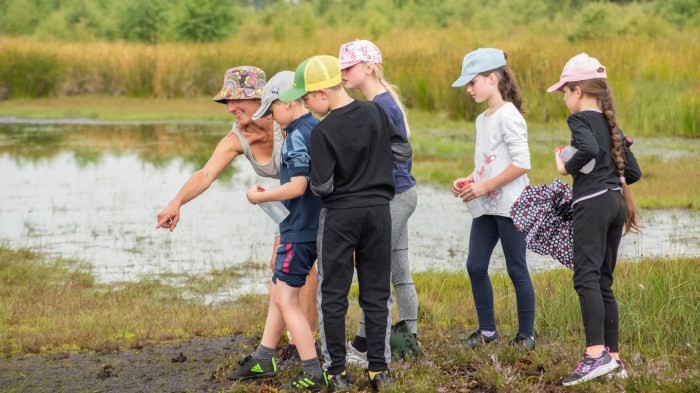
A woman in a colourful hat points at something on the ground. Five children, wearing caps, look where she is pointing. They are standing in a boggy area with a pond behind them, and long grasses.

Bog Communities and connections : early evaluations

emma austin, natural england, in conversation with harriet fraser and rob fraser

It has been said more than once, and it’s true: it’s not possible to give a final ‘evaluation’ of the impact of a project until some time has passed. Arts interventions and multi-disciplinary engagement in community, scientific and conservation work have effects across a wide timescale: in the days, weeks or months in which direct research and engagement take place, and then in the months and years following that. Moss of Many Layers (MoML) is a case in point. So, 14 months on from the Wide Open Day celebratory event, we (Harriet and Rob) sat down with Emma Austin to hear her reflections.

A woman in a pale jumper stands among cotton grass, with a grey cloudy sky
Emma Austin. Still from Juliet Klottrup’s ‘Moss of Many Layers’ film

Emma, Natural England Senior Reserves Manager for North Cumbria, was part of the MoML project team. She already had an established relationship with Bolton Fell Moss – the vast area of peatland that is currently under restoration – and with some of the residents living around the edges of the moss before the project began. So what was the impact, or the novelty, of a project that brought together artists, scientists, restoration specialists, reserve managers and local residents? This was the first question we put to Emma.

What was the impact, or the novelty, of a project that brought together artists, scientists, restoration specialists, reserve managers and local residents?

Emma tells us that she really hoped the project would focus on the local community, helping to build bridges where people had been impacted by the difficult transition from an industrial site of peat extraction with local jobs and income, to a National Nature Reserve. ‘Having new faces that had no prior history with the place, artists who were independent, scientist with new knowledge, was brilliant,’ says Emma. ‘And the things that were introduced – whether it was a camera, a poem, specialist kit – these were new, and fresh, and I think the local community who became involved perhaps felt involved in a way they hadn’t been before.’

A woman in a colourful hat points at something on the ground. Five children, wearing caps, look where she is pointing. They are standing in a boggy area with a pond behind them, and long grasses.

Emma taking part in the schools events, co-designed with artist Anne Waggot Knott

A woman and children around a table, ready for an art exercise. Sticks mud and water bottles are on the table.

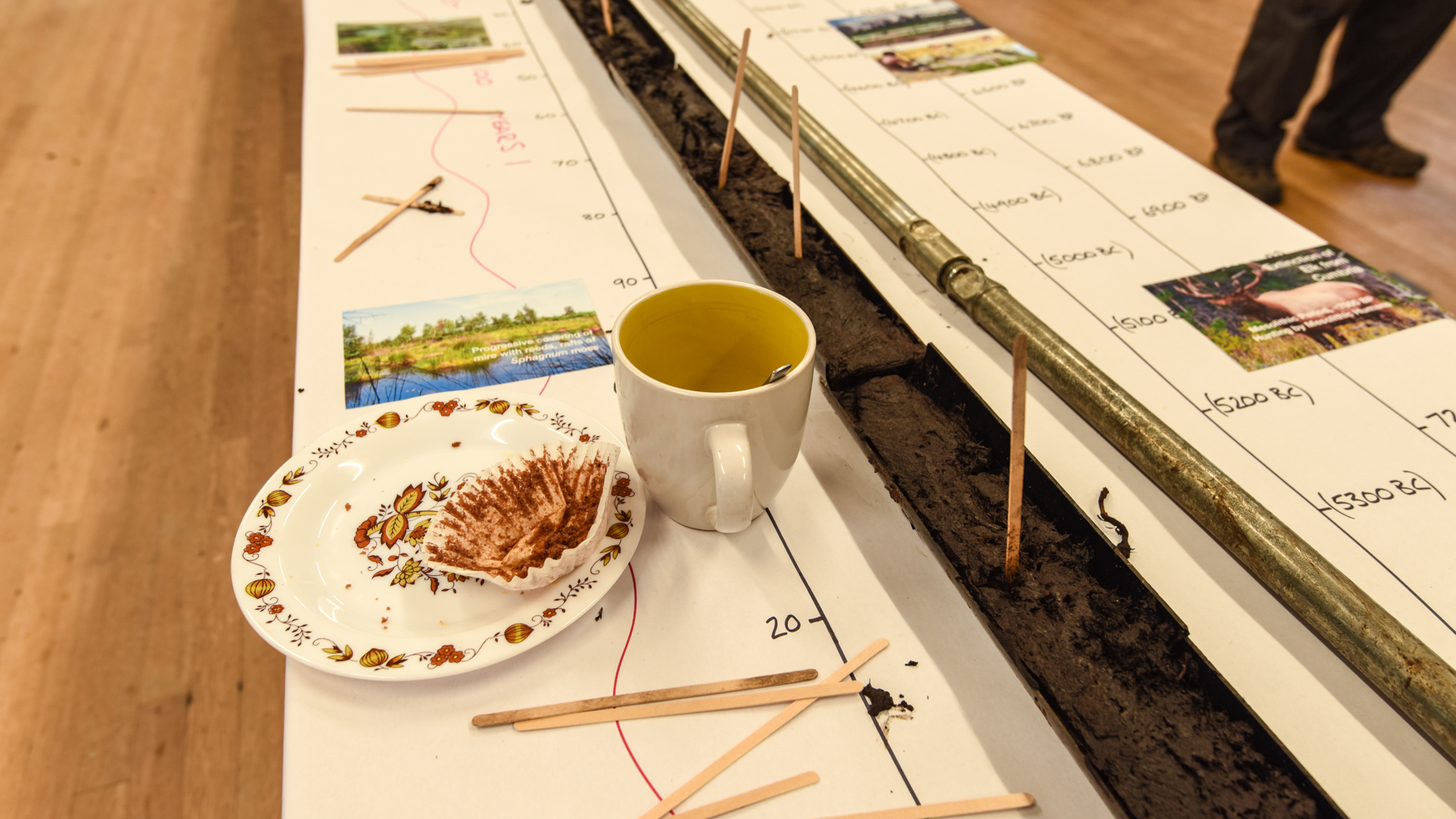
Emma says that she senses the project’s impact through the new links made with the local community.  The first time this hit home for her was the huge turnout for the Wide Open Day. Emma always grins when she talks about this: the peat core extending the length of the hall, the room buzzing with conversation, curiosity about the artworks, school children and their parents, and local people meeting one another, some for the first time.

A plate with empty cake wrapper, a cup, and a table laid with a peat core and dates going back to 5300BC

Emma tells us there has been a real growth in interest in the moss since then, nicely coinciding with the completion of the new 3km boardwalk. Juliet Klottrup’s film has been a feature at local discussion events, and there is a definite interest for more of these. The mailing list for news of Bolton Fell Moss has grown fourfold; and events on site run by an engagement officer over the summer were really popular.

In June 2023, during a nationwide heatwave, there was a fire at Bolton Fell Moss, and for six days people worked together to tackle it.

In June 2023, during a nationwide heatwave, there was a fire at Bolton Fell Moss, and for six days people worked together to tackle it. ‘It sounds strange,’ says Emma, ‘but I think the fact that we did the Moss of Many Layers project may have made a difference. I certainly felt able to ask for help in a way I would have been wary of in the past.  It’s hard to say for sure that this is linked with MoML, but the project may well have played a part in the way it helped create new friendships and familiarity.’ The intervention of artists helped to bring people together, and the continuing use of the film in Emma’s meetings helps to spotlight local people who are connected with the moss – who live nearby, who once worked there, who are engaged in monitoring, or just love to visit, and who have stories to share.

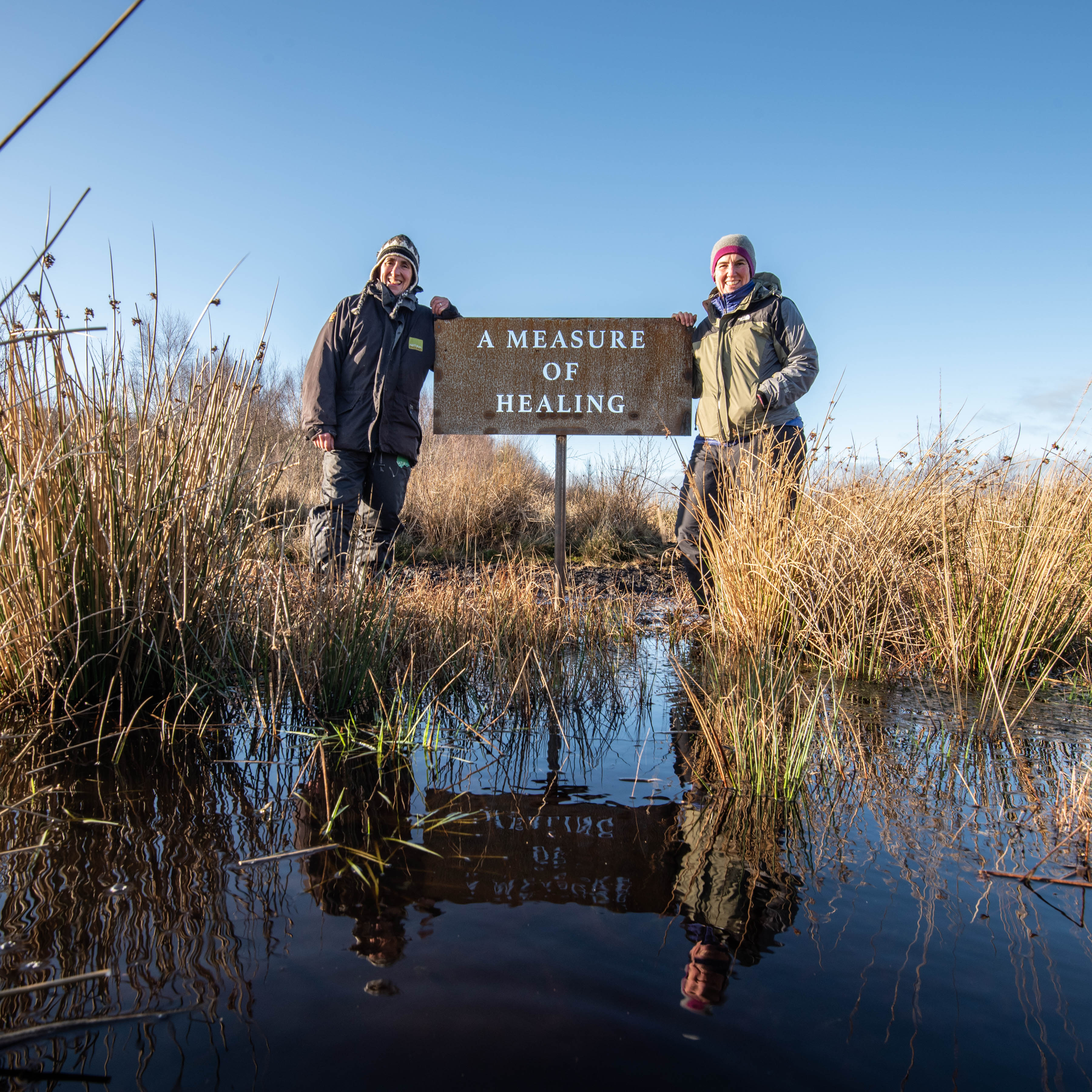
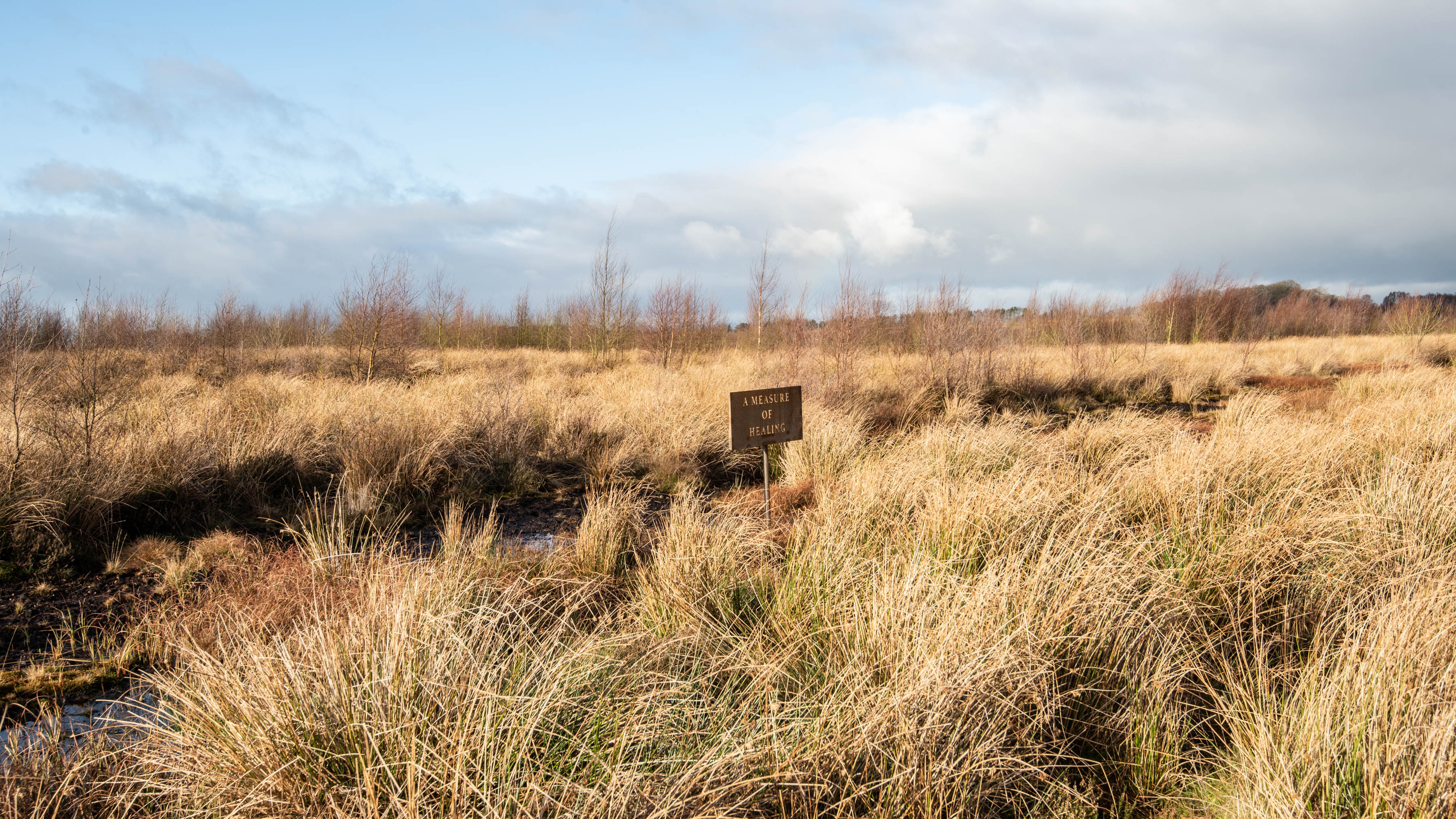
Two women stand either side of a steel sign that has words cut into it reading 'A Measure of Healing'
Emma Austin (left) and Harriet Fraser with one of the seven poetry signs

Emma smiles as she talks about the poem signs on the bog. She often hears positive comments about them, and just last week she heard from a group of MSc students who had said they loved the poem and had a WOW moment when they learnt that the signs are anchored and so they will act as a measure of peat accumulation for centuries to come – a novel combination of art and science.

‘People get used to seeing things in a certain way,’ says Emma, ‘We all do. But seeing it from a different perspective – through the arts – can bring a different outlook.’

One of the central elements of Emma’s role with Natural England is to get to know people and liaise with land owners and farmers about changes that are needed to support restoration of the moss. Emma thinks that the inclusion of art, and the presence of the artists and scientists in the area during the project, has helped people understand the bog more and feel the importance of  it, and has also helped to soften the edges of difficult conversations. ‘People get used to seeing things in a certain way,’ says Emma, ‘We all do. But seeing it from a different perspective – through the arts – can bring a different outlook.’

For her, the Moss of Many Layers project helped, above all, to put the community first. ‘How do you make sure that you create a discussion or a conversation where the person whose place you’re in feels as important, or the most important, part of the jigsaw. Because if we are going to achieve any of the things we want to achieve for nature, we’ve got to involve everybody – and the way the Moss of Many layers brought different strands together, through art and science, helped to create a neutral space of shared ownership.’

‘… if we are going to achieve any of the things we want to achieve for nature, we’ve got to involve everybody – and the way the Moss of Many layers brought different strands together, through art and science, helped to create a neutral space of shared ownership.’

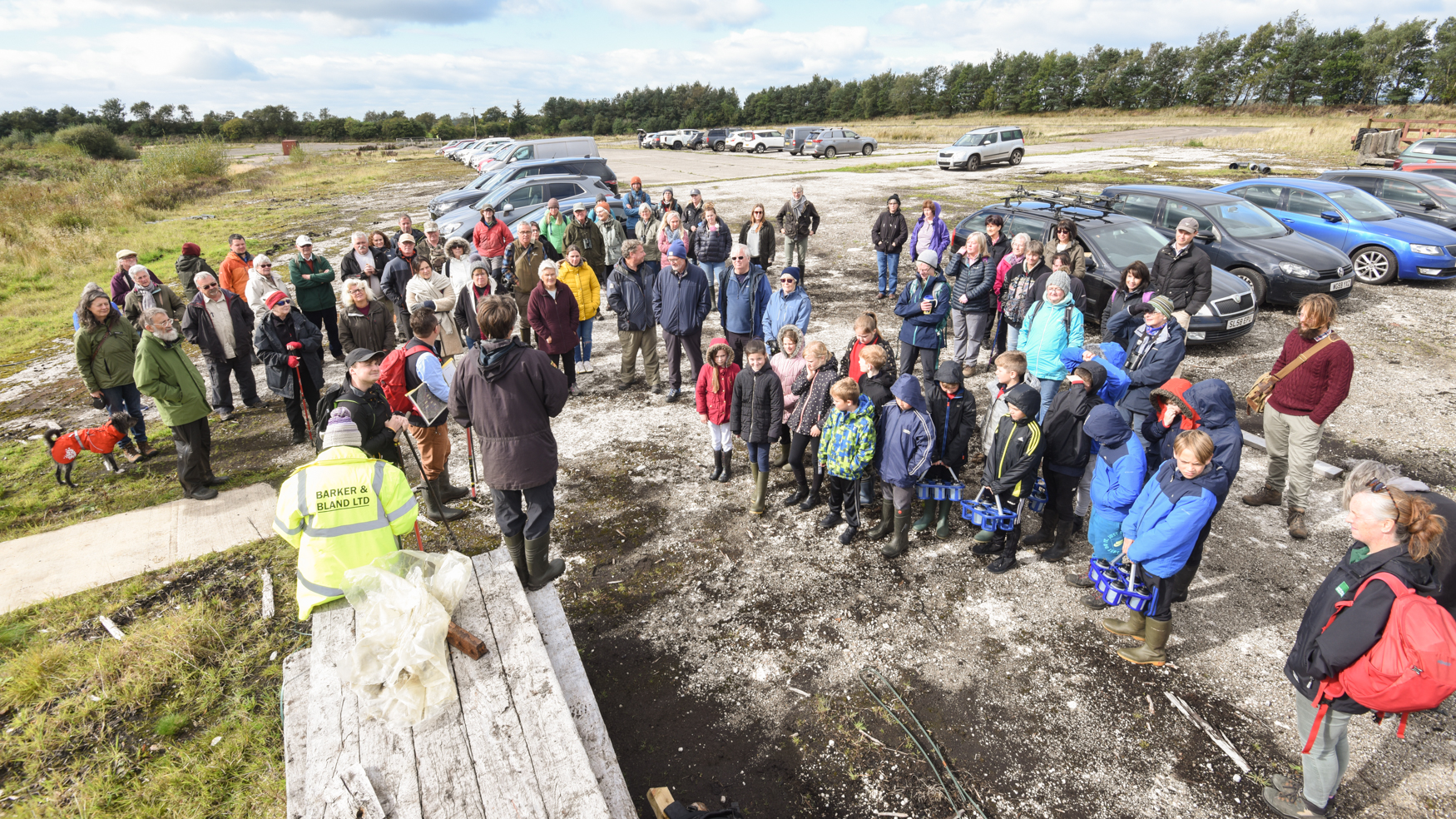
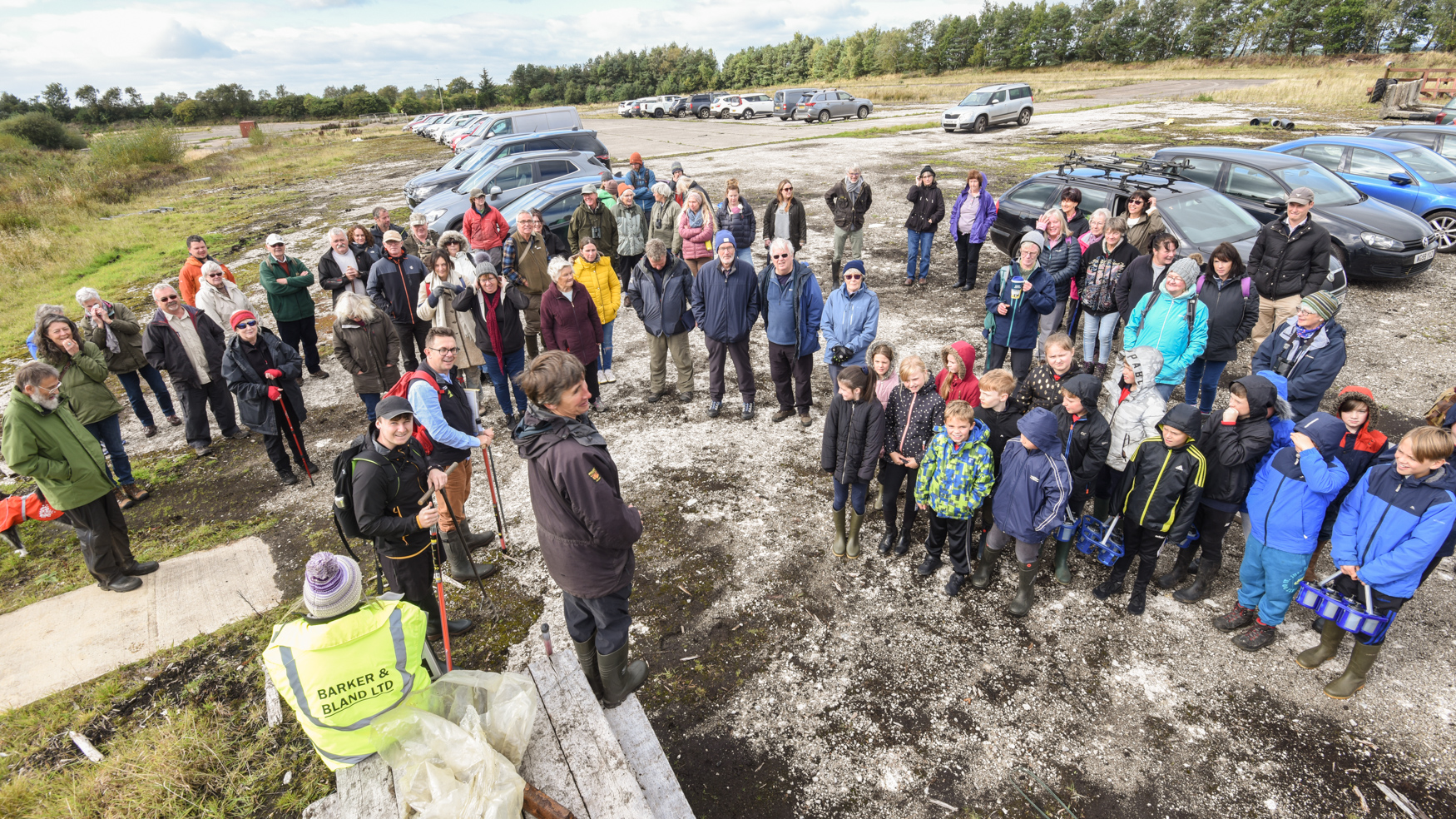
A group of people stand with cars in the background
Emma Austin and MoML team members welcome people to the Wide Open Day, 2022

For more on Moss of Many Layers:

Visit the main project page here.
Also tap into these blogs about the process, including work with schools, the Wide Open Day, Scientist Jack Brennand’s reflections and you can use the search function, looking for Moss of Many Layers to explore further.


Monitoring the bog : Carbon dioxide and methane measurements

Listen in :

Simon Carr talks to Harriet Fraser about monitoring greenhouse gases at Bolton Fell Moss .. carbon, climate and the living, breathing bog

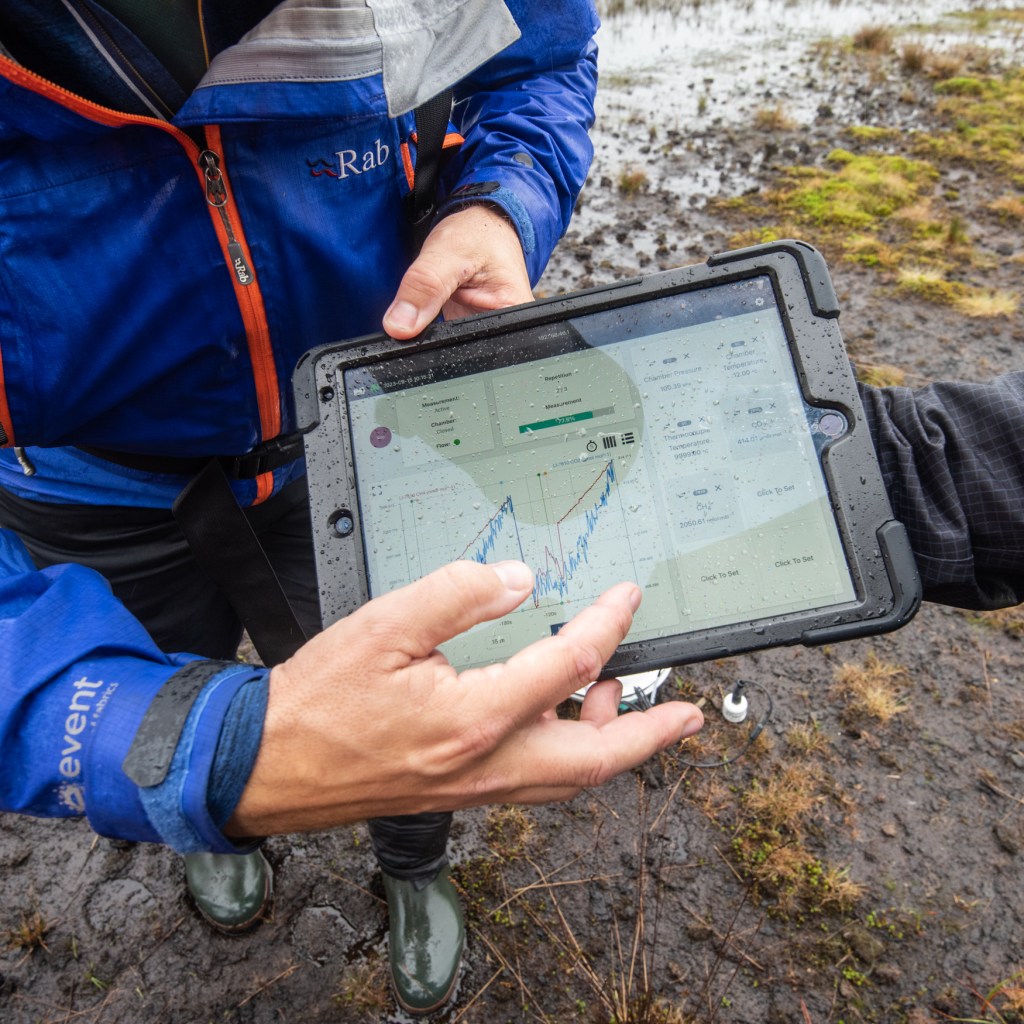
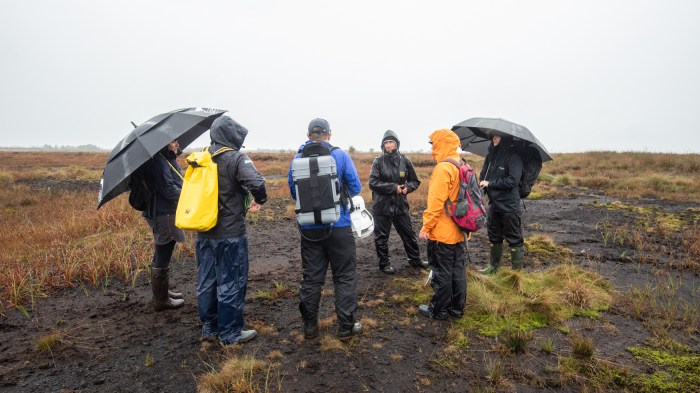
The bog is wide and grey, the rain is slashing down, and we’re all dressed in wellies and full waterproofs. We have umbrellas too – useful to protect camera equipment, and give a little shelter to Simon and Jack as they bend down and get busy with their tools to measure emissions of carbon dioxide and methane. Understanding how much of these gases the bog is emitting, and how more is held over time, is a critical part of the restoration work.

Two men in raincoats stand on a wet bog and look at the camera; the man on the left holds a white object, which is a monitor he will use to measure carbon dioxide and methane emissions

In this recording, Simon reflects on the current levels of greenhouse gases in the atmosphere, introduces the carbon flux monitor, and explains what he hopes to learn from monitoring the bog. Every month, he and Jack visit ten monitoring sites spread across this vast bog; and they walk 10km in the process. The white carbon flux monitor, which is aesthetically beautiful and almost personal, is continually taking in gases, and periodically it lets out a ‘burp’, which you can hear on the recording.

A metal sign set among grasses with a white sky behind. The sign reads 'This Wide Mire Breathing'
This Wide Mire Breathing – one of seven signs that complete a poem (Harriet Fraser)
A group of people sit beneath trees; one man is standing
Lunch and a Moss of Many Layers meeting (almost) out of the rain

Find out more about the Moss of Many Layers project here.
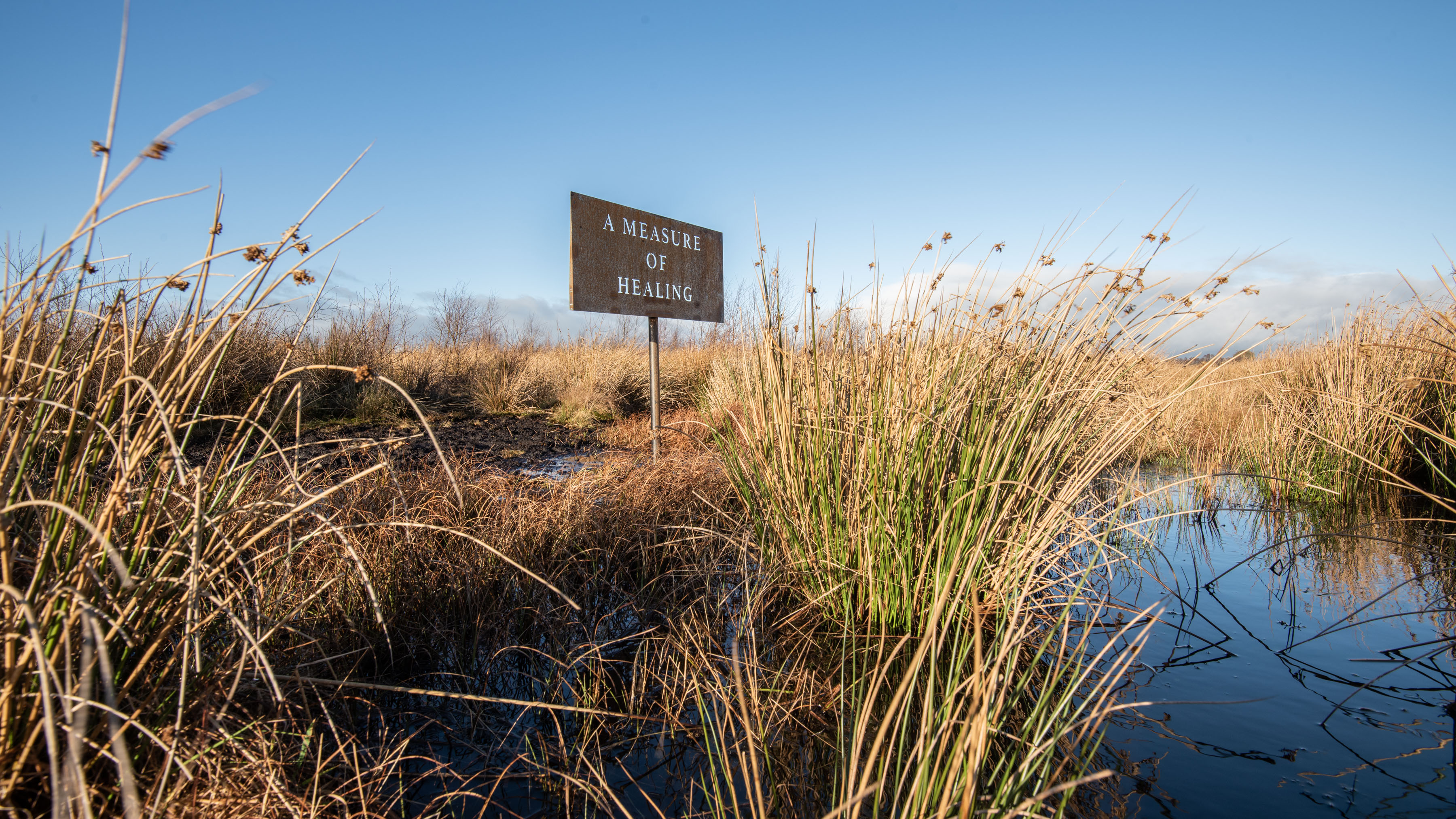

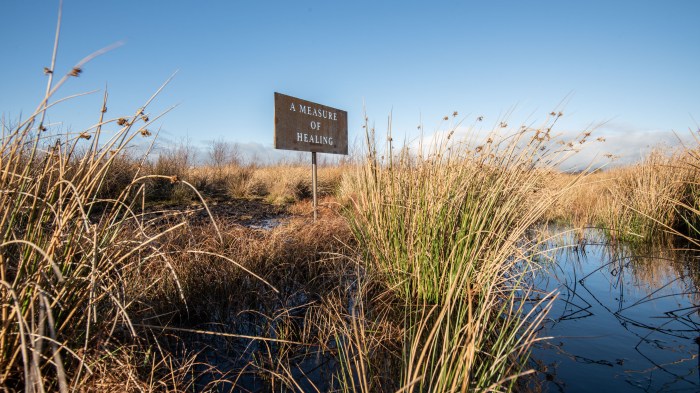
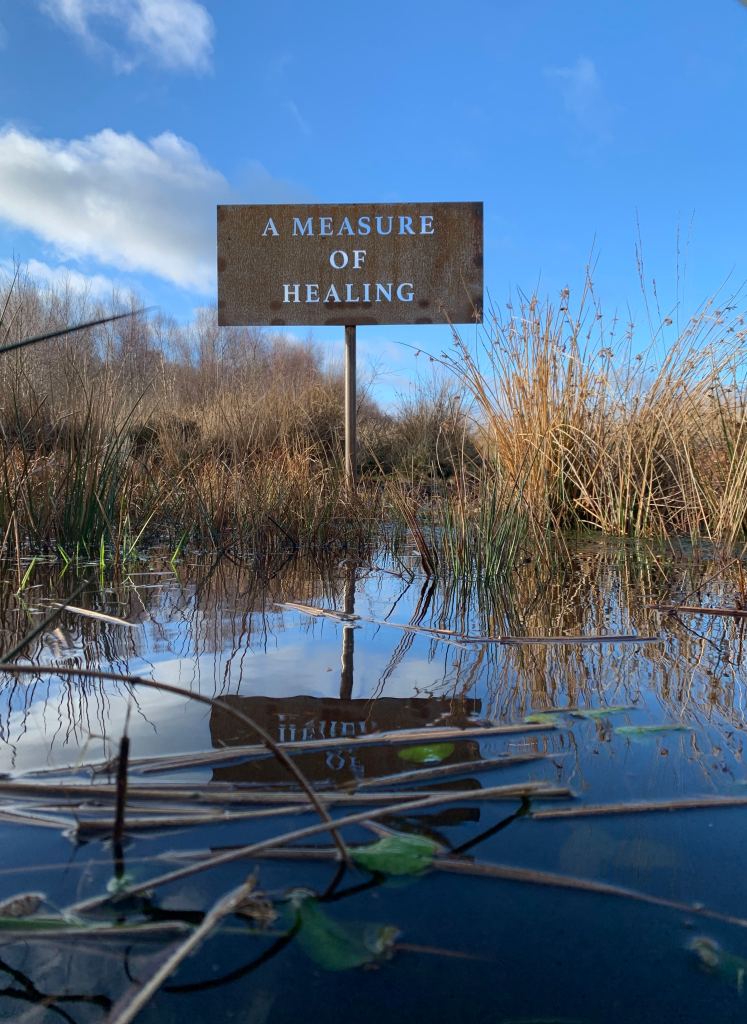
A sign rises from wetland and grasses. Words on the sign read 'A Measure of Healing'

poetry sign test – success!

A blog from Harriet Fraser and Rob Fraser, working on the Moss of Many Layers project.

Landmark day! After a year of planning, with research, poetry composition, design, engineering and finger-crossing, on Friday, together with Natural England Senior Reserves Manager Emma Austin, we headed out to Bolton Fell Moss to test the installation of a poetry sign. And phew, the install went perfectly! Hurray!

This is one of a set of seven signs that will be placed within sight of the boardwalk, which runs for a circuit of 3km. Together, the signs will form a seven-phrase poem that can be read clockwise or anti-clockwise, or can be read in couplets. Each sign will rust up, blending in with the colours of the bog.

A steel sign rises from a wetland area of a bog and has words cut into it, reading A Measure Of Healing

A tool for scientists

The support pole for each sign acts as a surface level rod, so the team monitoring the growth of sphagnum moss (and, very very slowly, peat itself), will be able to measure incremental change. The support poles extend down to the mineral layer beneath the peat, which is a marker of the end of the last ice age before peat began to form here. The range on chosen sites is 227cm – 578cm, reflecting different levels of extraction around the site.
Process, and first impressions

When you dream something up, then work through the ideas, encounter and overcome design challenges, and get to this stage, you think you know how it will look, but it’s only a guess. You only really know once it’s in …

We’re really happy with it – this first sign carries the qualities that we had hoped it would. The form and material reflect the industrial heritage of the site, where steel was used extensively in the machinery used for peat extraction, and angular shapes were common. The cut-out letters allow the signs to also have a softness, reflecting the softness of the mosses and grasses: as the light changes, or as you walk past the sign, the sign seems somehow to float, and the words are airy. It helps with the invitation for a pause – the words help to convey the ongoing story of this wonderful place, and perhaps for some will be a catalysts for thoughts, feelings, questions and further conversations.

This sign is the third in the sequence, if you follow the boardwalk in a clockwise direction; or the fourth if you walk anticlockwise.

Team work

Massive thanks to Emma at Natural England who has been a really important part of the evolution of this piece, and to Martin Lucas, engineer extraordinaire, whose attention to detail always pays off. And thanks to the rest of the Moss of Many Layers team – scientists, artists, conservationists, rangers – and the local community, who have all been part of the learning that inspired Harriet’s composition of the poem.

Two women stand either side of a steel sign that has words cut into it reading 'A Measure of Healing'
Emma Austin (left) and Harriet Fraser with the poetry sign

Opening yet to come

The site is a National Nature Reserve but will not be open to the public until later this year. Once the site opens, all the poetry signs will be in place, as will a new shelter on the central ‘island’. We’ll share updates as they happen.

A sign rises from wetland and grasses. Words on the sign read 'A Measure of Healing'

More information about the Moss of Many Layers project here.

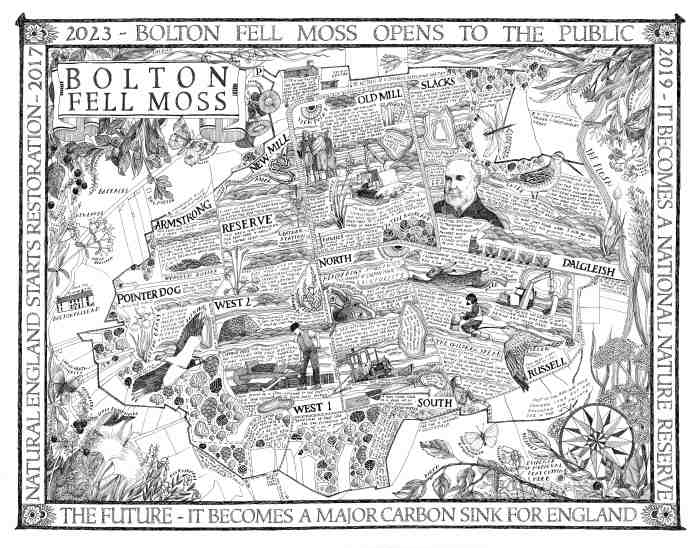
A hand-drawn map of Bolton Fell Moss in Cumbria with words and images, by Helen Cann

Mapping a Moss of many layers

A hand-drawn map of Bolton Fell Moss in Cumbria with words and images, by Helen Cann

One of the main artistic outputs from the Moss of Many Layers project is the map of Bolton Fell Moss created by Helen Cann. This post put together by Harriet Fraser gives a behind-the-scenes look at Helen’s process, and how the map came into being.

Helen’s map not only shows the history of the moss, but also the present, documenting the ongoing upkeep of the Moss, and the hoped-for future as restoration brings rewards.  The layers of time – past, present and future – were important in Helen’s thinking.

The map shares stories from local residents and insights from scientists, and portrays the wildlife communities that have returned to the moss since extraction ceased and are likely to thrive as their habitats improve. It’s a thing of beauty, something that draws you in.

Detail of a handdrawn map of Bolton Fell Moss by Helen Cann. The image contains words (View point and Old Mill) and images of people, with description of the formation of peat over a ten thousand year period

When the original map was shared at the Wide Open Day it was like a magnet – people gathered around it, pointed out things they recognised, new information that surprised them, and used it as a catalyst to share further stories. The map is hand-drawn, in wonderful detail. When further infrastructure is in place on Bolton Fell Moss, and accessible via the boardwalk, a reproduction of the map will be in place. We can’t wait to see it there!

Three people stand with their backs to the camera, while they look at a large map of Bolton Fell Moss


Helen’s process

Helen compiled the map over a number of months. As well as visiting the site (which she reflects on in her blog here), Other artist researchers in the team shared recordings with her, so she could listen to interviews with people who used to work on the site when peat was extracted and ecologists and rangers who are now monitoring recovery of vegetation, and the return of wildlife. And Helen had conversations with the scientists, restoration specialists and others on the Moss of Many Layers team. This approach is new to Helen, and it’s great to see how rewarding it has been.

‘I have rarely worked with an inter-disciplinary team before other than being given access to historian or curatorial research notes, for example. Moss of Many Layers gave me the opportunity to have face to face talks with experts. The site visit was fantastic and vital in understanding the land and being able to have conversations with experts in the field.’ 

Images and writing from a map created by Helen Cann of Bolton Fell Moss. Images include a hare, a curlew, a girl and a digger

The inter-disciplinary nature of this project impacted the approach of all the researchers, with a level of responsiveness that relied on iterative learning and conversations. ‘My experience as an illustrator means my practice involves following a brief and then delivering as near to the agreed brief as possible.  In this case, I created my own brief and then followed through.’

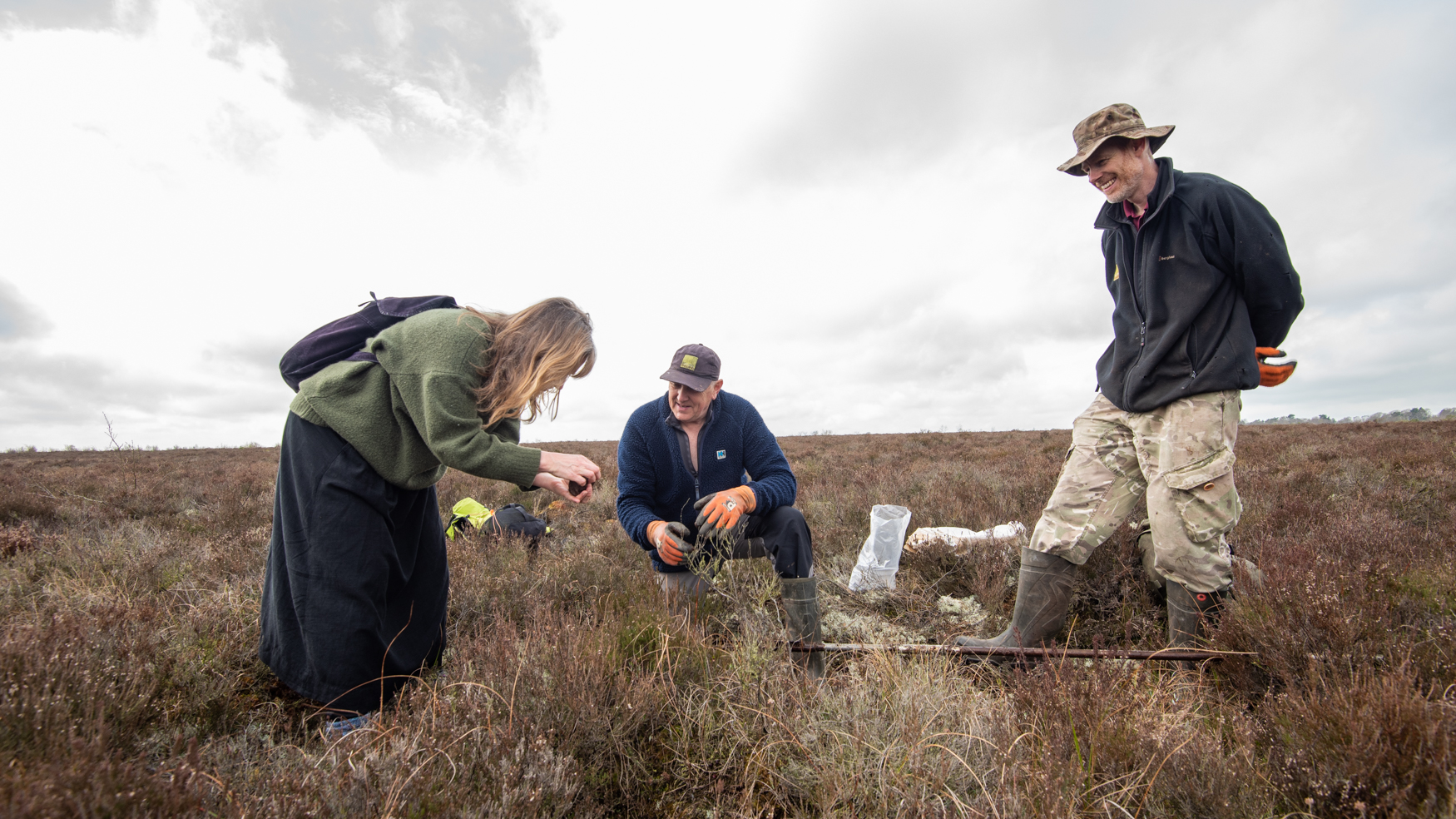
A woman and two men are looking at a peat sample taken from 9 metres beneath the surface of a raised mire.

When we talked about this, Helen reflected that this is quite unusual – but worked perfectly. Each artist began with a loose framework (in Helen’s case, to draw a map) and then let their work evolve according to ongoing learning from visits to the site and from other people. Helen’s visit to Bolton Fell Moss caused her to change some of her initial ideas (and do a fair amount of rubbing out!). This doesn’t happen often in her work. ‘In the future, it might be good to allow myself space for more ‘idea bouncing’ and the flexibility to change course from the initial brief if my thoughts develop or I’m inspired to go in other directions. In general, I’m not sure how acceptable this is for stakeholders if they’ve a been promised a particular outcome – I’d never do this as an illustrator but it’s good to know how/if this works within an art context.’ Perhaps this is a key difference between pure illustration and research-led illustrative artwork, where the shape, detail and overall feel of a piece, can alter along the way: it’s responsive. You can read more about Helen’s reflections on her process on her website here.

One of the aims of the Moss of Many Layers project was for the various pieces of artwork to reflect learning, rather than an aim for a predetermined outcome. We’re really happy that this is what happened – and when all the work is compiled and made available we’ll share a link to it through the project page.

Encountering the unexpected

I asked Helen if anything unexpected happened for her. This was her answer:

‘ – the realisation that the Moss was in a constant state of flux, was still a work in progress and that I’d need to adapt drawings made initially as thoughts and practice had changed over the months.  I’m used to maps becoming anachronistic over time but never within such a short time, and I have to acknowledge that some elements of the map may be out of date by the time it’s actually printed as a sign!’

This might be a little unexpected in the context of creating an illustration, but it is an encouraging reflection: now that extraction has come to an end and restoration work is beginning to have a positive effect in the way water balance is shifting on the moss, the process of healing is showing quick results. It’s part of the positive story of this place – the geographical location won’t change, but a lot else will.

And a final word from Helen? ‘It’s been a blast.  I learnt loads and am really pleased with how the map turned out. I wish I could have had some of that cake.*’

*The cake at the Wide Open Day was a 3D presentation of the bog.


Moss of Many Layers Film

By Juliet Klottrup

Juliet Klottrup was one of the five artists who worked as part of the team on the Moss of Many Layers project – here’s the film she made after months of research. Click the link and enjoy – it’s a 15-minute watch.

The film now features in the COP26 Virtual Peat Pavillion – visit it there and find out more about peat, mires, mosses and bogs across the world.

An image of the virtual peat pavillion at COP26

To find out more about the project, and the extraordinary Bolton Fell Moss National Nature Reserve, visit the project page here.

A group of people stand with cars in the background

Wide Open day at Bolton Fell Moss

What a day on Monday to celebrate Bolton Fell Moss and the work that’s been done through the Moss of Many Layers project. We were blessed with dry weather for the walk, and the buzz continued in Hethersgill Village Hall afterwards.

A group of people gathered in a car park before heading out on a walk

We were quite astounded with the uptake of tickets for the walk – more than seventy people came along. We separated into four smaller groups, each led by two members of the Moss of Many Layers team who shared insights about the bog.

Huge thanks to everyone who came along – in each group there were people who had never been here before, as well as people who have connections with this place, so there was a lot to be shared, including stories of working here during the bog’s time as a site of peat extraction, or of working on restoration tasks, surveying and conservation. The children shared their own stories and the knowledge they’ve gained during the past year and were able to show others the peat ‘bunds’ they had created, which are now holding water, ready for sphagnum mosses to become established.

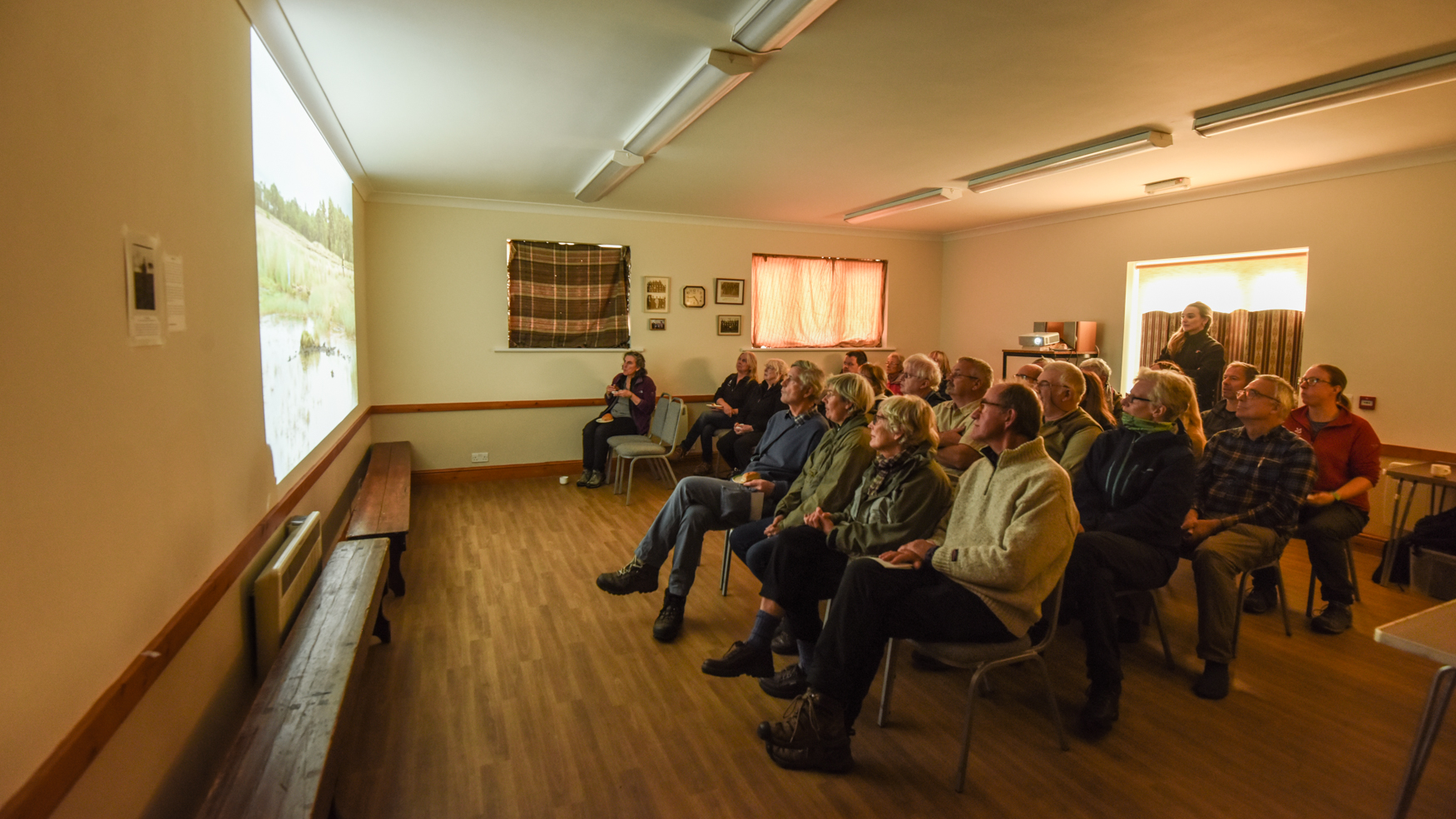
In the hall there was plenty of time for people to chat and find out more about Bolton Fell Moss and about the Moss of Many Layers project. People arrived who hadn’t joined the walk, it was a real pleasure to meet so many people who live locally and have their own connections with the bog. There is a lot of pride in this wonderful place!

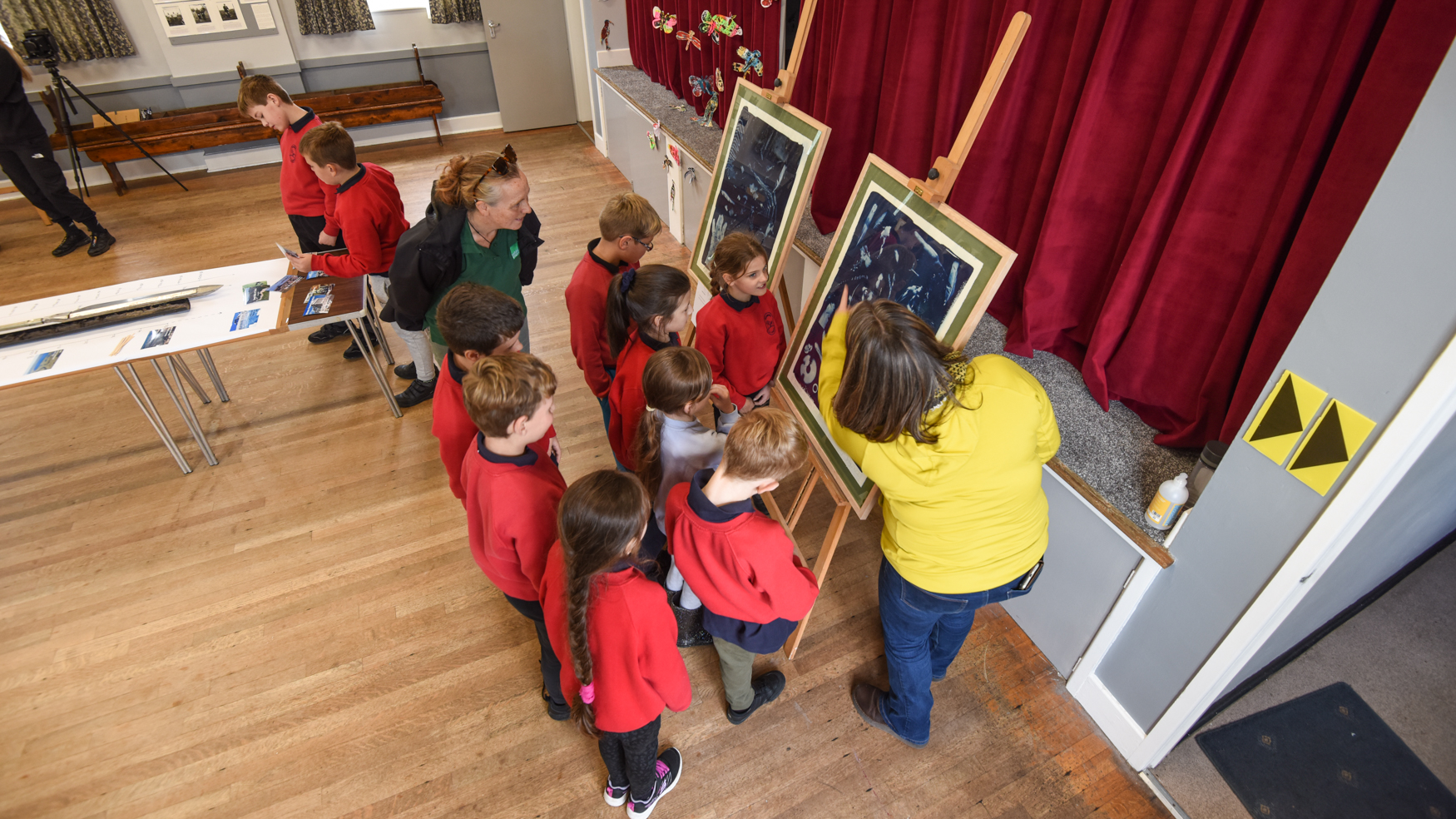
The ‘star’ of the show was the peat core, which at more than 8-metres long took pride of place. Other work on display included Helen’s beautiful map; a series of portrait images taken by Rob, to share the faces and stories of people connected with this place; artwork from Shankhill Primary School children and young people from William Howard School who have worked with Anne; information about the Moss put together by Emma; a set of poetry written by Harriet; and a drone and GPS tracking devices that the scientists have been using for their research. And Juliet’s film had its premier with back to back screenings.

As with most gatherings, the party extended into the kitchen, and around the wonderful ‘Moss of Many Layers’ cake.

The best way to tell the story is through some images of the day. A digital collection of the work that’s been produced will be coming in due course, and we’ll be sharing the film as well. Watch this space!

A cake decorated to look like Bolton Fell Moss, a recovering peat bog. The train in the foreground carried peat in the days of extraction, in the background the cake is green
Every event deserves a good cake

To find out more about the Moss of Many Layers project and the team, visit this page.

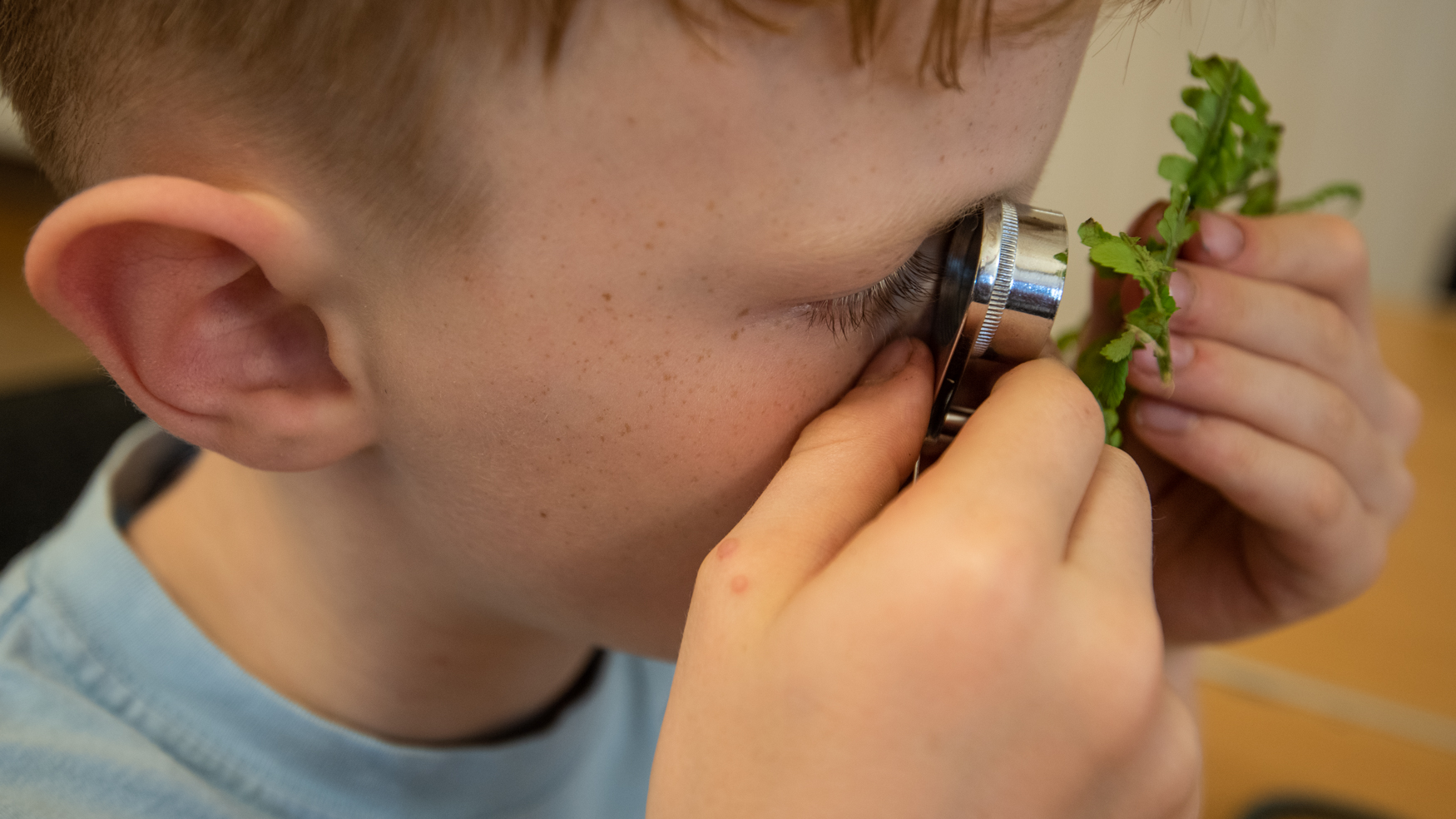
a young child looking at a fern through a magnifying lens

hand in hand

Working with young people: Reflections from Anne Waggot Knott


Let’s burrow and borrow,

hand in hand, for tomorrow.


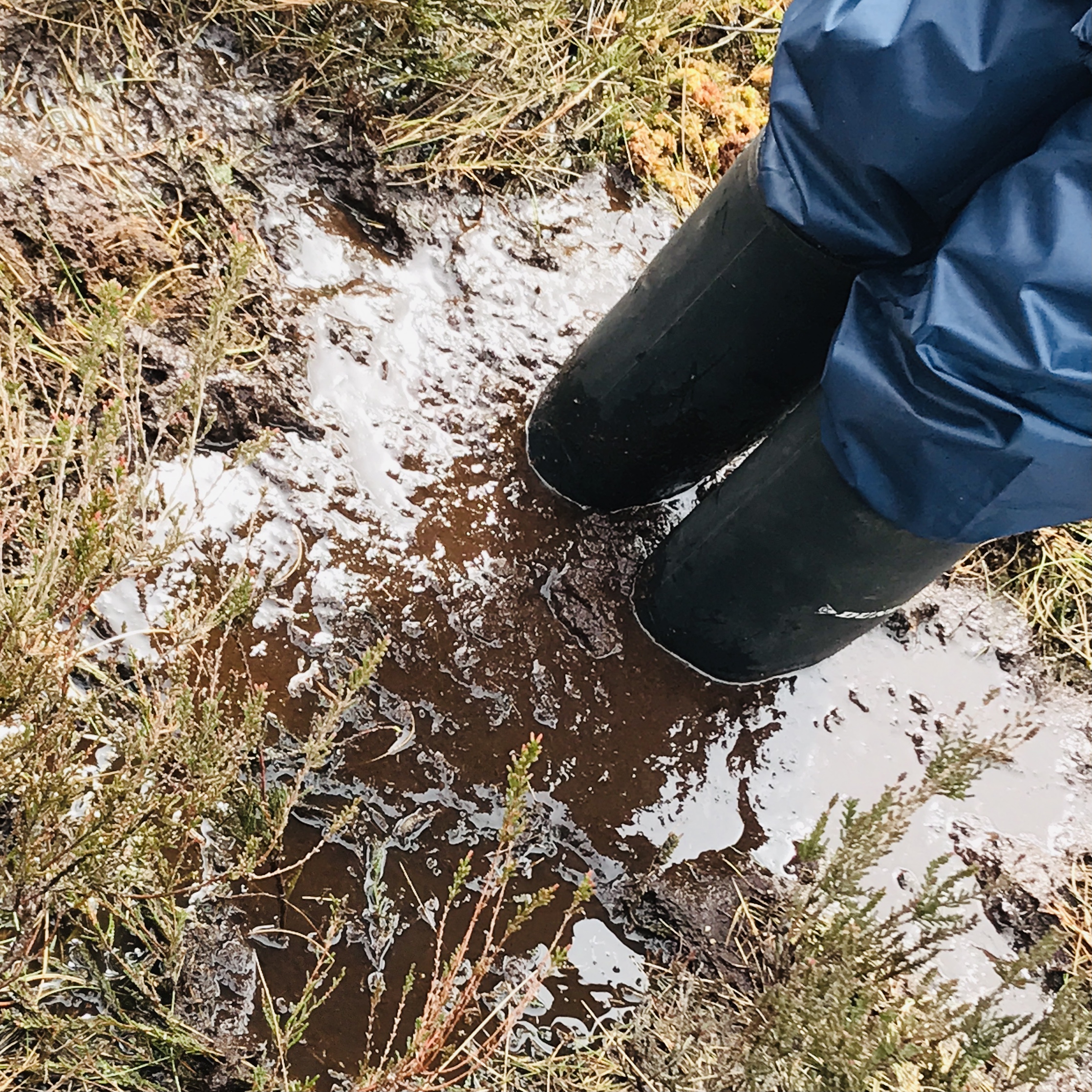
a child's hands squidging a lump of wet peat_creditAWK

The crux of the Moss of Many Layers project has always been about facilitating a deeper connection between the community and Bolton Fell Moss, more than just visiting the bog and creating work inspired by our visits. Reflecting on our engagement with young people, I think we’ve achieved a rich and profound process of exchange and reciprocity, of sharing and balance, between the students and the bog itself. Not just sharing information and ideas, but a tangible, physical, corporeal exchange.

The students have contributed their time, their minds, their hands and their handiwork. They committed a level of bravery; physical and mental exposure to this unpredictable, new environment and its elements. They’ve been listening and looking and trusting and digging and pushing and probing deep into the peat itself, getting dirt behind their nails, and (literally, in some cases!) immersing themselves the bog. They planted restorative species, putting something back into the landscape, a physical symbol of their involvement.

In return, Bolton Fell Moss has given back to them. As new ambassadors and stewards for this valuable place, they have watched it change through the seasons and they carry with them fresh knowledge and understanding from the land. The bog also gave up pieces of flora and fauna to take away and use in their artwork.

a young child looking at a fern through a magnifying lens

Building relationships

Foraging forces a slow, vigilant journey in the landscape. Through the careful acts of identifying, collecting, handling, protecting and transporting their finds, students developed a sense of ownership and responsibility for these tiny fragments. Their pride was evident in producing their foraged items back in the art room, examining them repeatedly and becoming familiar with the detail. This physical contact with the plantlife over a period of time, this guardianship and forensic examination, cements and reinforces a relationship, like hugging or holding hands.

Prior to industrial peat extraction, bogs were similarly part of the community as domestic sources of foraged foodstuffs. People picked berries, fungi and medicinal plants, and enjoyed a familiarity with their peat landscapes. It’s satisfying to have catalysed an intimate, tactile relationship between the bog and people once again. I like to think of the students’ work as a collective portrait of the bog, personifying and celebrating it as we would a prominent member of the family. We’ve welcomed it as part of the community again.

Letting things happen

I had very fluid expectations of these creative sessions. Although structured, I’ve assumed a broad acceptance of whatever the students and the bog bring to the table on the day. The act of making has proved fruitful as a vehicle for continued, pressure-free conversation and discussion. As we drew and stuck and printed, we’ve created so many opportunities for holistic conversations, anchored in the bog but relevant to the climate emergency and the way we use our natural resources. The students have enjoyed an opportunity to manifest their findings in a personal way, playing to their own strengths, reaching their own conclusions, and processing their experience with no judgement or assessment.

Art, science and community

I think we’ve also helped to embed the idea, early and subconsciously, that science and art don’t sit separately. And that this is a generation of connected, multidisciplinary young people who are broad, creative, confident, analytical thinkers, capable of bringing great breadth and depth to future environmental research and policymaking.

Artists and scientists work in similar ways: we research, experiment, create outcomes, disseminate and evaluate. From my perspective, Moss of Many Layers exemplifies the successful intertwining of approaches and processes, with funded time and space for experimentation. It has created a basis for triangulating art, science and community around our protected landscapes. It’s encouraging to see many more research and engagement projects take this approach as a matter of course, recognising the value of embedding artists and scientists in relationship with our natural world, hand-in-hand.

a child's hands holding the root ball of a plant
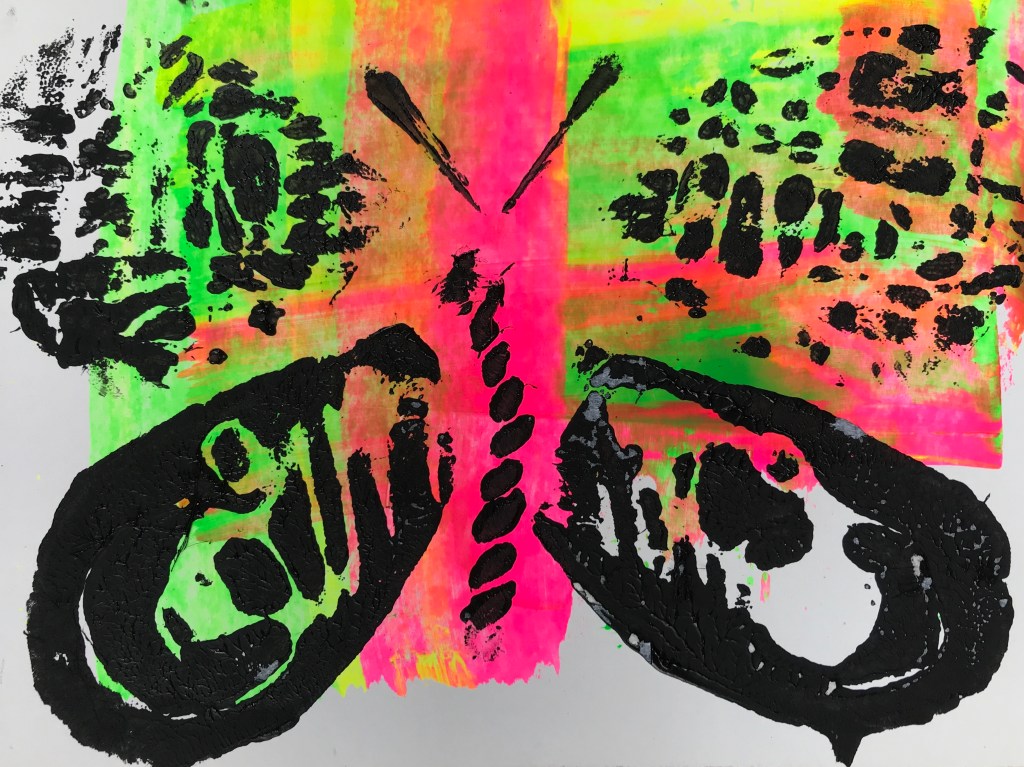
a child's bright collagraph print of a butterfly

Find out more: the NERC-funded Moss of Many Layers project.

Jack Brennand’s Moss reflections

Learning about bog life, restoration, carbon sequestration and arts-science collaborations … here’s a short film of Jack Brennand, PhD student at Cumbria University, talking about his research into bogs and peat and his experience working on the Moss of Many Layers project.

Film still: Simon Carr on Bolton Fell Moss

Restoration Joy

A quick post with a short piece of ad-hoc filming at Bolton Fell Moss back in December 2021. Dr Simon Carr, PhD student Jack Brennand and Natural England Senior Reserves Manager Emma Austin share their delight in the progress that’s being made. Looking over some of the peat milling fields, they explain what we can see. Restoration work has included the creation of bunds, where peat has been moved to re-profile the land so that water can begin to settle.

Slowly, mosses and grasses will begin to colonise but all this happens much more quickly with a little help. Jane Barker of Barker and Bland has been critical in this process, and some of the restoration work on Bolton Fell Moss has involved adding sphagnum moss and cotton grass back to the bare surface of the peat.

More about this process, the way peat works, and what’s needed to restore damaged peatlands, will be shared on the Wide Open Day, and in the work that Rob and Juliet are creating with their photographs and film.

For more on the team, see this page here.

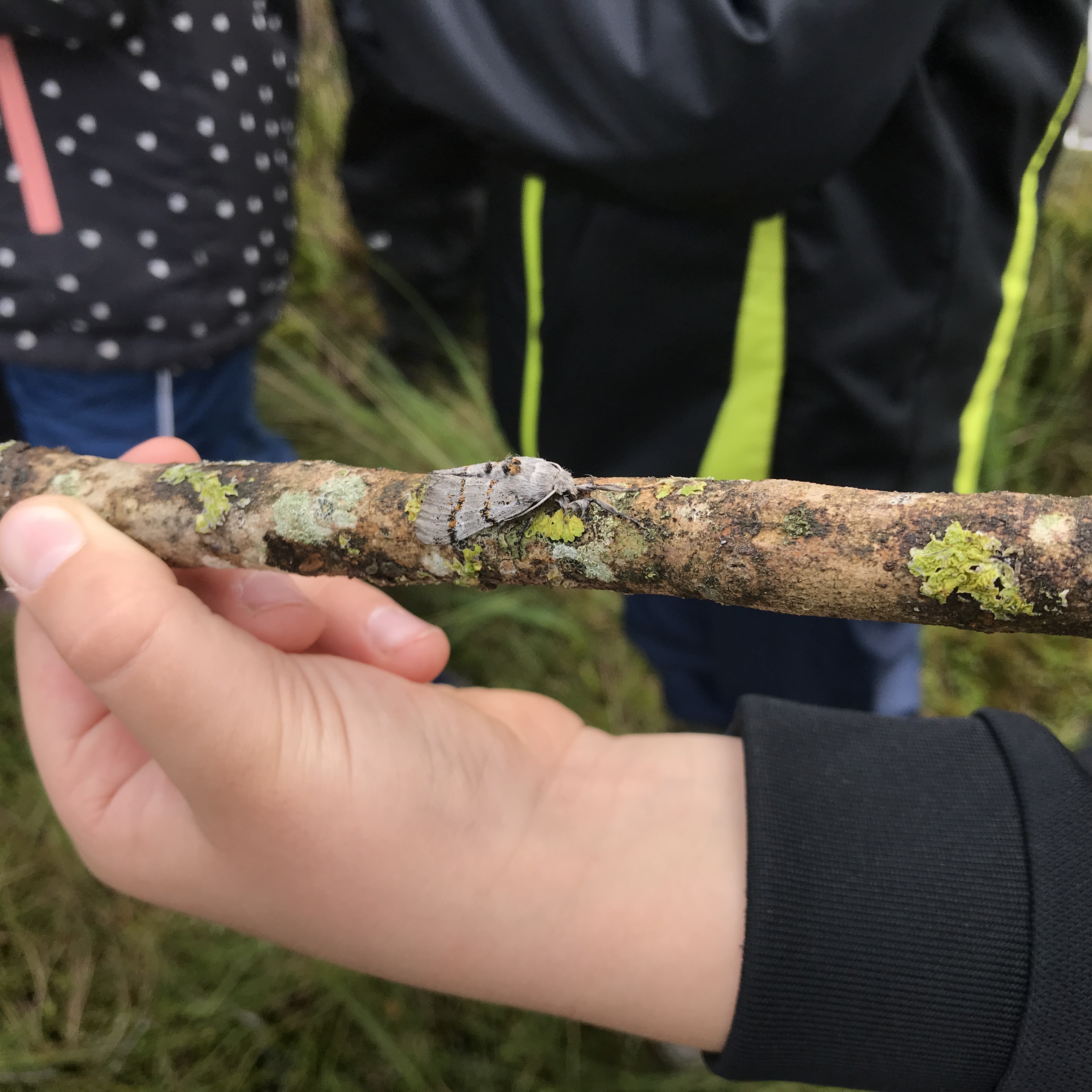
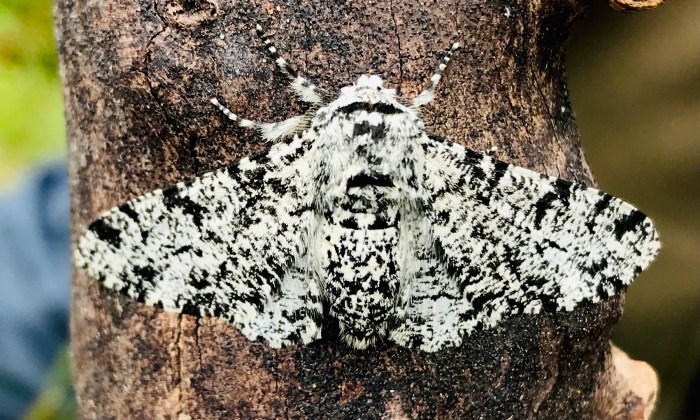
Animage of a pepper moth which is black and white, shown against a branch

Many layers

A blog from Anne Waggot Knott, reflecting on the Moss of Many Layers project


a school minibus in the distance, driven by sideways rain

heralds the widening of eyes

and the blooming of minds

in the wilderness


Animage of a pepper moth which is black and white, shown against a branch

As we reflect on the second of three creative activity sessions with young participants on Bolton Fell Moss, I realise we have now really begun to unpack the many layers in the title of the project.

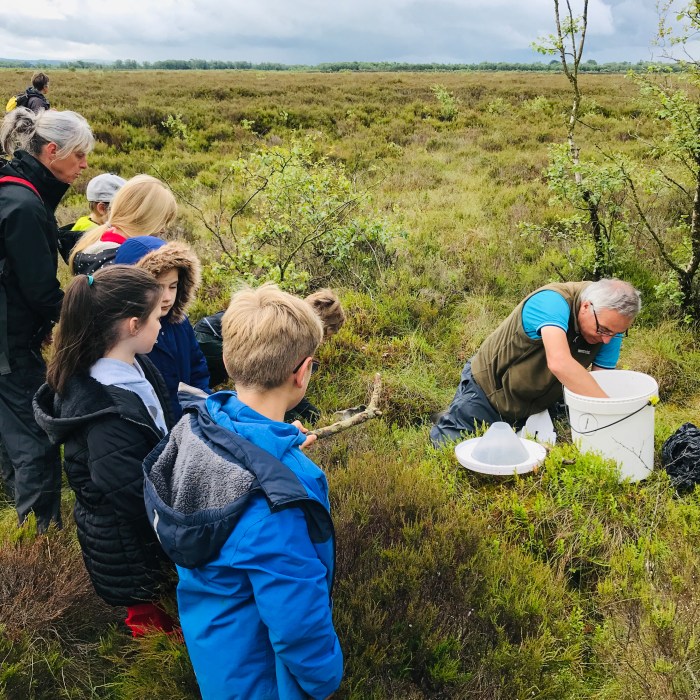
This visit was all about exploring what lives and depends on the moss: plants, insects, spiders, moths and birdlife.

We unloaded moth traps, uncovering beautiful, fragile beasties camouflaged against lichen and logs. We foraged for slugs and beetles and squirmed as a mass of spider babies spilled from their mother’s egg sac. We wafted our sweep nets after butterflies and captured all of the breathless wilderness wonder we could find.

A line of children on a mossy piece of ground watching a man reach into a moth trap to see what they have found
Looking in the moth trap

Our final exercise was to guard ‘curlew eggs’ (actually hardboiled chicken eggs), encouraging the students to understand the vulnerability of ground-nesting birds. I had to leave them at this point but the pupils each took an egg and spread out intrepidly to find their own nesting sites out on the reserve.

I turned to face the rain and my trudge to the car park. As I looked back across the vast expanse of heather, I could see little eight-year-old heads hunkered momentarily alone in the moss; sitting grounded like curlews on a nest, looking quietly around themselves with a new wonder and awareness, fully entrenched in their environment. They were totally absorbed, individually forming new ways of understanding the world.

A child making a picture of a moth by sticking fabric and buttons to an outline of a moth
Collograph plate

Reinforcing and embedding this experience through creative activity is a challenge, a layer of learning for me and for the other delivery partners too. This time we made collagraph printing plates inspired by the beasties we found, using recycled and repurposed collage materials, embedding another level of environmentally sensitive practice into the project.

An image showing the process of making a collograph print, creating a moth with drawing, ink roller, ink pad and print shown on a table

One of the most rewarding things about truly multi-disciplinary science-arts engagement is that we can find ways of reaching every individual participant. As an accompanying teacher pointed out last time, literally everyone enjoyed it. A neurodivergent student was completely mesmerised by the insects and moths. This generated a new admiration from their classmates and helped them focus on the follow up creative session too as they were already hooked. Abstract printmaking is satisfyingly inclusive – it doesn’t matter if you ‘can’t draw’ – it’s just mark-making at the end of the day – and the vibrant effects look enticingly cool. 

Also enticingly cool are these climate change faces produced during our reflective debrief. We hadn’t talked much about the bigger picture of carbon capture and storage during this session, focusing instead on flora and fauna on quite an intimate scale. But these expressive, striking images paint a thousand words and give me confidence that pupils have made the connection with the broader environmental catastrophe. I hope that by delivering sessions like this, we will help them develop a broad range of tools and knowledge to really make a difference. 

Climate change faces drawn by children on yellow and pink post-it notes
Art piece: Determined Pasts (iii) by Anne Wagott Knott

Determined Pasts

blog by Anne WagGot Knott

Determined Pasts (iv) by Anne Waggot Knott

Pitted metal, sinking, taking its stories down. Broken remnants of an excavation that shattered our bonds with this earth.

And now we pit ourselves against the tide of time, to build a fire once more. Our fingers and minds picking and unpicking, scratching and collecting.


In order to get on with designing forward-looking schools activities I felt a strong need to first make some work about the industrial past of Bolton Fell Moss. This is enabling me to consider and process the history of the site, freeing myself to move on in my creative mind.

Art piece: Determined Pasts (iii) by Anne Wagott Knott

Often we only understand a place in the context of what we can see there now, but the now is built on layers and layers of history. To understand a place more fully, we need to go back in time. This is particularly true of a peat bog.

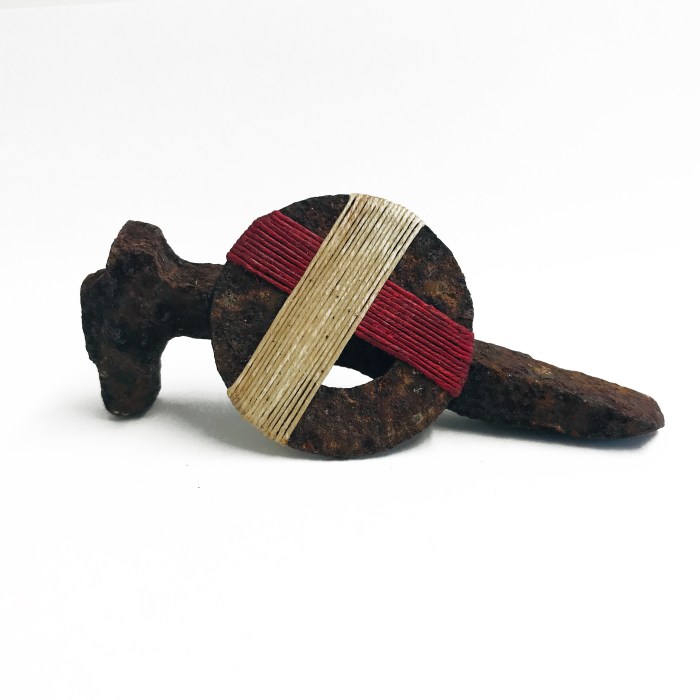
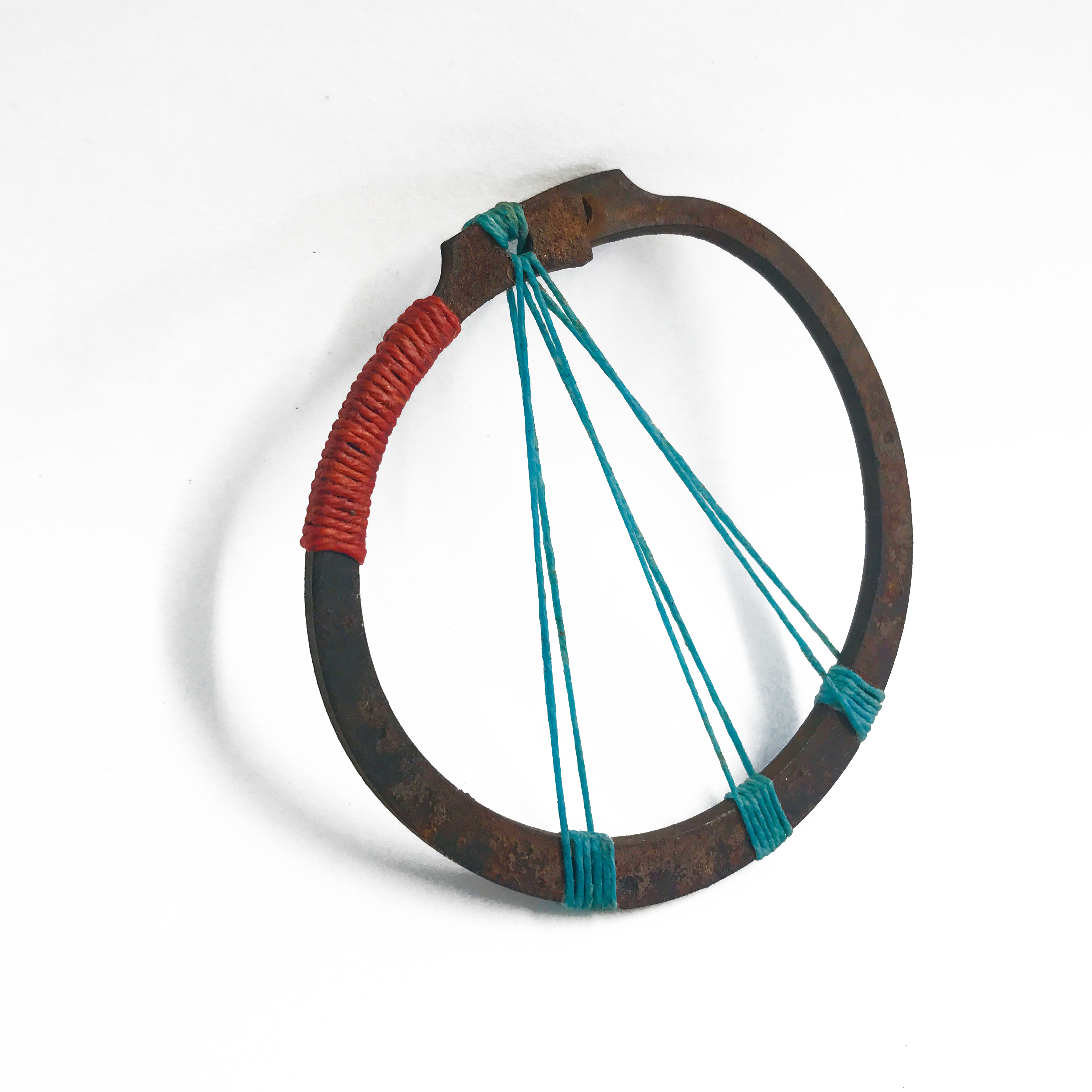
I anchored Determined pasts around rusted metal fragments scavenged from the peat bog, left behind when the peat excavation came to an end. I think I have coined a new term: peatcombing.  A Google search for the word reports that “it looks like there aren’t many great matches for your search”, which is a rare and rather lovely thing to read.

I embellished these industrial remnants of peat excavation with waxed linen, a natural, malleable material. The colours of the thread are inspired by field visits to the bog, evident in the flora and fauna and the huge sky it shares with all of us.

Determined Pasts (i) artpiece by Anne Waggot Knott

By weaving the colours of a bright future around the redundant machinery parts I am wrapping up the destructive, invasive history, swathing and choking it with our newfound determination, our will to change things for the better. I am packing it away into the past and changing its context, but preserving its memory for a new and thoughtful audience.

Borrowing from ancient craft techniques, like weaving and basketwork, lends these pieces the aesthetic of archaeological relics or talismen. They toy with our recognition of time, seeming older than their rusty components, like trinkets from a pre-mechanised age. They blur the boundary between artworks and artefacts, between gallery pieces and museum exhibits.

And so I look back into the past and forward to the future. Understanding the long, deep passage of time, well beyond our own generation, is crucial in our quest to protect and nurture our peatbog environments.

Anne is one of the PLACE collective artists working on Moss of Many Layers. As part of her work, she is running creative activities with young people from nearby schools, helping them enjoy and engage with Bolton Fell Moss, a peat bog in north east Cumbria. The bog has been intensively excavated and depleted, the peat extracted for compost over a number of years, resulting in severe degradation. It is now a National Nature Reserve, and is being slowly restored.

Determined Pasts (ii) by Anne Wagott Knott

An adder (snake) pictured among heather, with its head raised.

Shifting grounds – mapping Bolton Fell moss

Guest Blog from Helen Cann

As part of the NERC-funded ‘Moss of Many Layers’ project, Helen has been commissioned to create an artist map of Bolton Fell Moss – a 400-hectare site that has experienced large-scale peat extraction and is now being restored. Helen’s map will show the bog’s industrial peat cutting heritage, ongoing restoration, and its future state as a National Nature Reserve, which will also be a massive carbon sink.

Helen has been busy researching from a distance, and has been talking to other members of the Moss of Many Layers team and was finally able to visit the bog to find out for herself just how it looks and feels. The  blog is Helen’s description of her day there last week when she visited with Rob Fraser (photographer).


“We walk over the old milling grounds to the Reserve Field, the four of us – the current warden, the volunteer (an ex-warden), the artist and mapmaker. Most of us know the lines of this land. I do not.

I have mapped it in my head, of course, researching online, digitally flicking through the yellowing pages of ancient books written in Cumbrian dialect and old land documents. I have an idea of Bolton Fell Moss but, like those papers viewed through a screen, that idea misses any kind of real life energy.

Now I’m here.

An image showing dried grasses and exposed, dark peat, extending into the distance: a raised bog.

It’s different to how I’d imagined. Wide skies. Less bleak. Parts are still scarred a burnt black, as if scorched. The evidence of peat milling shows as giant scrapes across the land but in places, those lines are softening with moss and rush, or silvered with water reflecting the early spring clouds. The landscape has shifted to something else over the past few years as it’s started to recover.

We stand on the Reserve – the small part of the Moss that was untouched by industry. To demonstrate the surface instability, the warden and the volunteer jump up and down. As they land, I watch ripples spread out across the mounds of moss like a small earthquake. This whole world feels like a strange but perfect animal – part plant, earth and water and forever moving. The sphagnum moss on the surface holds water like a sponge, keeping the peat underneath it wet; exactly how it needs to be for the bog to act as a carbon sink and for its delicate ecology to survive.

We walk further. It’s clear we’re not alone and share this space with many others. We hear the bubbling call of the curlews before we see them. Blunt tailed, they fly as a pair, their scythe-like beaks almost half the size of their bodies. They’re an unlikely-looking bird for sure.

A hare sits against the black earth in the distance. She turns her pale eyes towards us – and then she is gone.

Against the sphagnum and the silver heathers basks an adder, his back a graphic pattern of blacks and whites. The bog trembles as we step closer. The snake must be able to feel us but the sun is too seductive and he flattens his body some more against the highest hillock. We walk on. When I turn back, I’ve lost him, camouflaged against the grey of the ling. The warden finds the spot again, practised in reading the mounds of moss like a sailor can read the waves.

An image of an adder with diamond shaped black pattern along its back, resting on heather and pale mosses.

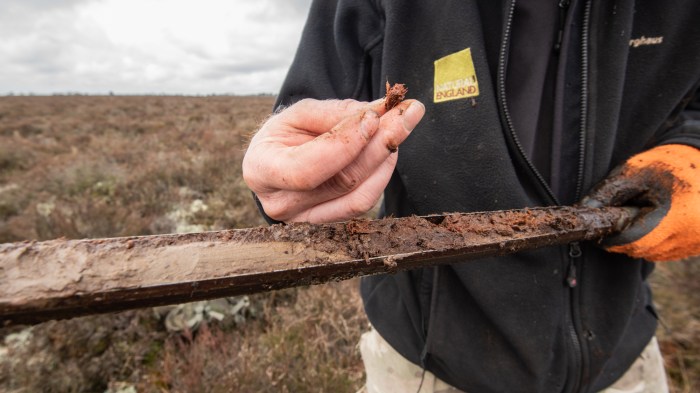
The volunteer and warden offer to take a core from the bog for us. A huge pipe, open on one side, perhaps a couple of centimetres in diameter and many metres in length, is slowly twisted into the ground like a corkscrew. The pipe is pushed down through, perhaps, 8 metres of peat until it hits the bottom. They pull it out with a cheer, as if unbottling champagne. Inside the core it’s clear to see the layers of peat changing in colour and texture as climate and interaction with the land has changed. This place has always been shifting.

Two men on a heather-covered piece of ground, holding parts of a very long straight pole, which is used to get a core sample of peat.

At the very bottom of the core sits grey glacial mud full of tiny stones. It comes from a shallow lake that must have been here during the Holocene. I scrape some of the clay out and ball it in my hands, pushing my thumbs in to make a simple pot. An age-old human interaction with the earth.

A woman and two men are looking at a peat sample taken from 9 metres beneath the surface of a raised mire.

The colour of the layers in the core rises to warm, wet browns of moss and plant debris that once fell into that lake, eventually to compact and create peat. I find an 8,000 year old birch twig, its bark still preserved, and the husk of a seed, the ghost of a life.

An image of a person standing and holding a peat corer, with some plant matter held between their fingers. the core shows peat as well as clay. the emblem on the person's jacket reads 'Natural England'.

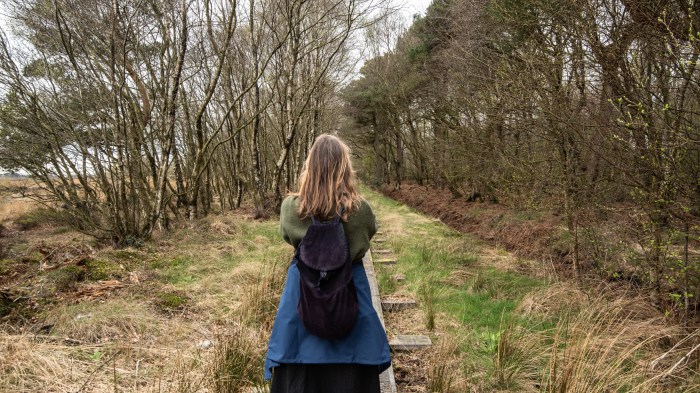
Rob and I tread the boardwalk to a small central island of trees to take photographs. The boardwalk is being relaid and there’s a smell of fresh cut pine. It mixes with the yellowgreen scents of the Moss, cut with sharp ice off the Fells and the warmth of valley silage. The wind brings the calls of lapwing and greylag geese.

An image of a woman facing away from the camera, with trees either side.

We sit on a massive bog oak that reclines languidly now, although at one point, no doubt, it was pulled roughly from the peat as inconvenience to the digging machines. Its dry, silver bark reminds me of the patterns of moth wings.

I look out over the site. It’s a work in progress and will be for decades to come. Ideas are being trialled and constantly readjusted to calibrate to a shifting environment’s needs. The belief in the restoration of Bolton Fell Moss as a carbon sink and nature reserve is unwavering for the future though, however long it takes.

A woman sits on an old section of blackened bog oak, sketching in a book.

Now I’m here, I’m less certain of my first map drafts – I will need to change them as the restoration work and the bog itself have changed from my initial understanding. I have to accept that this is a place in flux and my map can only be a document of this landscape at one particular moment in time.

I’m happy, though, that I can take some stories from the Moss today, stories I might never have heard had I not visited. On the map I’ll include the larks and the lichen, the creaking frogs in the rushy pool, the voices of the warden, the volunteer and the artist. The science. The history. The hope. They all add to the multi-layered understanding of a place – to be used in a map that’s not simply a reductionist document of roads or territory.

The world’s climate is shifting now; and so must we. We have to find ways to capture carbon and prevent carbon release. Restoring bogland will help us do that, so in order to encourage this equally shifting landscape, this forever changing land of peat and water and moss, we must learn to shift with it too. And on a personal level, on coming to Bolton Fell Moss, I recognise that my own ideas have shifted and subtly, with them, so has my own world.

We walk back to the car. The yellow sunshine-faces of the coltsfoot flowers smile up at us.

Yellow flowers growing from peat.

To find out more about the Moss of Many Layers, visit this page.

To find out more about Helen, visit her profile page here.