A living artwork: nurturing conversations around land use, care and action
Resonance is a living, growing artwork that brings together people, silver birch trees and peat bogs, in a changing landscape. This project is a convener, connector and catalyst – for new relationships and for community action and conversations about land use at local, national and global levels.
PLANTING EVENTS FOR THE FINAL TWO CIRCLES: MARCH 25 AND MARCH 27, 2026
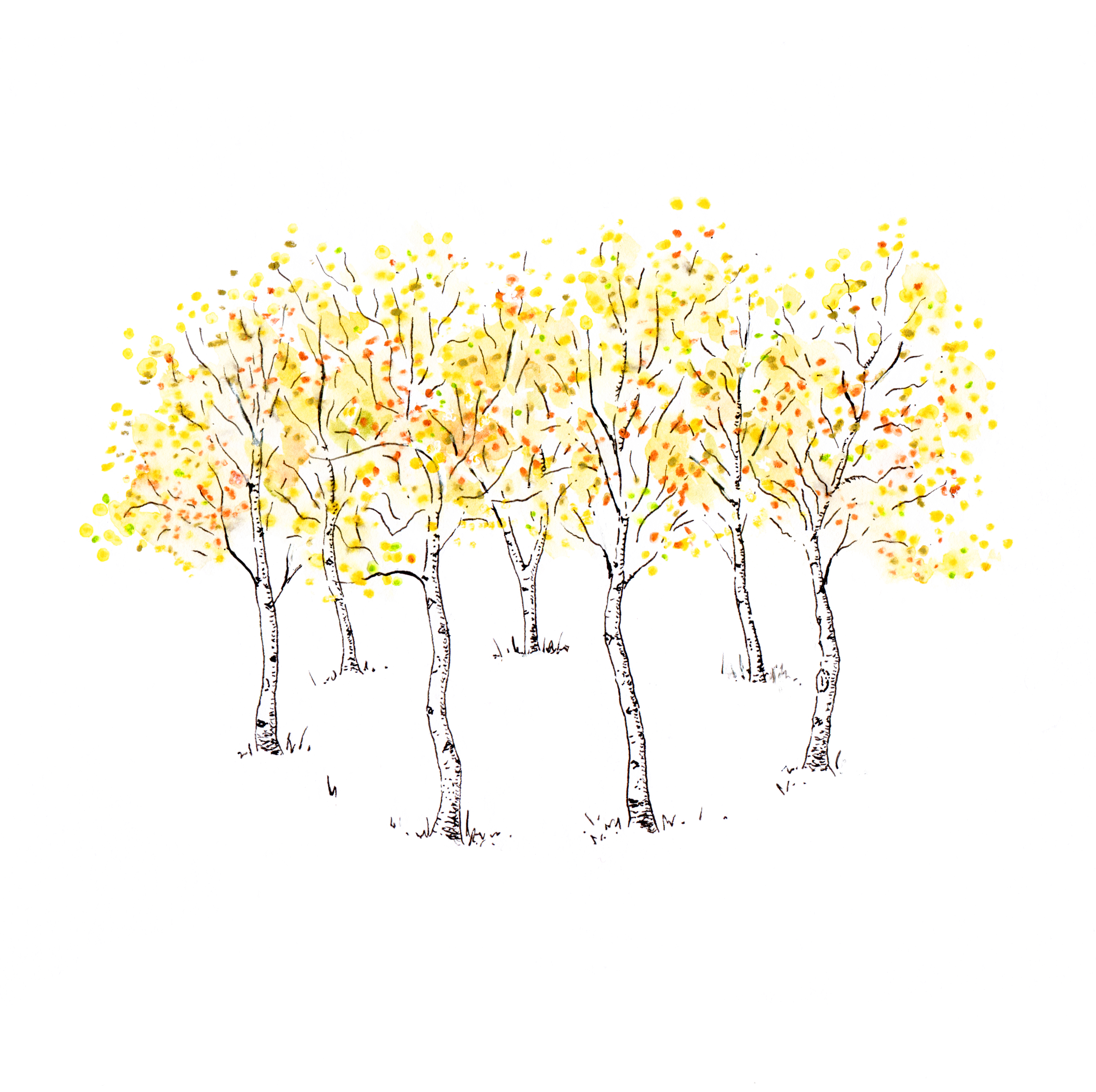
- Seven circles of seven birch trees, placed on seven lines radiating from the centre of the Lake District National Park
- The birch trees have travelled from a peat bog to their new locations: a radical act of care
- Collecting the 49 trees, and each occasion for planting a tree circle, is an event bringing people together from different specialisms and locations – a circle of collaboration, conversation and relationship
- The Resonance film will capture the journey of these trees and the conversations between people along the way, discussing peat, trees, land use, relationships to place, and pathways of change.
- Over the next one hundred years, the trees will grow, each within a different community
In 2025, circles were planted in Grizedale Forest, the Ullswater Valley, the Grasmere Valley, Ambleside, Langstrath Valley; the last two circles will be planted early in 2026. Read about the planting days here.
LUNZ Hub
The Resonance project is part of the PLACE Collective’s work with the UK-wide LUNZ (Land Use for Net Zero, Nature and People) Hub.
The LUNZ Hub is co-led by the James Hutton Institute and the University of Leicester, and has been set up to help drive the transformation of UK land use needed to achieve ‘net zero’ by 2050. It aims to bring people together and collate knowledge and research, to inform practice and policy and outline pathways of change (scroll down for more info). Within the Hub, artists from the PLACE Collective offer artful interventions, curate novel spaces for discussions, and create artistic provocations and reflections on work that is being done across the country, in the context of land use and land use change. Resonance is one element of this work, and is being realised with support from many organisations and individuals (more here).
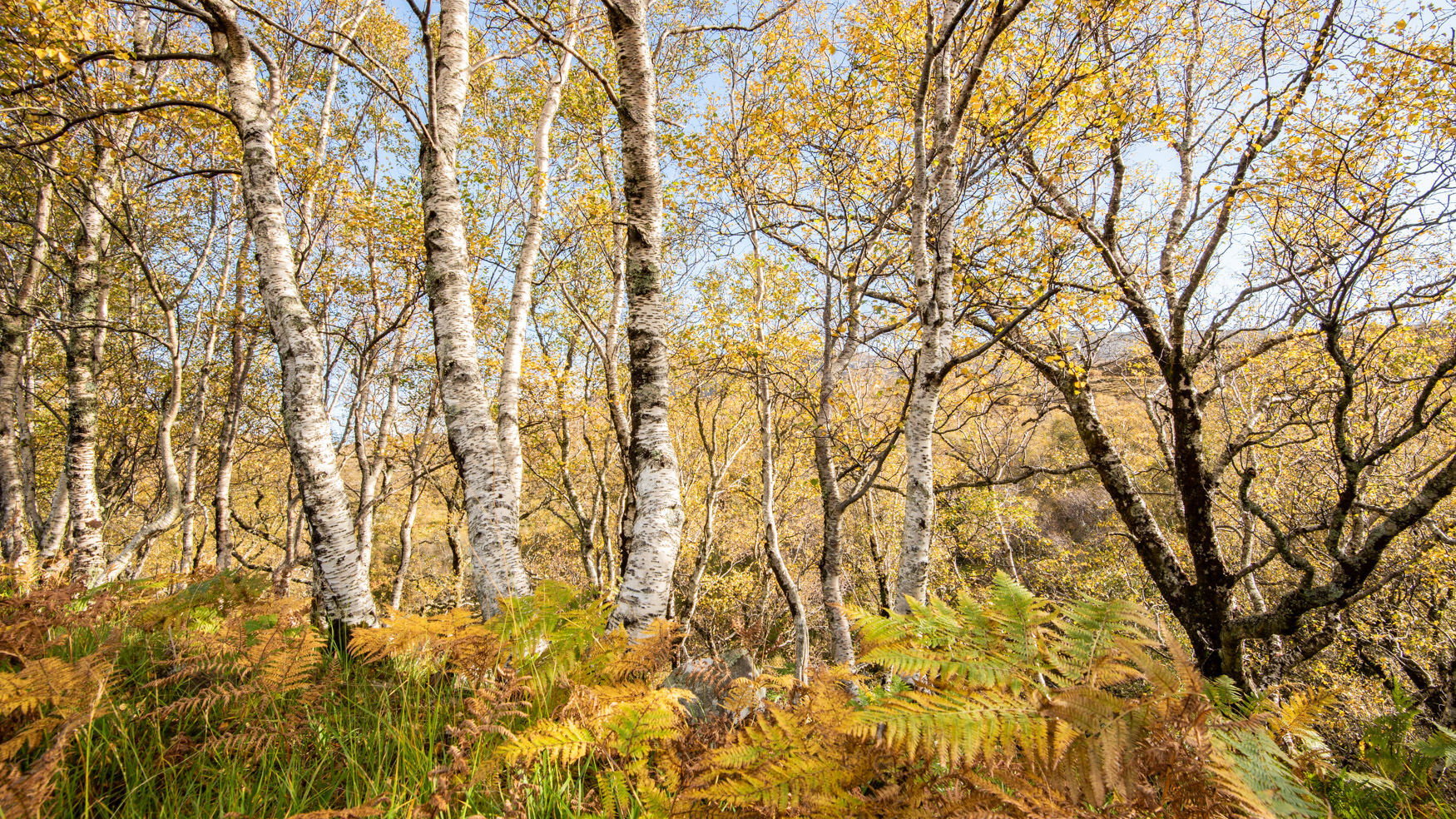
seven circles of seven trees … and one large peat bog
Resonance is sited in Cumbria. It begins with the creation of seven circles of seven silver birch trees: like seven drops of silver. These circles will be planted in the Lake District National Park, at locations on lines radiating from a sycamore tree that marks the centre of the National Park.
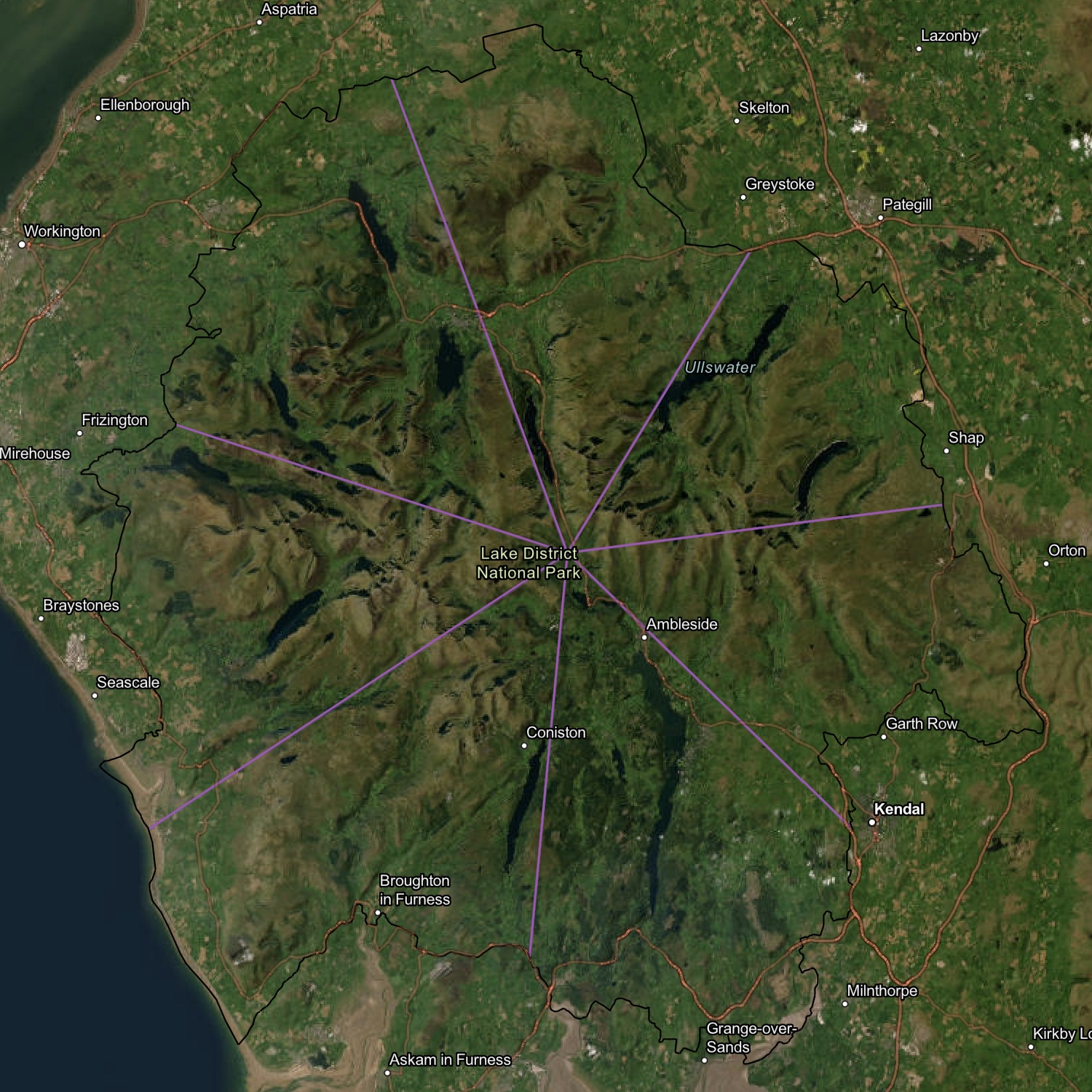
Seven circles of seven trees will be planted on seven lines, radiating from a single sycamore at the centre of the Lake District National Park.
The young birch trees were carefully taken from Bolton Fell Moss National Nature Reserve in November 2024, during the ‘Big Dig Day’, which also included focused conversations in the nearby village hall (read about that here).
Bolton Fell Moss is a lowland raised mire (peat bog) near Carlisle. The bog stretches for over 400 hectares and was intensively milled, extracting peat largely for the horticultural industry, between the 1950s and 2013. Now owned by Natural England, the bog has undergone restoration and is slowly recovering. Where the land is not yet rewetted, thousands of birch trees grow – they are part of the transitional process of life on the bog as the hydrology changes.
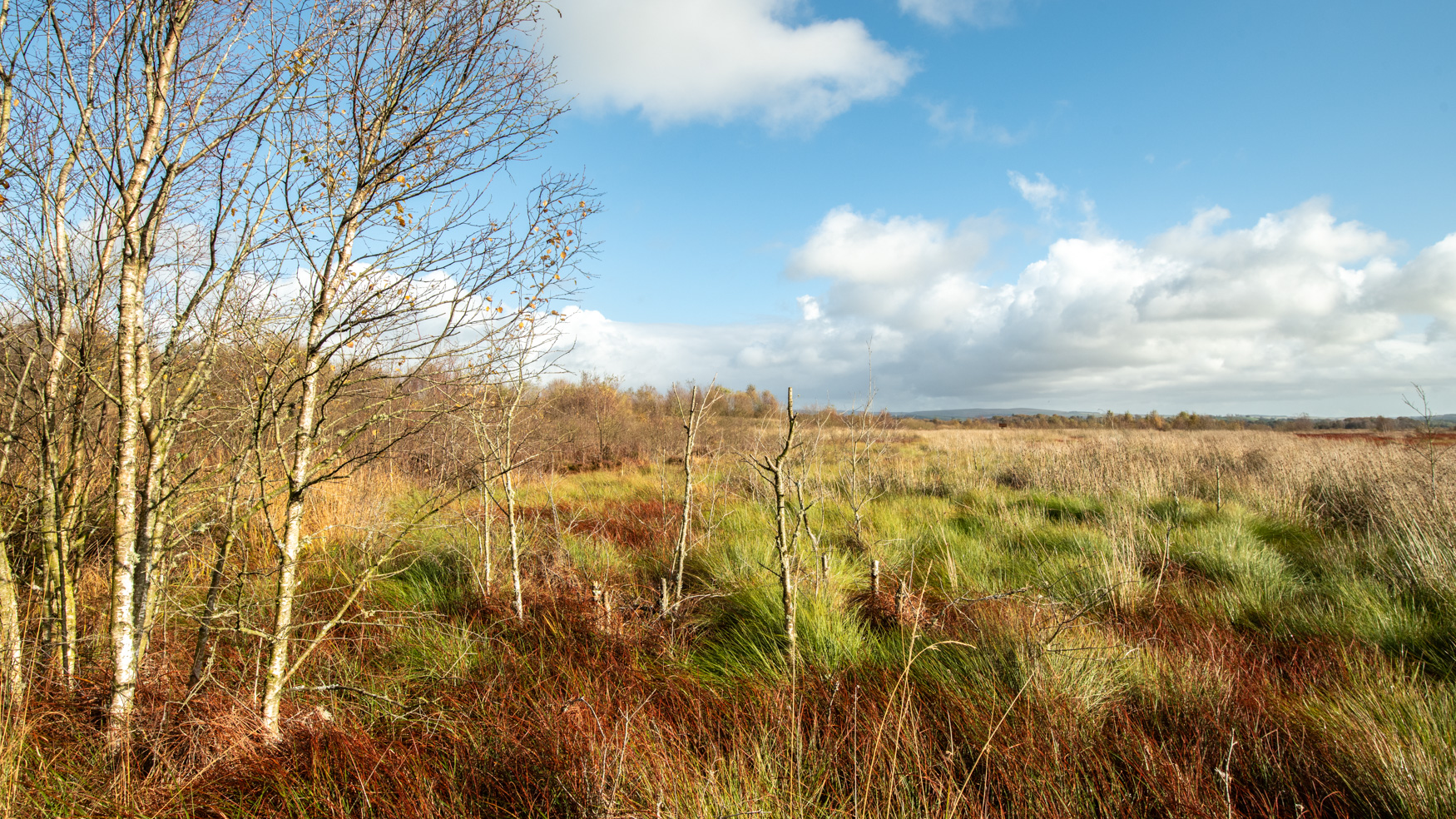
One area of Bolton Fell Moss: birch trees border a wet patch of land. As the hydrology changes and the peat rewets, the birch trees cease to thrive.
In their new locations, the trees are planted in circles that are 3.5 metres in diameter. When the trees are 10-15 years old, an adult should be able to reach out their arms, and touch two trees. At the time of planting, the trees will already be 3-4 feet tall. Read about the planting days here.
In March 2025, the two-day Resonance ‘Big Tent’ event brought people together from across the sector of farming, forestry, land management, research and policy. Read more about that here.
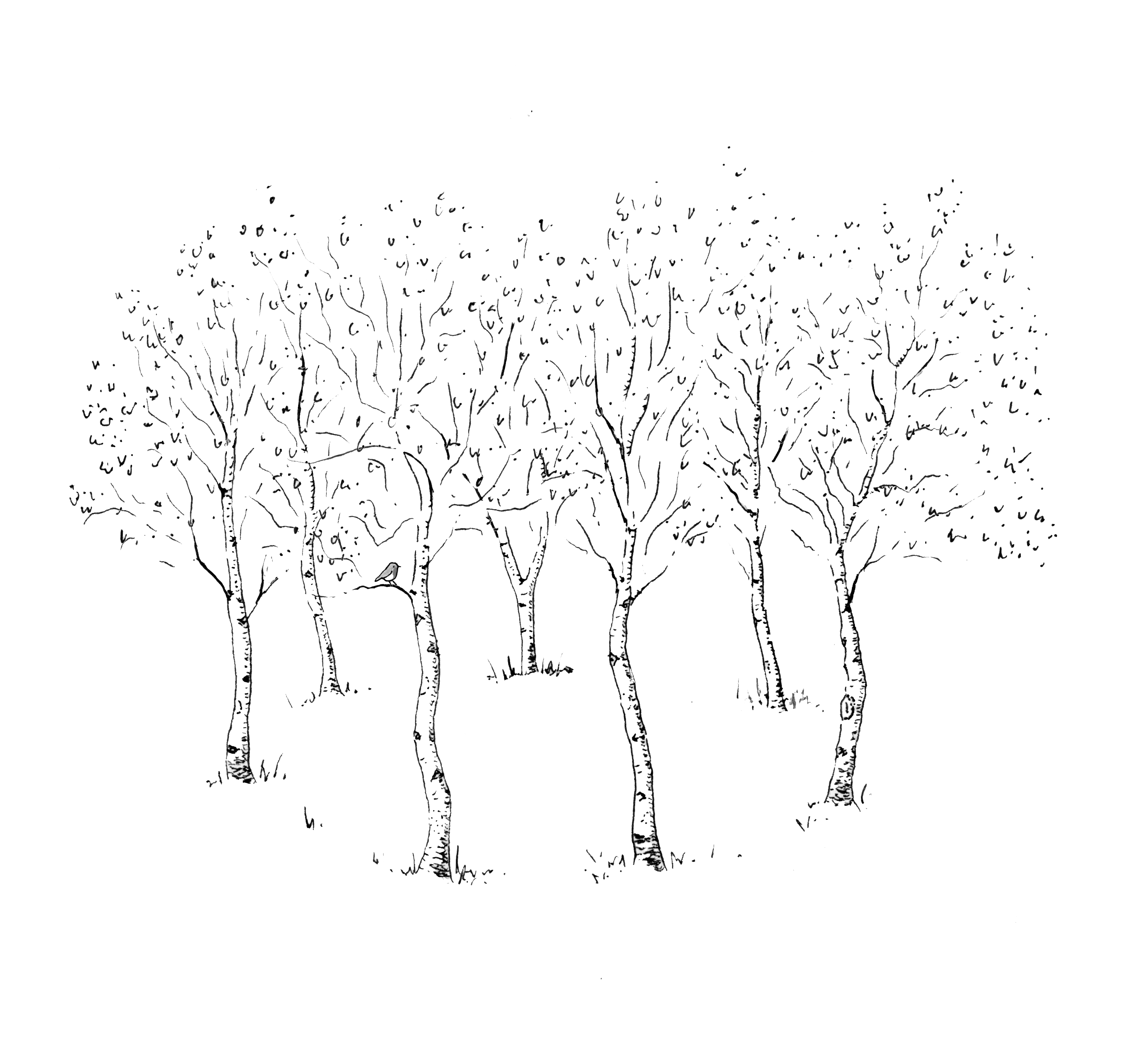
Each circles of seven trees will have a diameter of 3.5 metres.
Connections with Bolton Fell Moss
PLACE Collective artist-researchers have previously worked at Bolton Fell Moss, which is now a National Nature Reserve, through Moss of Many Layers. It’s great to continue the connection with this stunning peat bog, with Natural England, with University of Cumbria scientists monitoring greenhouse gas emissions, and with local volunteers who are monitoring biodiversity on site.
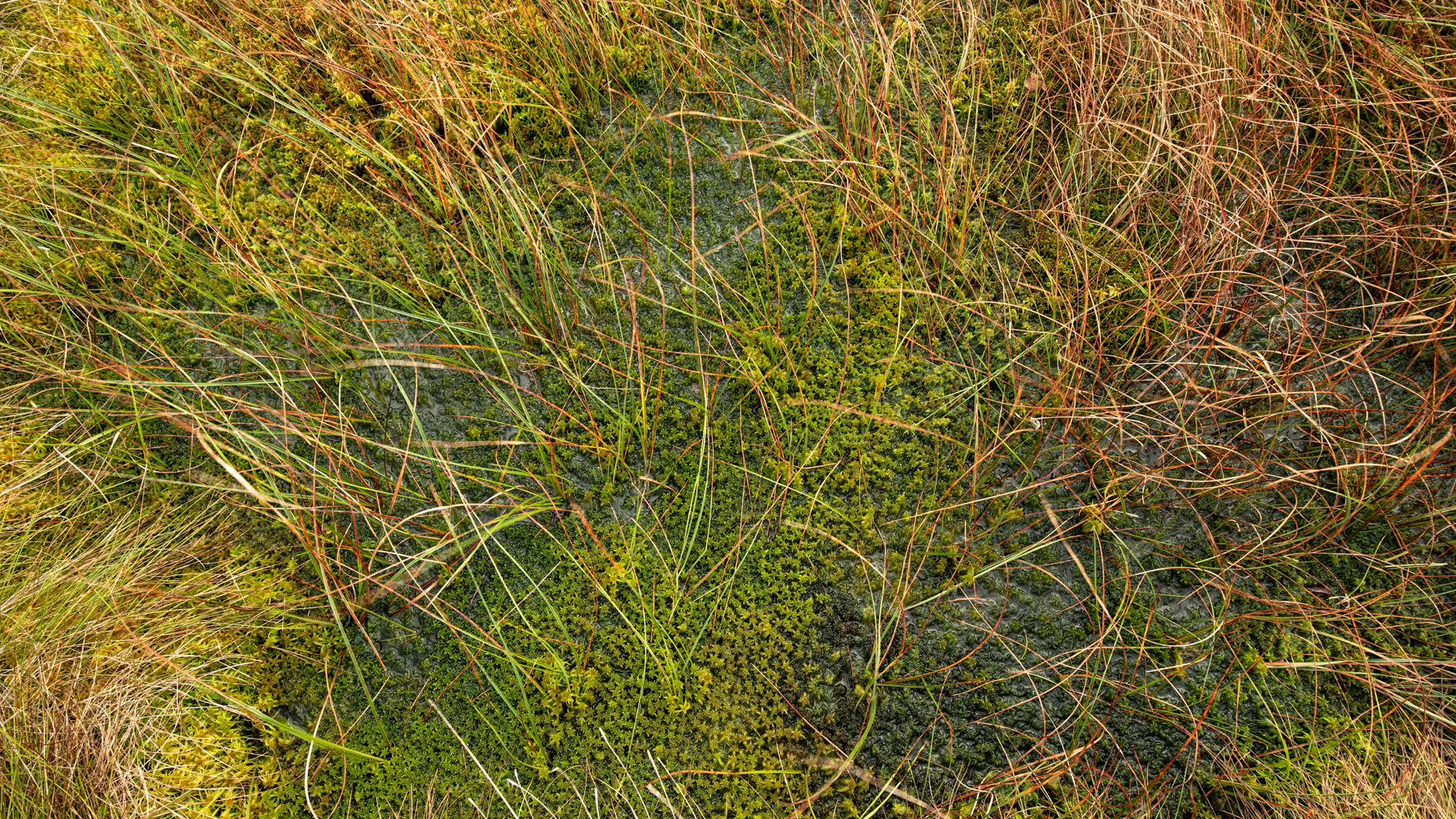
Above: Sphagnum moss thriving in wet areas of Bolton Fell Moss
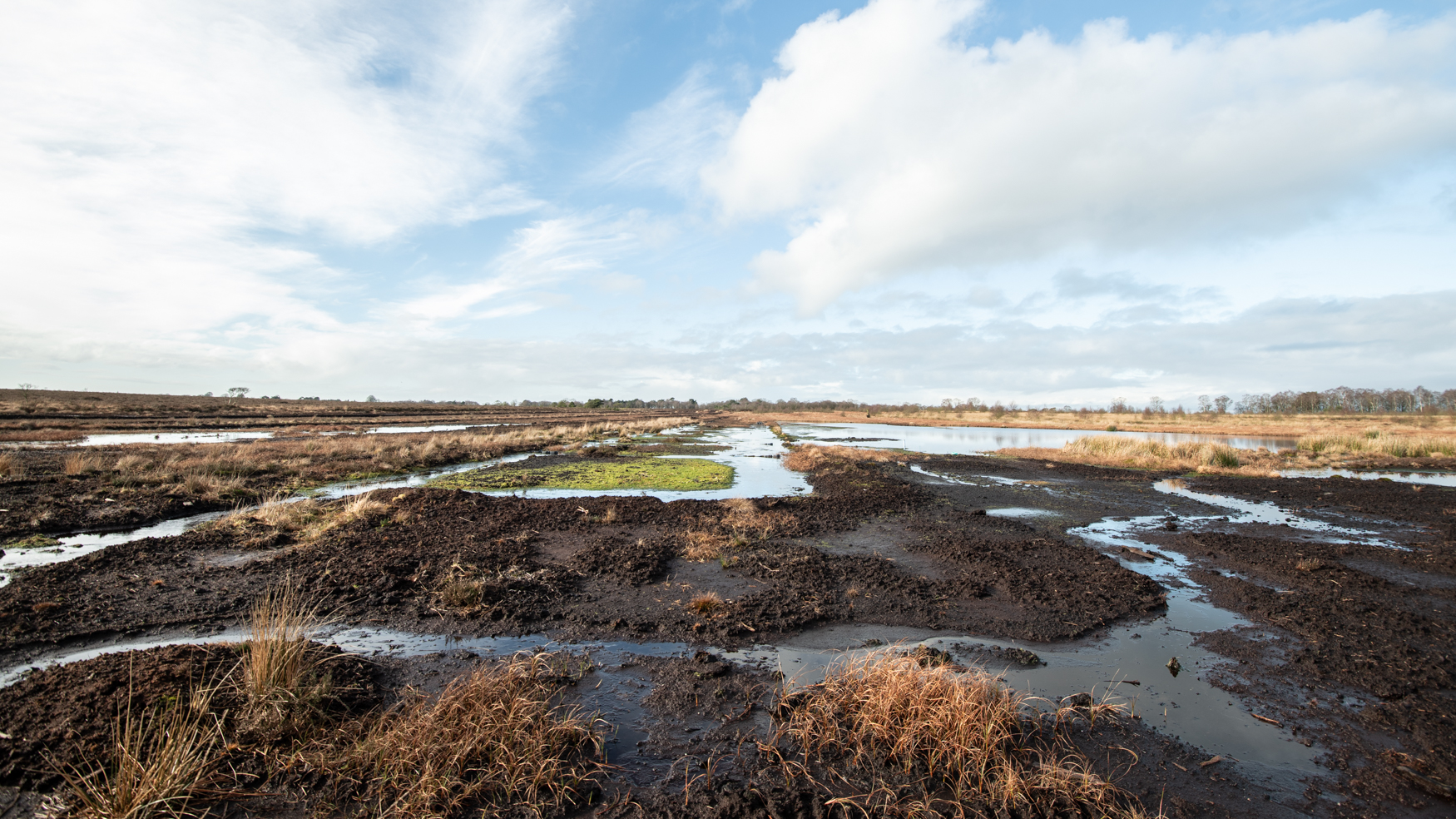
Above: Peat exposed after extraction works, with rewetting in process
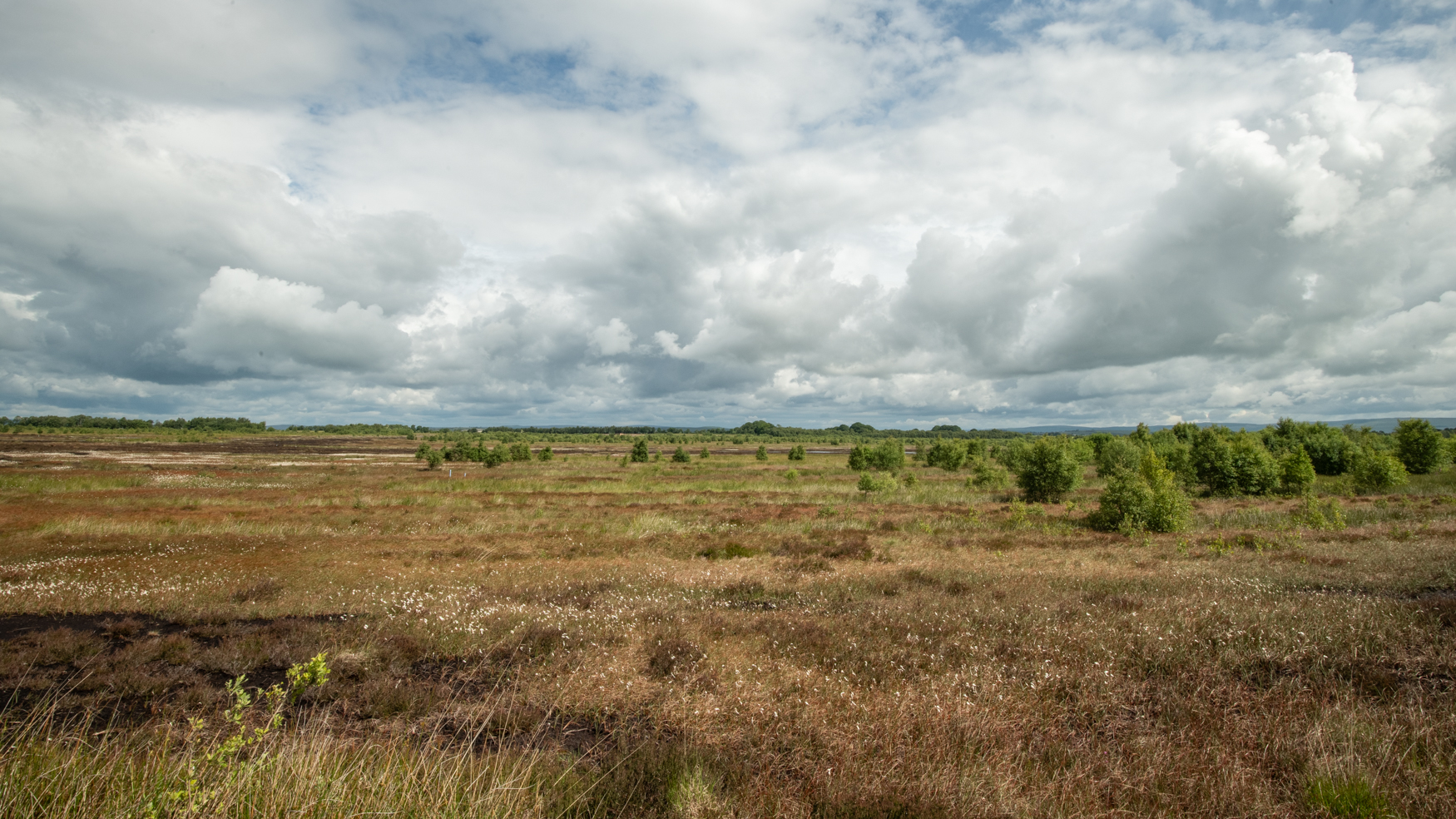
Looking across Bolton Fell Moss, where trees grow in some areas, among grasses and mosses
bringing strands together
The act of collecting trees and replanting them is participatory – people from the local area taking part alongside regional and national ‘stakeholders’ and specialists in soil, trees, peat, land use and agricultural systems. Each event is a forum for knowledge exchange.
Resonance introduces a sense of intimacy to the act of planting trees; each circle has a diameter of just 3.5 metres. The lightly curated planting event is an invitation to pause and reflect on trees, soils, land use, change, and interconnectivity across landscapes and communities and between species and environmental processes.
The project also emphasises reciprocity – between people and trees, between people and ‘nature’: who we are interlinked and interdependent. As such, it is underpinned by an attitude of care and we’ll do our best to be sensitive to the trees, caring for them along their journey and in their final locations.
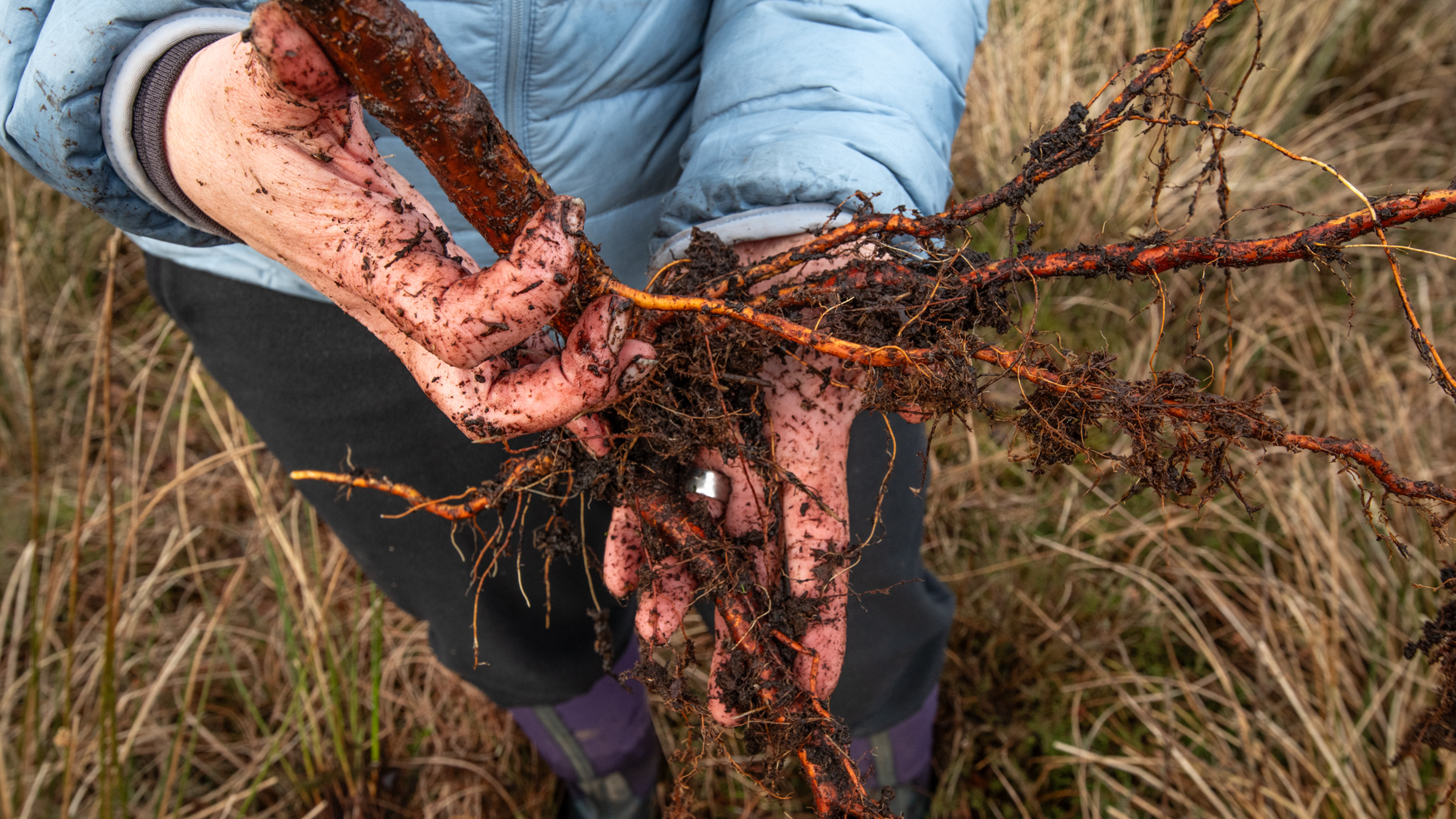
Early in 2024 three small birch trees were removed, to test the viability of replanting.
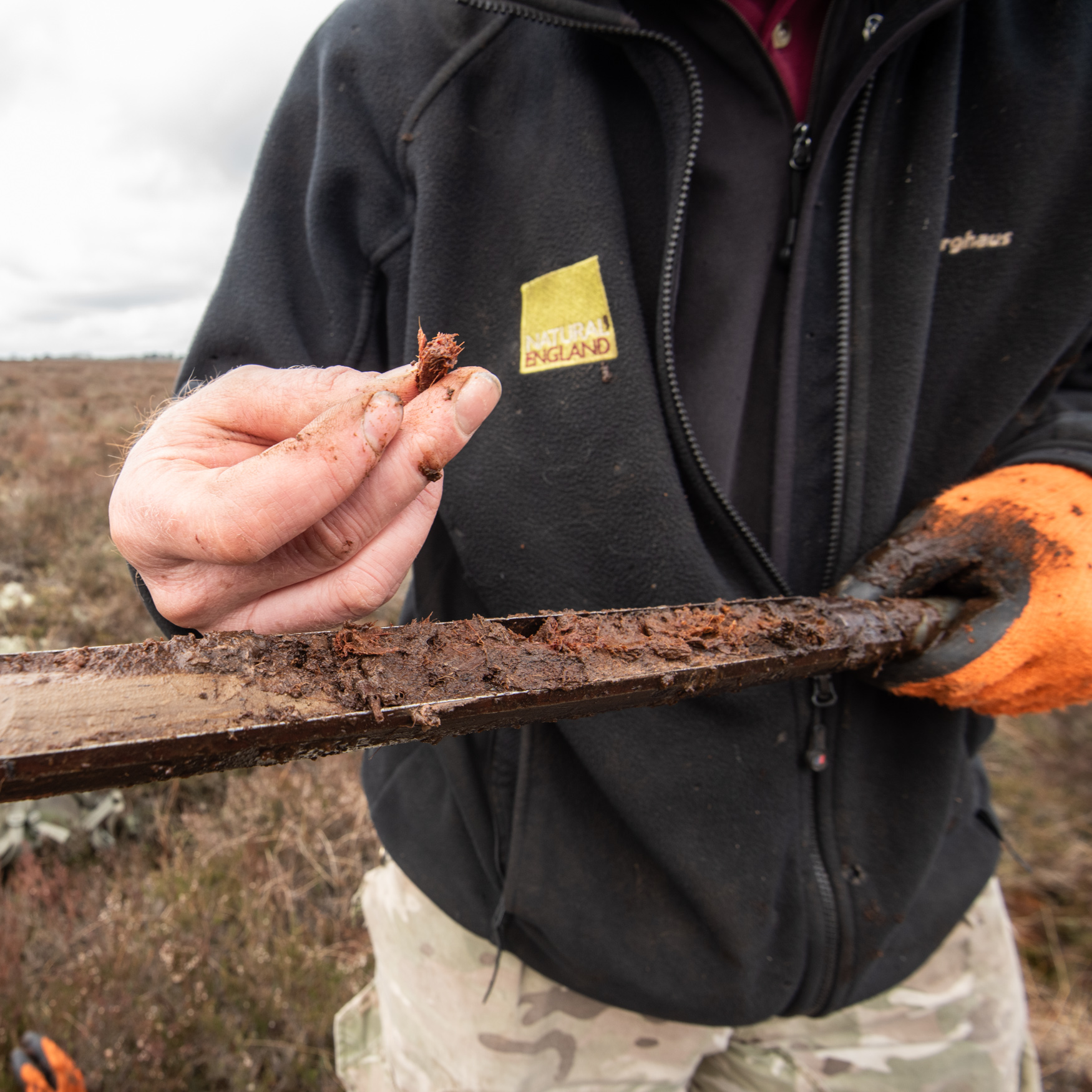
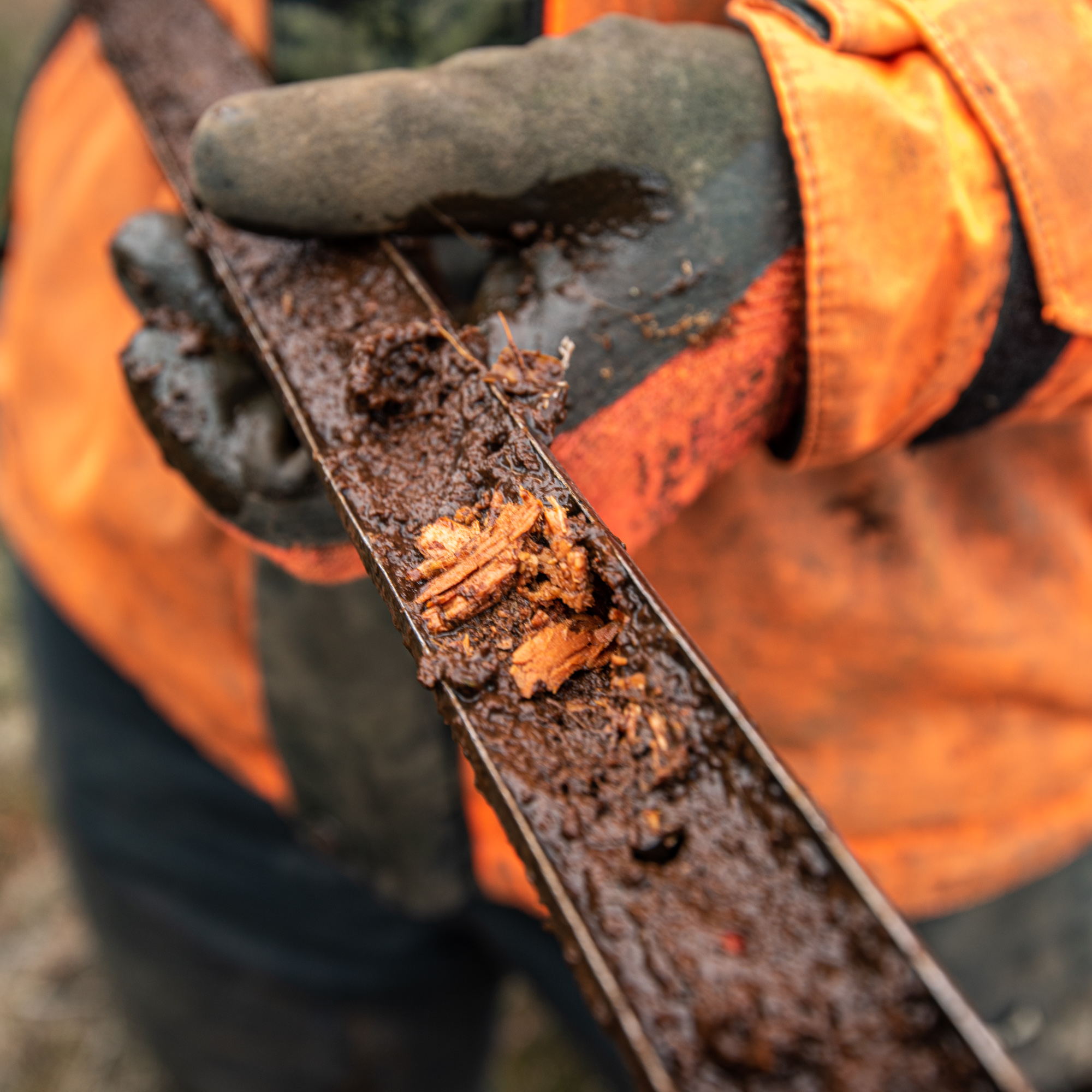
Deep in the peat – more than 8 metres below the surface – woody matter shows evidence of trees growing here in the past
Over the years each tree circle will evolve as the trees grow. In each location their care is ensured thanks to the watchful eyes of local farmers, land owners, and groups from organisations including the National Trust, Natural England, Lake District National Park Authority, Forestry England and Friends of the Lake District. Their potential to remain a focal point for actions and conversations that are place-based, yet touch on issues that are national and international, will unfold in response to the local communities.
documentation, storytelling and further research
Resonance will be documented through film, photography, illustration and poetry, all of which will incorporate a wider narrative about land use and land use changes that bring benefits for nature and people and help in the much wider quest to reduce emissions of greenhouse gases, and increase carbon storage. People who get involved from local communities will be supported to co-design their own documentation and/or events relating to their tree circle. There’s the potential for ongoing research into carbon storage by trees both in peat and in other settings, and research into the ripple effects and impact of these transdisciplinary events.
WHO’S INVOLVED
Resonance is being led by artist researchers Rob Fraser and Harriet Fraser, in discussion with and with support from Natural England, National Trust, scientists from the Centre for National Parks and Protected Areas at the University of Cumbria, farmers from the region, the Lake District National Park authority, and specialists in soil, peat, trees and woodland creation from the LUNZ Hub consortium. Other artist researchers involved in the development and documentation of the project, and delivery of events include Matt Sharman, Juliet Klottrup and Ali Foxon, and filmmaker Reuben Hibbert.
MORE ABOUT THE LUNZ HUB
The Land Use for Net Zero, Nature and People (LUNZ) Hub is a consortium of 34 leading research and stakeholder organisations established to help all four UK administrations address land use and agriculture as a major greenhouse gas emitting sector. Co-led by The James Hutton Institute and the University of Leicester, it will provide UK and devolved nations timely evidence around land use to help drive the land transformations needed to achieve Net Zero by 2050. A central strand of the Hub’s approach will be the development of plausible and innovative Net Zero scenarios and associated pathways.
“Creating a fair, realistic path to Net Zero in the land use sector can only be achieved with the involvement of a wide range of stakeholders throughout the process – to provide their expertise, share the Hub’s outputs and ensure its proposals work in practice as well as theory.” Prof. Heiko Baltzer, LUNZ Hub co-leader, University of Leicester
The Hub is co-funded by UKRI, the Department for the Environment, Food and Rural Affairs (on behalf of England and Wales), the Department for Energy Security and Net Zero, the Department for Science, Innovation and Technology, and the Scottish Government. It has been co-designed with Defra and the Welsh and Scottish governments.
RESONANCE TIMELINE & EVENTS
February 2024 Test phase: removal and replanting. Three trees have been taken from Bolton Fell Moss in their dormant phase, and planted in peat-free soil, to observe their reaction. They have thrived. Each tree is around 5-feet tall, so when replanted in a circle of seven, the trees a visible presence in the land, much more so than the striplings that are normally used in tree planting schemes.
May-September 2024: Mapping. Investigation to find seven sites for the seven birch circles in the Lake District National Park. The sites follow the radial lines from the central point; each will differ in location, ownership and current land use type. Site selection involves discussions with landowners, farmers and other invested groups, with consideration of statutes of protection connected with priority habitat or historic environment status. Advice has been taken from Lake District National Park Authority, Natural England, National Trust and farmers who are in charge of the nominated areas. The location of the circles will be shared at the end of 2024.
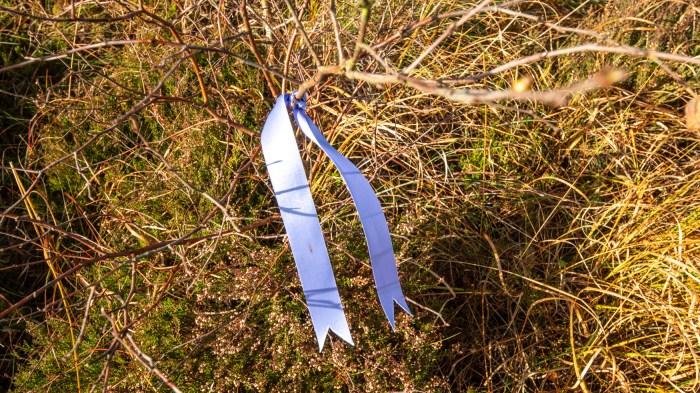
October 2024: Selecting. Selection of the 49 trees that will be collected – site visit made while the leaves were still on the trees. The 49 trees have been marked with ribbons: seven colours, one for each circle of seven trees.
November 26th, 2024: Collecting. 49 young birch trees will be identified as viable, and carefully removed from Bolton Fell Moss. This is the Big Dig Day. The tree collection will be followed by a gathering, with food and presentations, in the village hall, and discussions to identify the pressing issues and ‘beautiful questions’ to explore in the next phase of the project. The 49 dormant trees will be cared for, heeled-in for root protection over the winter.
January 2025 – March 2026: Planting. Seven circles of seven trees will be planted out. Up to 20 people will take part in each of the plantings: a deliberately small group to enable quality conversations and knowledge sharing. The seventh and final circle will be planted on the Ambleside campus of the University of Cumbria, a completion to kick off a large event co-hosted with the Centre for National Parks and Protected Areas (suggested dates for this are March 27th and 28th). Good food will be part of all events! The trees will be well protected and checked regularly, especially over the first couple of years.
March 27/28 2025: Convening. A ‘Big Tent’ event will be held at the Ambleside campus of the University of Cumbria, developing the conversations through LUNZ, with the Centre for National Parks and Protected Areas, to focus on land use and change in the uplands and north of England. The last of the seven circles will be planted on Ambleside campus, to lead into this event.
March 2026 and beyond: The Ripple Effect: Phase 2. Completion of the film and development of a ‘how-to’ guide to assist co-creation of circles in other parts of the UK.
FUNDING & SUPPORT
The LUNZ Hub is co-funded by UKRI, the Department for the Environment, Food and Rural Affairs (on behalf of England and Wales), the Department for Energy Security and Net Zero, the Department for Science, Innovation and Technology, and the Scottish Government. It has been co-designed with Defra and the Welsh and Scottish governments.

In addition to support from the LUNZ Hub, the Resonance project is being supported by people giving advice, time, site visits, and recommendations about process from many organisations, including Natural England, National Trust, Lake District National Park, RAISE Cumbria, University of Cumbria, Centre for National Parks and Protected Areas, Forestry England and Cumbria Woodlands, and from farmers and landowners where the seven circles are located.
Beyond Cumbria: Resonance across the UK
Beyond the initial constellation of seven birch circles, Resonance will seed other tree circles and events. Like a series of vibrations, other identically scaled circles may be planted across the UK. These circles could be in rural, protected and urban areas. Each circle will relate to one another, as if connected by invisible threads. These connections between habitats, communities and thoughtful actions are part of the living web of life and become part of an unfolding narrative about restoration of land.
MORE INFORMATION
We’ll be sharing reflections from the project in a series of blogs, and list them here as they are posted.
For more information, please contact Rob Fraser: rob.fraser@cumbria.ac.uk.
Further Information …
Land Use for Net Zero, Nature and People Hub: LUNZ Hub
Centre for National Parks and Protected Areas at the University of Cumbria
Natural England & the BogLIFE project (IUCN Peatland Programme 2015-2019)
Background information on the bog’s formation and restoration plans: scroll through all the issues of the ‘Sundew’ BogLife newsletters.
General information about UK Peatlands from the IUCN Peatland Programme.
Moss of Many Layers, including links to a new map and film
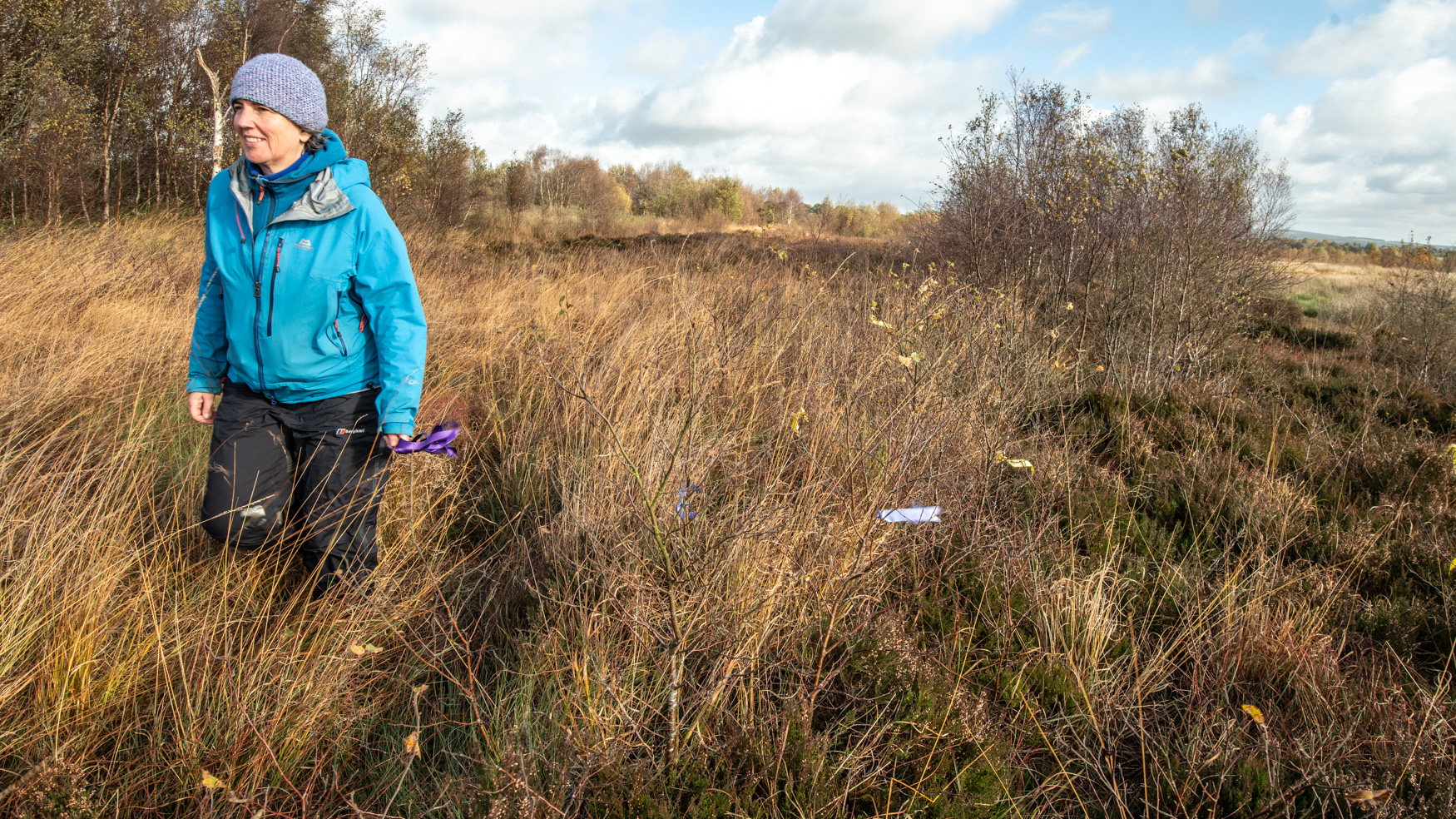
Seven colours : ribbons to mark the 49 trees ready for collection