
Camilla Nelson brings Daffodil Tryptych (2023) to the SEE HERE NOW exhibition. In this post, Camilla describes her process and shares some of the questions it prompts.
What is the cost of human art making and reproduction to the world we seek to celebrate with our representations?
What is the shadow ecology embedded within our making?
Daffodils have occupied a key place in the popular imagination of English landscape since Wordsworth’s “daffodil” poem (“I Wandered Lonely as a Cloud”) secured their popularity in 1807. Who speaks in these representations? The loudest voice, in this work, is the black pen on the white paper (a combination of bleached tree and plastic, oil-based marker pen). The black line is the voice of human agency using natural materials as a mouthpiece. So often, the human representation of another life form entails the death, destruction, damage, silencing, drawing out or over of the nonhuman form.


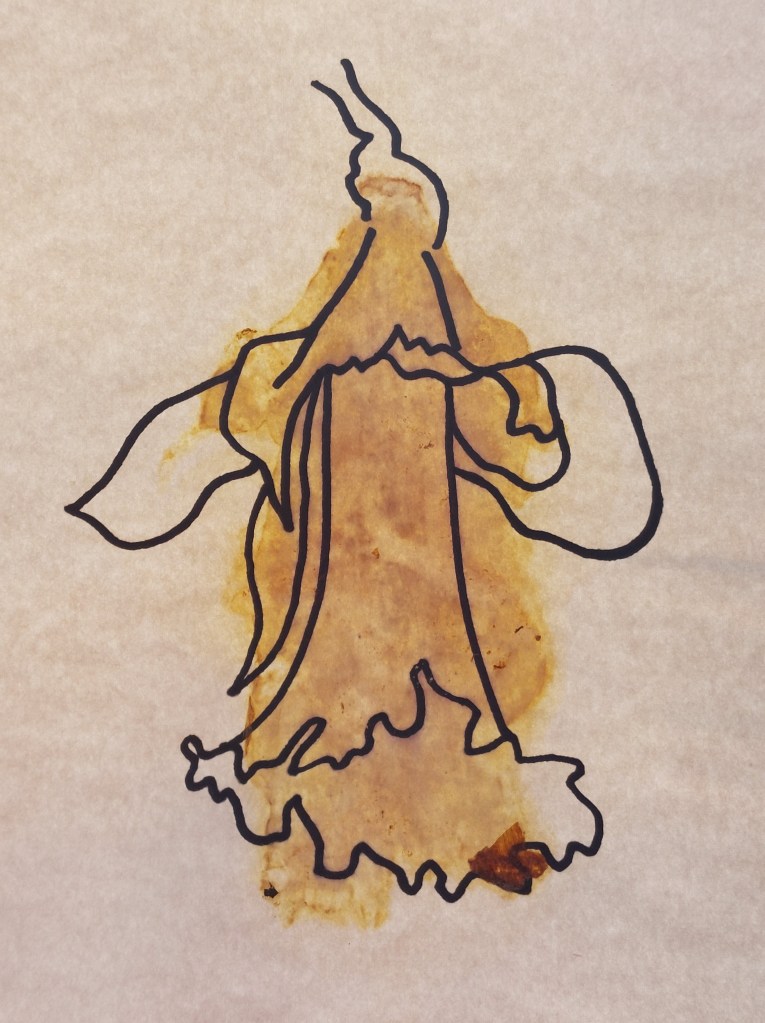
In How to Draw: A Daffodil Triptych (2023), the black line drawn on paper was pressed together with daffodil heads to produce two further works: one is an imprint made by the colour leached from the daffodil flower and the black pen lines of its human representation; the other is a ghostly imprint, a paper shroud, where the form of the daffodil heads, now absent, leave their indent in the page. Through this printing process, something of the flowers is drawn out or into the paper leaving a tangle of responses to the human effort to remake them, a quiet speaking back to or about what happens, the silent costs, of this process of representation.
This seemingly innocuous work asks what the cost of human art making and reproduction is to the world we seek to celebrate with our representations. What is the shadow ecology embedded within our making?
Find out more about Camilla Nelson here: Camilla Nelson.