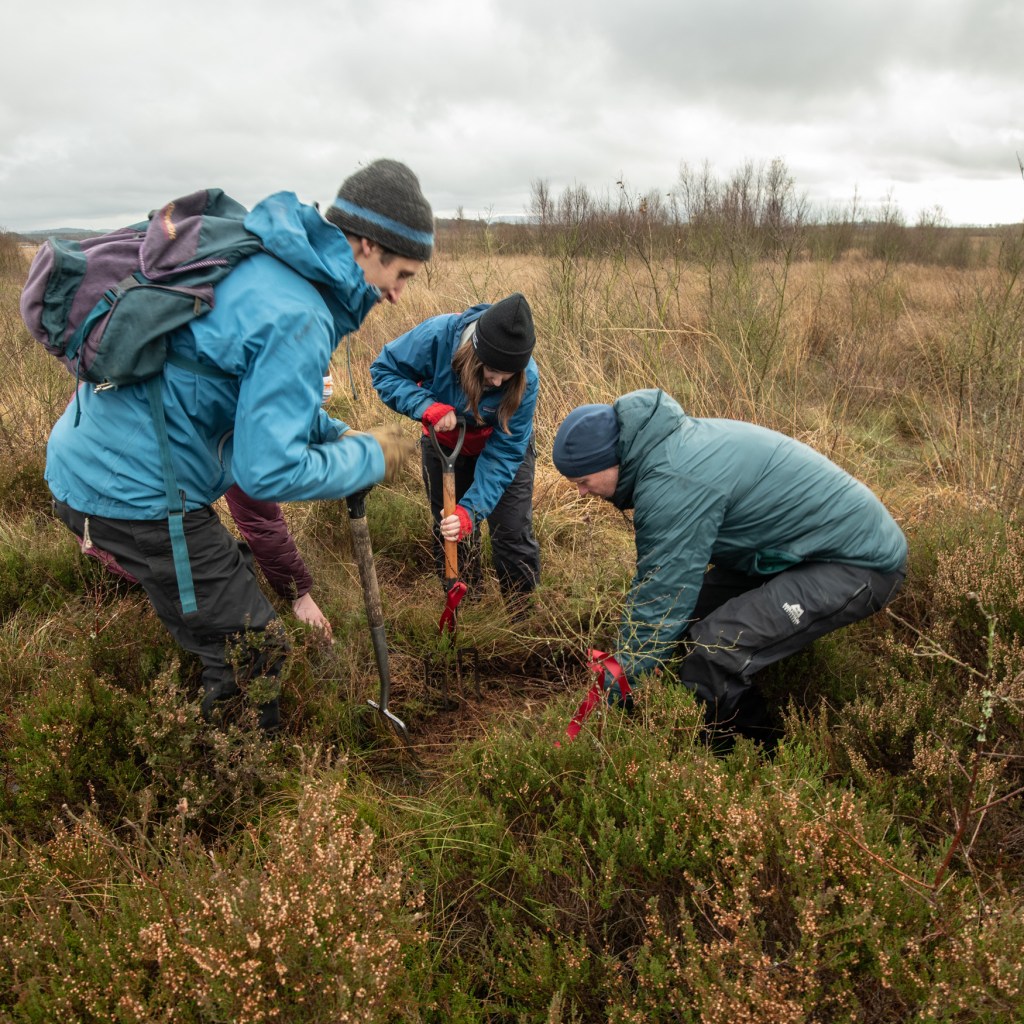
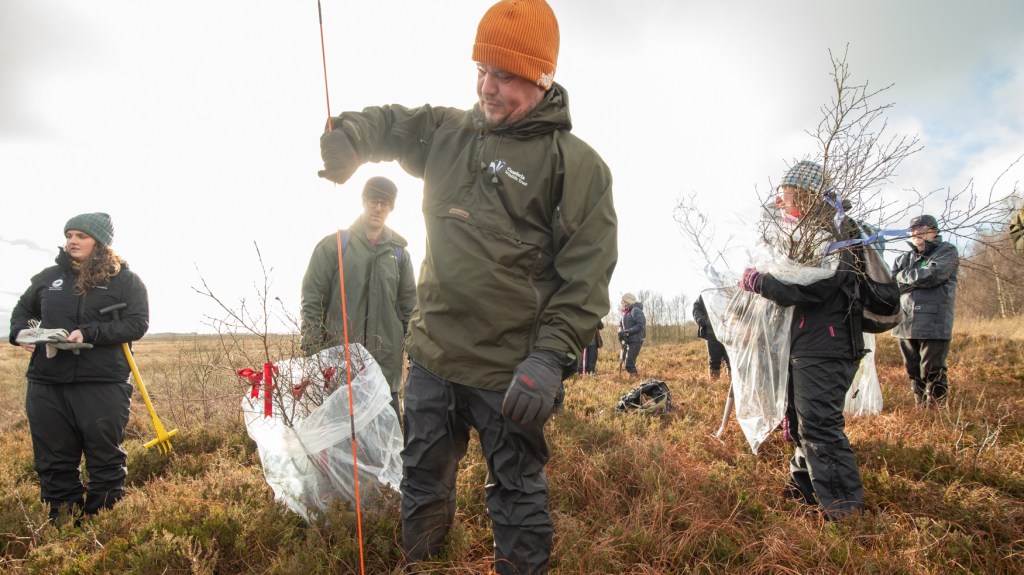
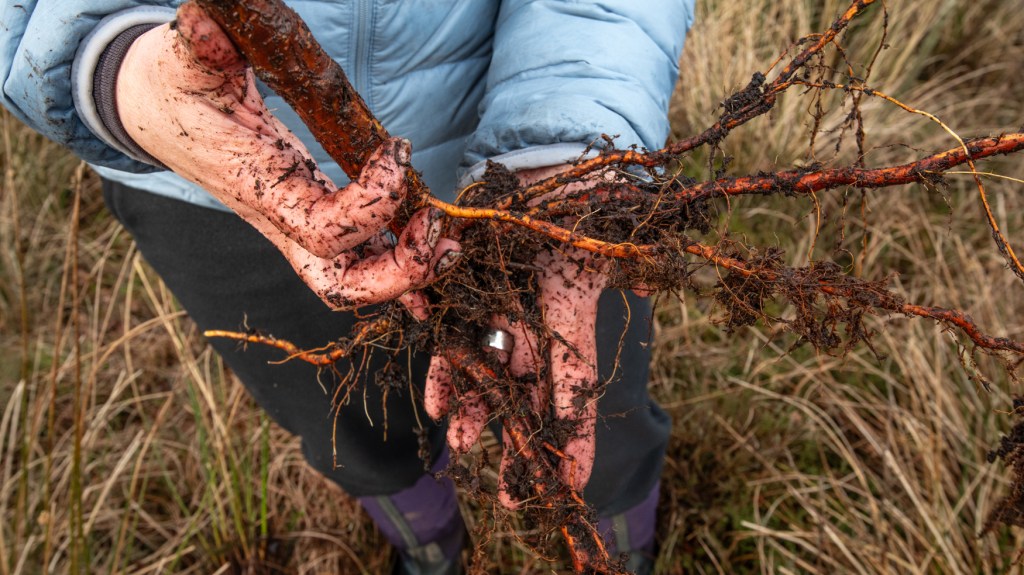
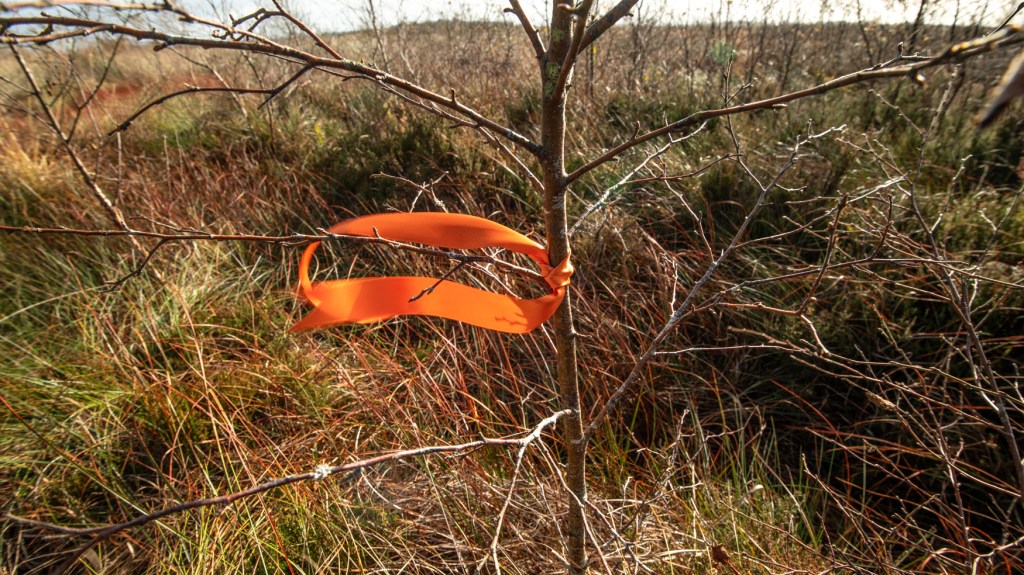
Since last November, the Resonance project has been moving on. It revolves around 49 silver birch trees, which have been collected from Bolton Fell Moss peat bog that’s in a process of restoration, and are being planted out in seven tight circles, each of seven trees, across the Lake District National Park.
This is part of the PLACE Collective’s work through the UK-wide Land Use for Net Zero, Nature and People Hub – or LUNZ HUb for short. Working within the LUNZ Hub team, we’re convening opportunities for people from across practice, research and policy to get together, share learning, and focus on actions; all part of a just transition in a time when changes in land management need to be big, and at scale, to mitigate impacts of climate change, nurture recovery of biodiversity and ecosystems, and embed resilience and natural regeneration in UK land use.
Head over to the project page for Resonance to find out more, and watch for updates – there are reflections on the Big Dig Day here, and a reflection on the key take outs from that event on the LUNZ Hub website.
From North America to North Yorkshire, the Moss of Many Layers film has been journeying to different cinemas and film festivals across the world. The first showing (and for me the most important) was in a village hall in Hethersgill, close to the Moss. The audience was made up of the local community and the many people included in the film: the school children, neighbouring farmers, researchers, artists and conservationists.
But now the film is shared far and wide, telling the story of the moss beyond its neighbours and the scientific community.
Still from the film
Art within science serves as a mirror: it can communicate ideas and data accessibly as different attention is required. Additionally, it acts as a versatile tool, allowing us to manipulate scale, delve into details, and expand our understanding of the landscape.
When recording or decoding science – as an artist – it’s important to include the human story that is connected to the Moss. That’s my motivation for including the ‘breathing portraits’ of subjects in the film.
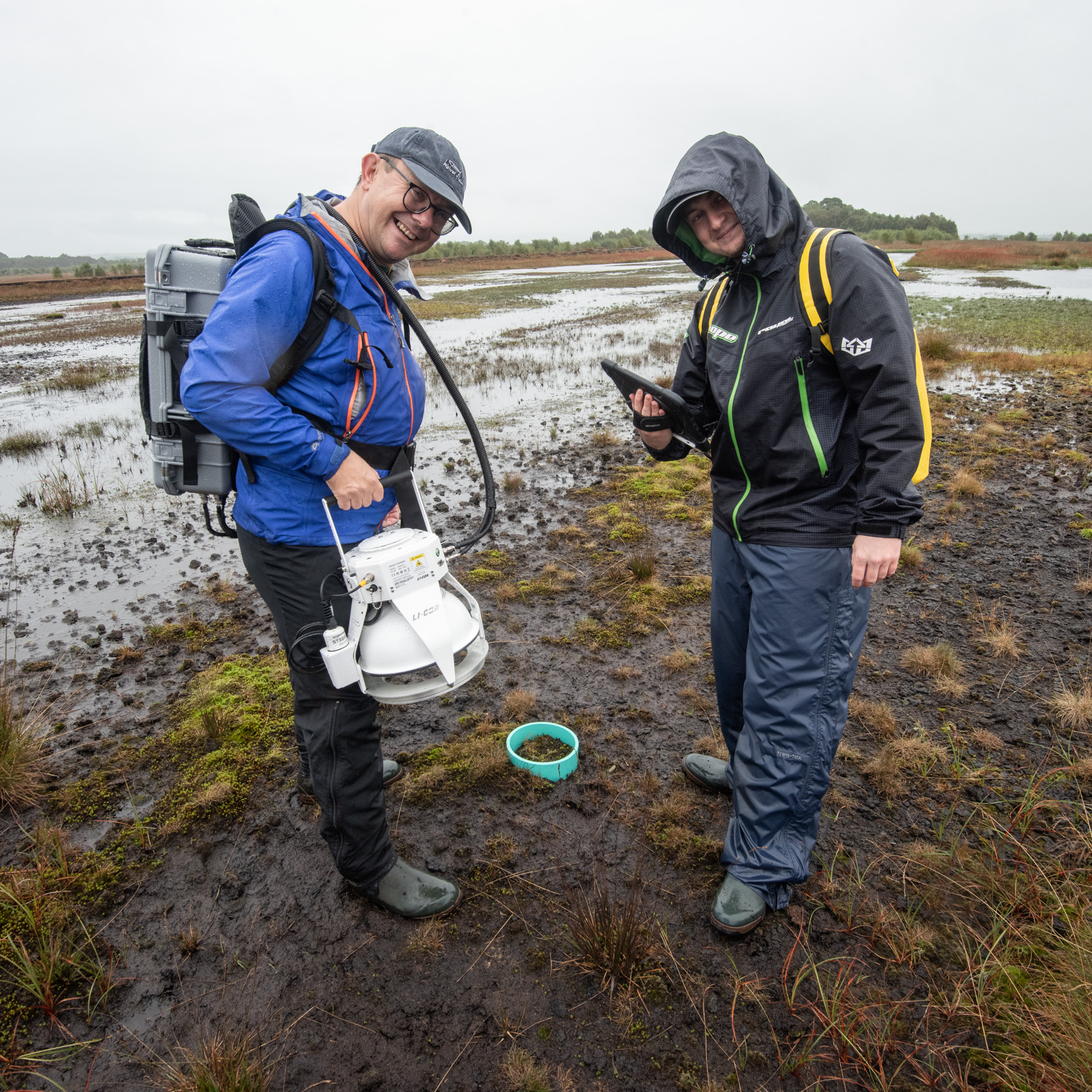
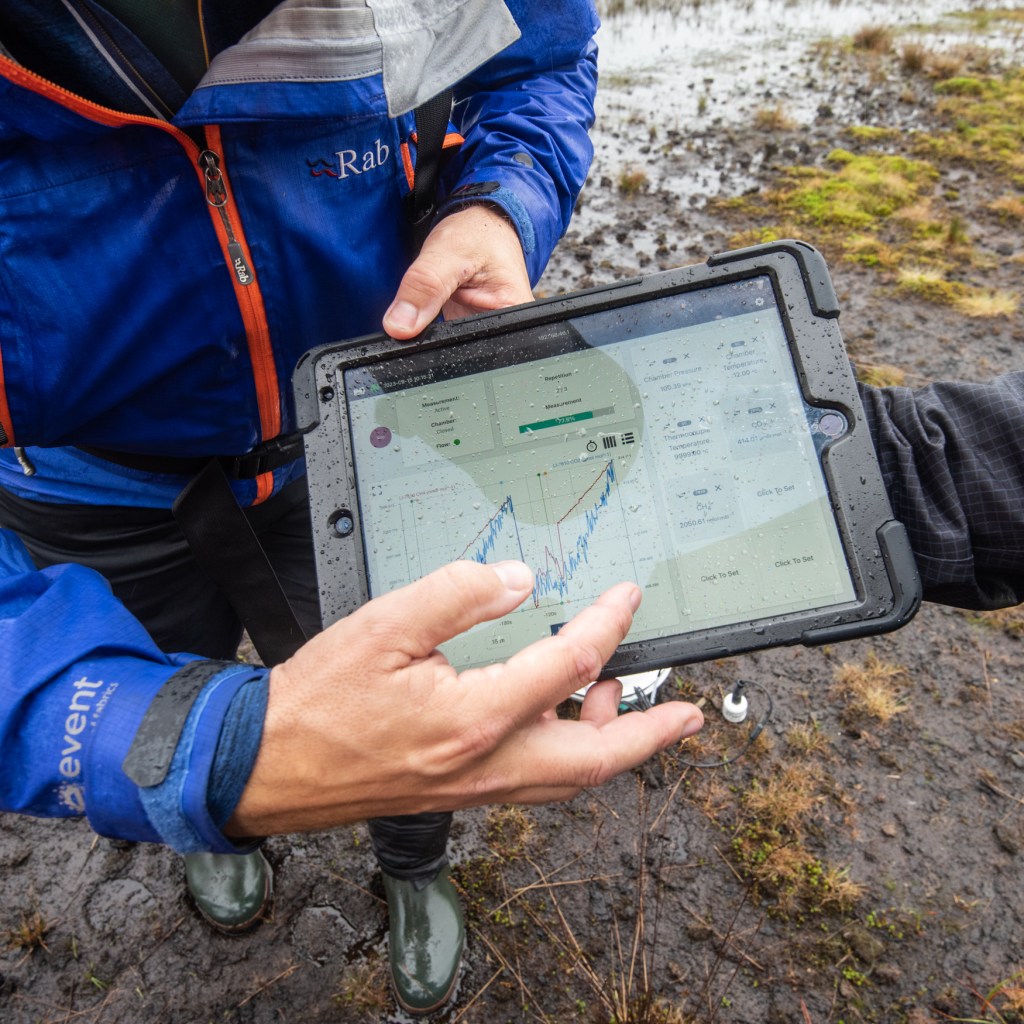
I certainly haven’t stopped thinking about Bolton Fell Moss, and am happy to keep going back. Here are two images from my last visit to the Moss, to see Harriet’s Poetry Signs and watch Dr Simon Carr and PHD Student Jack Brennan use a carbon flux monitor.
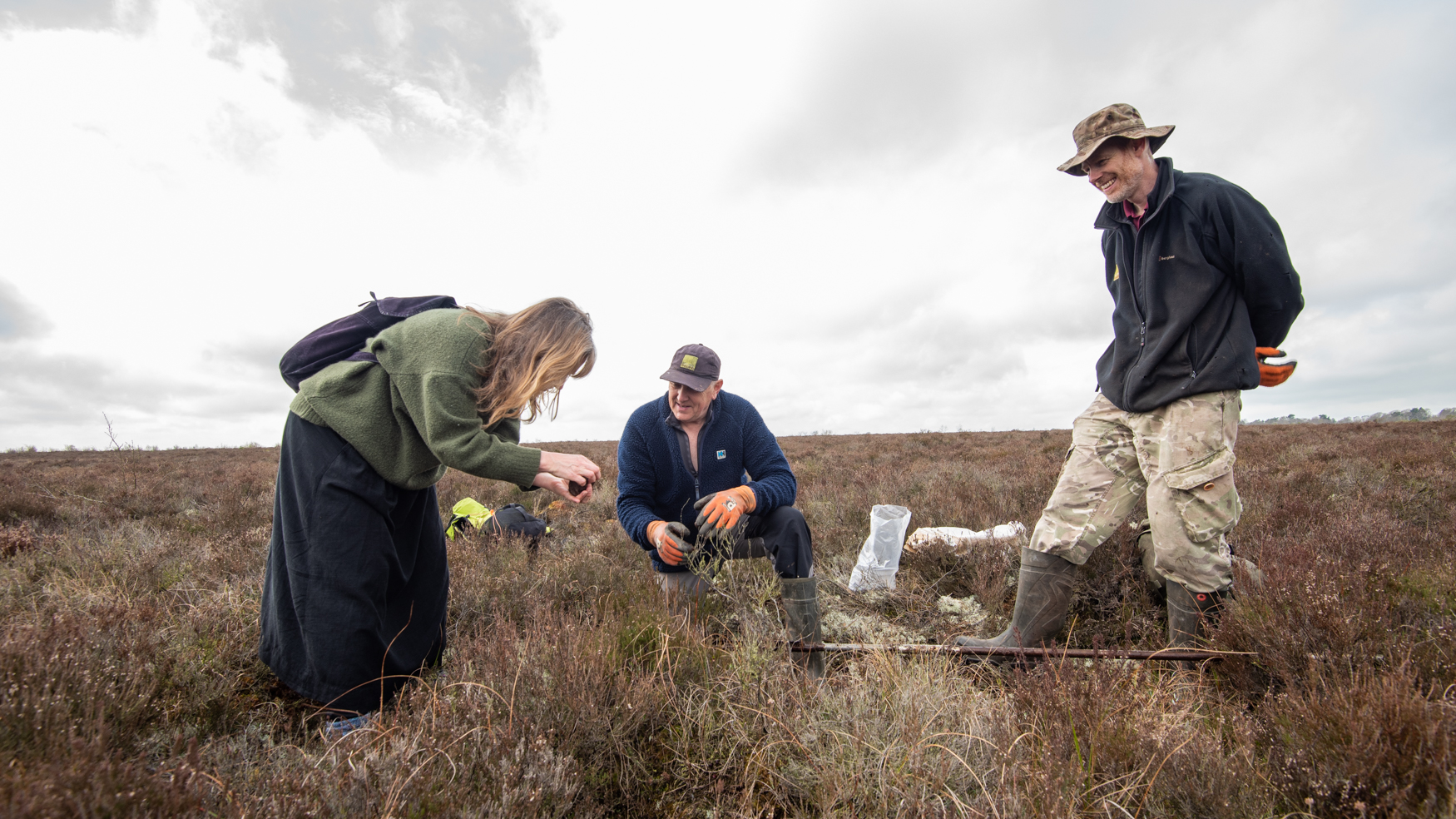
Simon Carr and Jack Brennand with the carbon flux monitor, on Bolton Fell Moss; image by Juliet Klottrup (taken using real film)
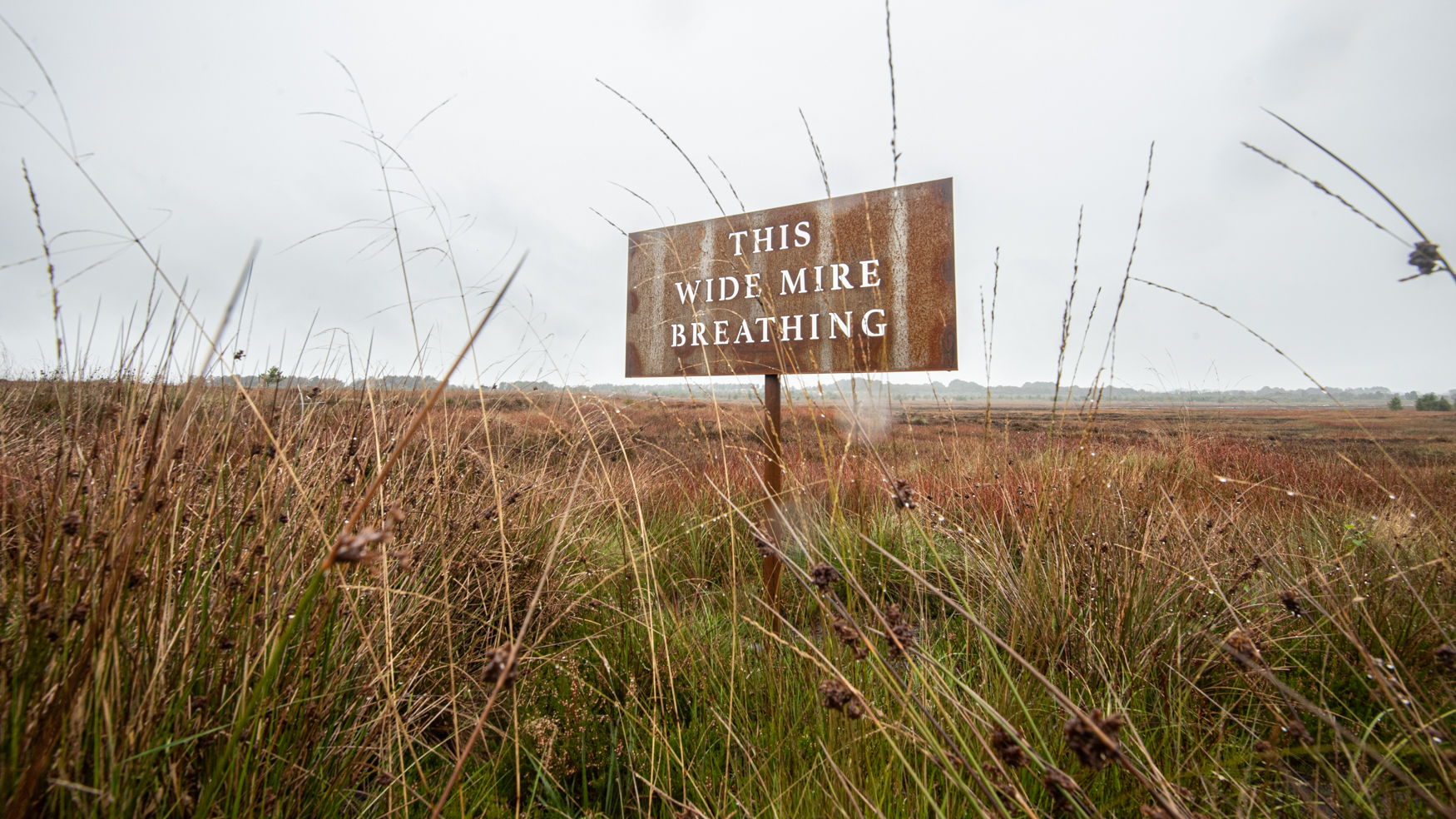
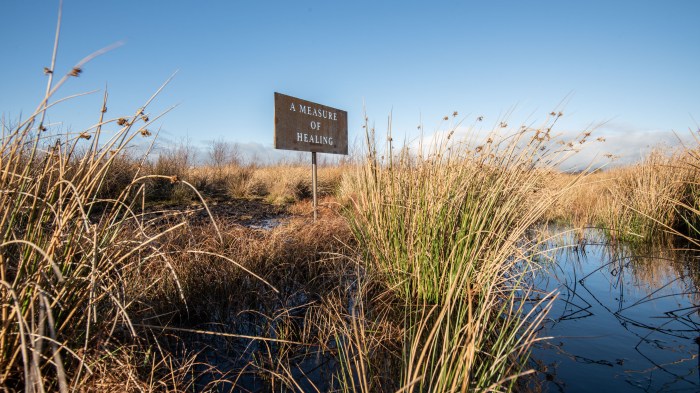
Poetry sign on Bolton Fell Moss, image by Juliet Klottrup (real film)
emma austin, natural england, in conversation with harriet fraser and rob fraser
It has been said more than once, and it’s true: it’s not possible to give a final ‘evaluation’ of the impact of a project until some time has passed. Arts interventions and multi-disciplinary engagement in community, scientific and conservation work have effects across a wide timescale: in the days, weeks or months in which direct research and engagement take place, and then in the months and years following that. Moss of Many Layers (MoML) is a case in point. So, 14 months on from the Wide Open Day celebratory event, we (Harriet and Rob) sat down with Emma Austin to hear her reflections.
Emma Austin. Still from Juliet Klottrup’s ‘Moss of Many Layers’ film
Emma, Natural England Senior Reserves Manager for North Cumbria, was part of the MoML project team. She already had an established relationship with Bolton Fell Moss – the vast area of peatland that is currently under restoration – and with some of the residents living around the edges of the moss before the project began. So what was the impact, or the novelty, of a project that brought together artists, scientists, restoration specialists, reserve managers and local residents? This was the first question we put to Emma.
What was the impact, or the novelty, of a project that brought together artists, scientists, restoration specialists, reserve managers and local residents?
Emma tells us that she really hoped the project would focus on the local community, helping to build bridges where people had been impacted by the difficult transition from an industrial site of peat extraction with local jobs and income, to a National Nature Reserve. ‘Having new faces that had no prior history with the place, artists who were independent, scientist with new knowledge, was brilliant,’ says Emma. ‘And the things that were introduced – whether it was a camera, a poem, specialist kit – these were new, and fresh, and I think the local community who became involved perhaps felt involved in a way they hadn’t been before.’
Emma taking part in the schools events, co-designed with artist Anne Waggot Knott
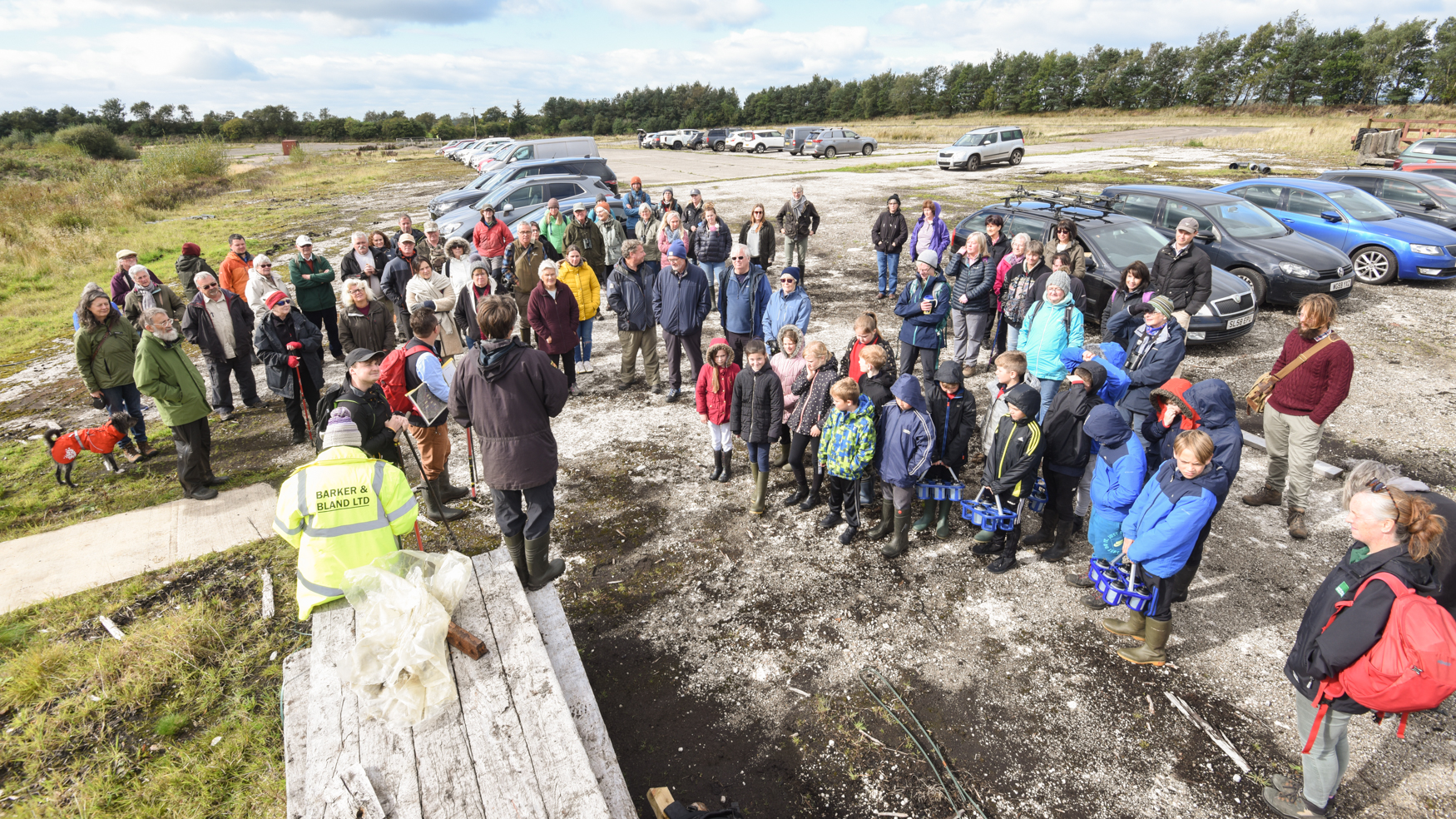
Emma says that she senses the project’s impact through the new links made with the local community. The first time this hit home for her was the huge turnout for the Wide Open Day. Emma always grins when she talks about this: the peat core extending the length of the hall, the room buzzing with conversation, curiosity about the artworks, school children and their parents, and local people meeting one another, some for the first time.
Emma tells us there has been a real growth in interest in the moss since then, nicely coinciding with the completion of the new 3km boardwalk. Juliet Klottrup’s film has been a feature at local discussion events, and there is a definite interest for more of these. The mailing list for news of Bolton Fell Moss has grown fourfold; and events on site run by an engagement officer over the summer were really popular.
In June 2023, during a nationwide heatwave, there was a fire at Bolton Fell Moss, and for six days people worked together to tackle it.
In June 2023, during a nationwide heatwave, there was a fire at Bolton Fell Moss, and for six days people worked together to tackle it. ‘It sounds strange,’ says Emma, ‘but I think the fact that we did the Moss of Many Layers project may have made a difference. I certainly felt able to ask for help in a way I would have been wary of in the past. It’s hard to say for sure that this is linked with MoML, but the project may well have played a part in the way it helped create new friendships and familiarity.’ The intervention of artists helped to bring people together, and the continuing use of the film in Emma’s meetings helps to spotlight local people who are connected with the moss – who live nearby, who once worked there, who are engaged in monitoring, or just love to visit, and who have stories to share.
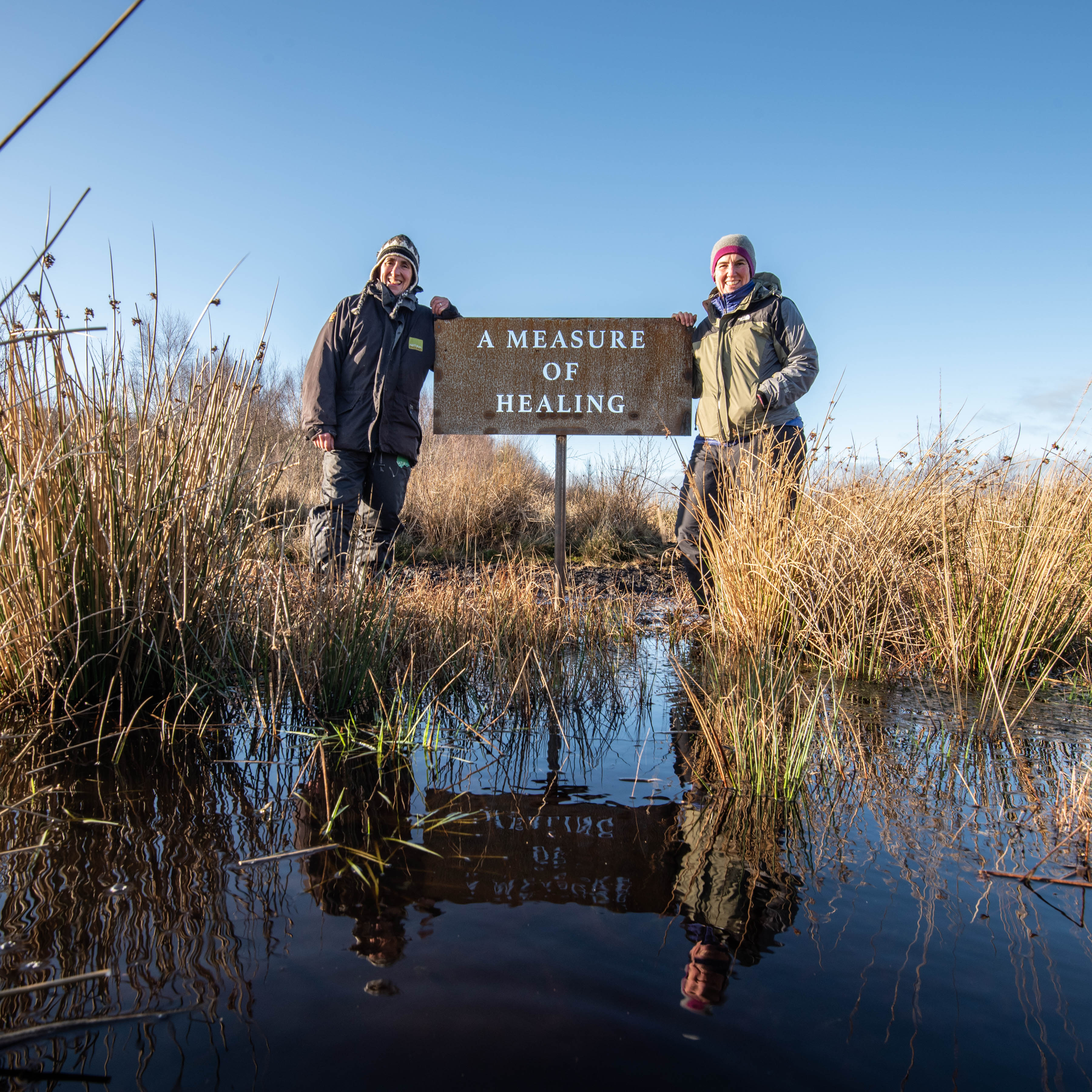
Emma Austin (left) and Harriet Fraser with one of the seven poetry signs
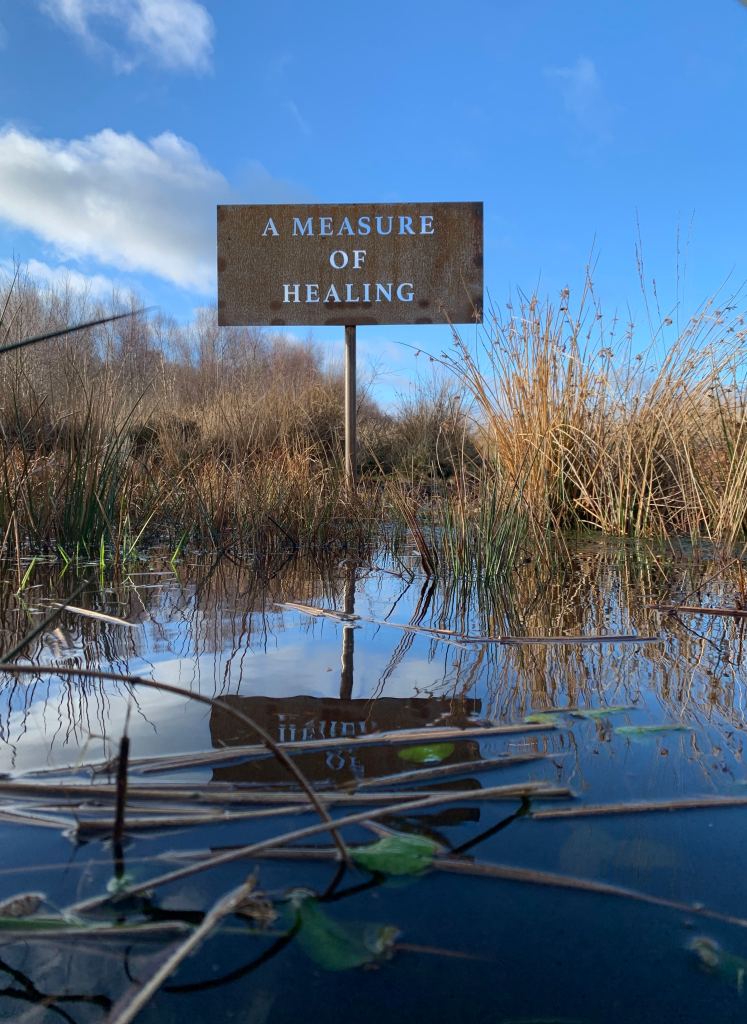
Emma smiles as she talks about the poem signs on the bog. She often hears positive comments about them, and just last week she heard from a group of MSc students who had said they loved the poem and had a WOW moment when they learnt that the signs are anchored and so they will act as a measure of peat accumulation for centuries to come – a novel combination of art and science.
‘People get used to seeing things in a certain way,’ says Emma, ‘We all do. But seeing it from a different perspective – through the arts – can bring a different outlook.’
One of the central elements of Emma’s role with Natural England is to get to know people and liaise with land owners and farmers about changes that are needed to support restoration of the moss. Emma thinks that the inclusion of art, and the presence of the artists and scientists in the area during the project, has helped people understand the bog more and feel the importance of it, and has also helped to soften the edges of difficult conversations. ‘People get used to seeing things in a certain way,’ says Emma, ‘We all do. But seeing it from a different perspective – through the arts – can bring a different outlook.’
For her, the Moss of Many Layers project helped, above all, to put the community first. ‘How do you make sure that you create a discussion or a conversation where the person whose place you’re in feels as important, or the most important, part of the jigsaw. Because if we are going to achieve any of the things we want to achieve for nature, we’ve got to involve everybody – and the way the Moss of Many layers brought different strands together, through art and science, helped to create a neutral space of shared ownership.’
‘… if we are going to achieve any of the things we want to achieve for nature, we’ve got to involve everybody – and the way the Moss of Many layers brought different strands together, through art and science, helped to create a neutral space of shared ownership.’
Emma Austin and MoML team members welcome people to the Wide Open Day, 2022
Also tap into these blogs about the process, including work with schools, the Wide Open Day, Scientist Jack Brennand’s reflections and you can use the search function, looking for Moss of Many Layers to explore further.
Simon Carr talks to Harriet Fraser about monitoring greenhouse gases at Bolton Fell Moss .. carbon, climate and the living, breathing bog
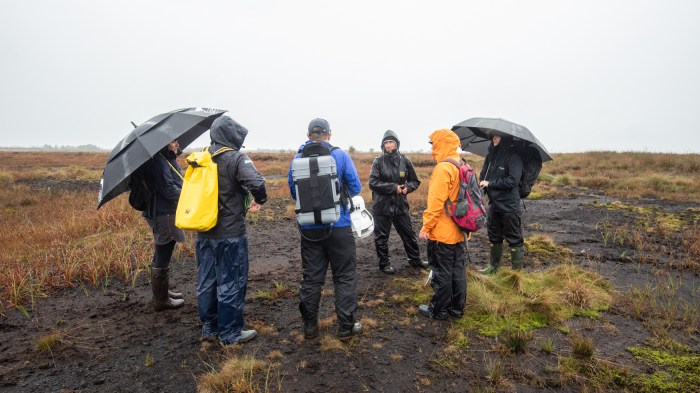
The bog is wide and grey, the rain is slashing down, and we’re all dressed in wellies and full waterproofs. We have umbrellas too – useful to protect camera equipment, and give a little shelter to Simon and Jack as they bend down and get busy with their tools to measure emissions of carbon dioxide and methane. Understanding how much of these gases the bog is emitting, and how more is held over time, is a critical part of the restoration work.
In this recording, Simon reflects on the current levels of greenhouse gases in the atmosphere, introduces the carbon flux monitor, and explains what he hopes to learn from monitoring the bog. Every month, he and Jack visit ten monitoring sites spread across this vast bog; and they walk 10km in the process. The white carbon flux monitor, which is aesthetically beautiful and almost personal, is continually taking in gases, and periodically it lets out a ‘burp’, which you can hear on the recording.
This Wide Mire Breathing – one of seven signs that complete a poem (Harriet Fraser) Lunch and a Moss of Many Layers meeting (almost) out of the rain
A blog from Harriet Fraser and Rob Fraser, working on the Moss of Many Layers project.
Landmark day! After a year of planning, with research, poetry composition, design, engineering and finger-crossing, on Friday, together with Natural England Senior Reserves Manager Emma Austin, we headed out to Bolton Fell Moss to test the installation of a poetry sign. And phew, the install went perfectly! Hurray!
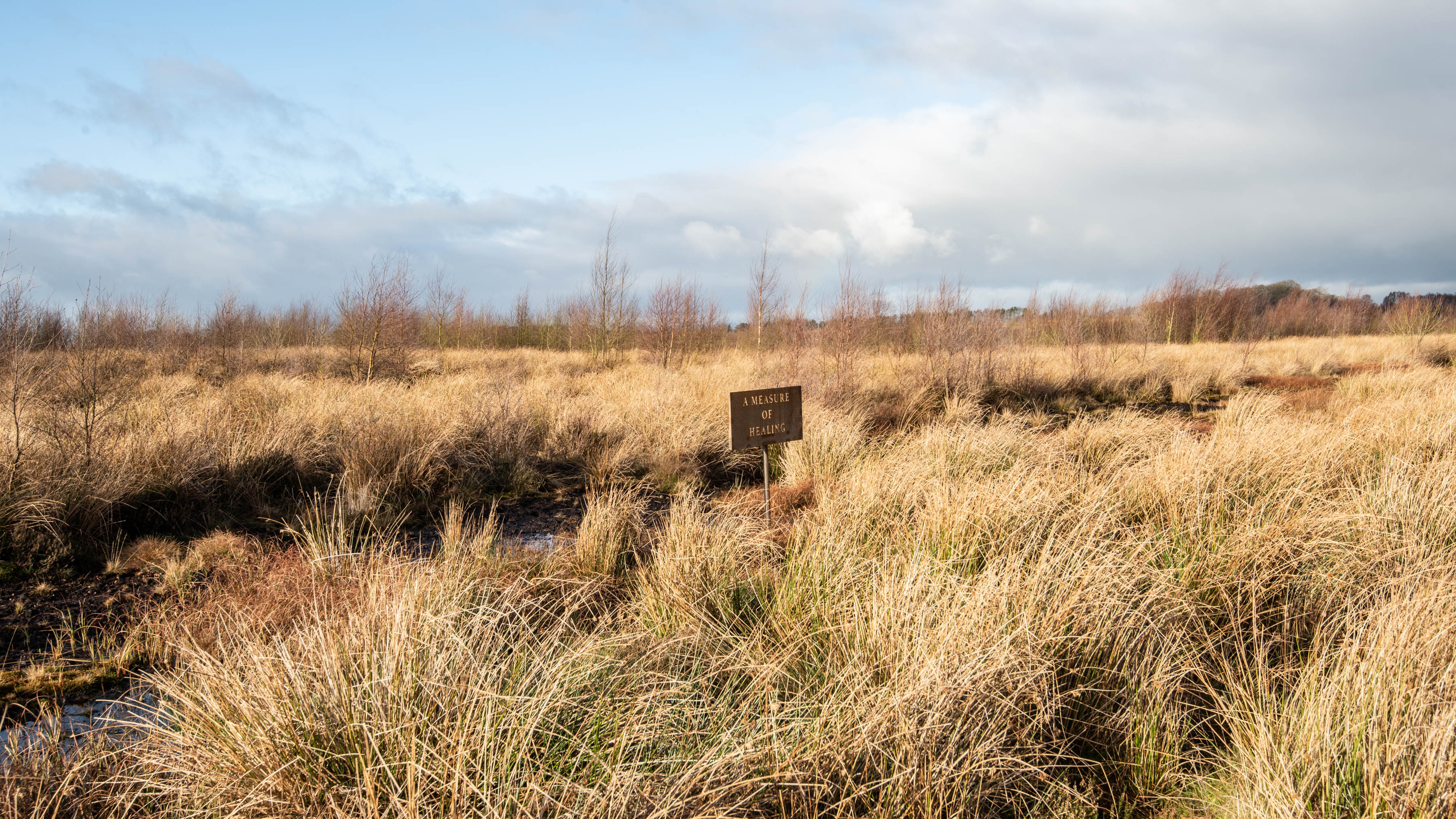
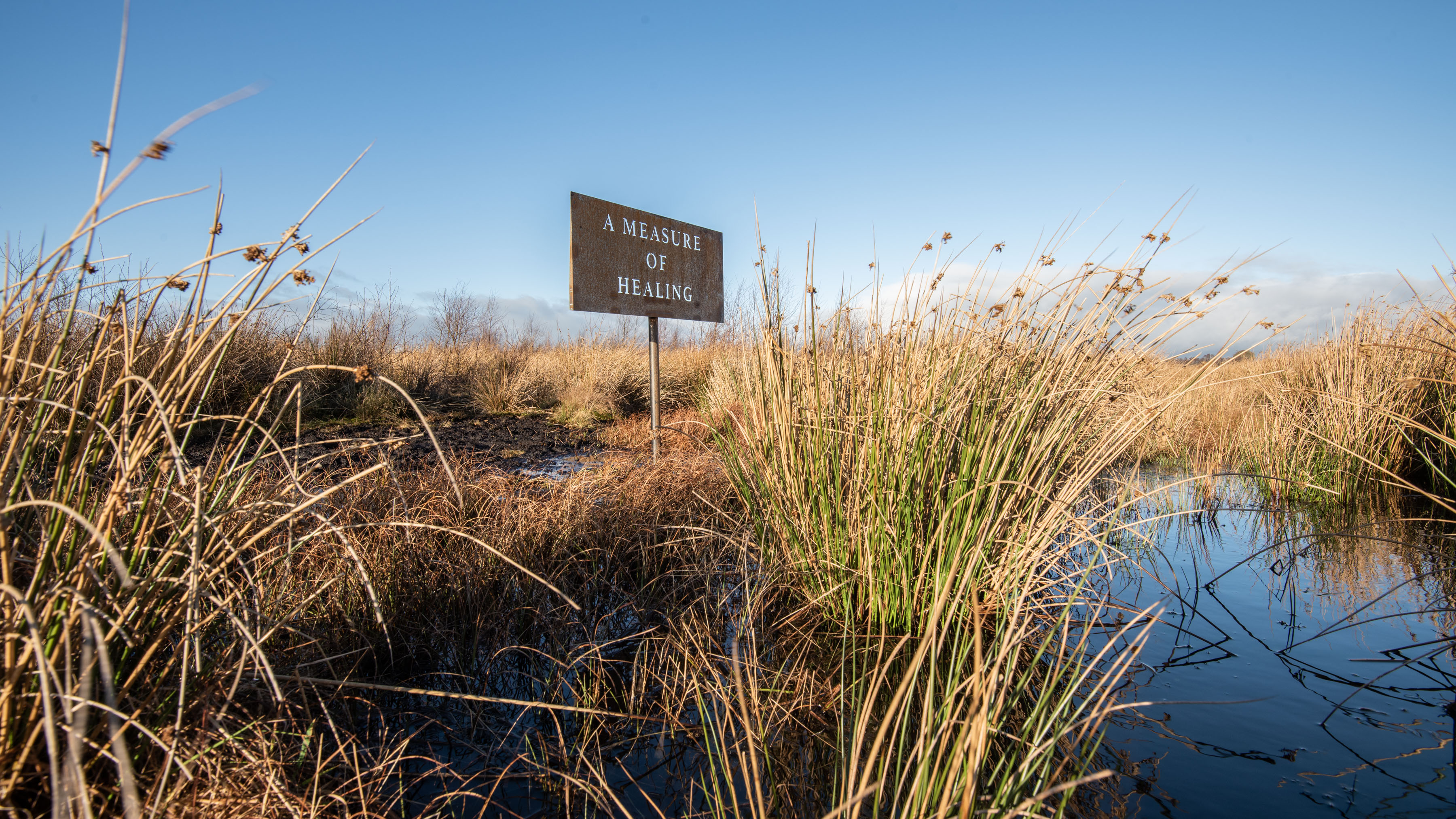
This is one of a set of seven signs that will be placed within sight of the boardwalk, which runs for a circuit of 3km. Together, the signs will form a seven-phrase poem that can be read clockwise or anti-clockwise, or can be read in couplets. Each sign will rust up, blending in with the colours of the bog.
A tool for scientists
The support pole for each sign acts as a surface level rod, so the team monitoring the growth of sphagnum moss (and, very very slowly, peat itself), will be able to measure incremental change. The support poles extend down to the mineral layer beneath the peat, which is a marker of the end of the last ice age before peat began to form here. The range on chosen sites is 227cm – 578cm, reflecting different levels of extraction around the site.
Process, and first impressions
When you dream something up, then work through the ideas, encounter and overcome design challenges, and get to this stage, you think you know how it will look, but it’s only a guess. You only really know once it’s in …
We’re really happy with it – this first sign carries the qualities that we had hoped it would. The form and material reflect the industrial heritage of the site, where steel was used extensively in the machinery used for peat extraction, and angular shapes were common. The cut-out letters allow the signs to also have a softness, reflecting the softness of the mosses and grasses: as the light changes, or as you walk past the sign, the sign seems somehow to float, and the words are airy. It helps with the invitation for a pause – the words help to convey the ongoing story of this wonderful place, and perhaps for some will be a catalysts for thoughts, feelings, questions and further conversations.
This sign is the third in the sequence, if you follow the boardwalk in a clockwise direction; or the fourth if you walk anticlockwise.
Team work
Massive thanks to Emma at Natural England who has been a really important part of the evolution of this piece, and to Martin Lucas, engineer extraordinaire, whose attention to detail always pays off. And thanks to the rest of the Moss of Many Layers team – scientists, artists, conservationists, rangers – and the local community, who have all been part of the learning that inspired Harriet’s composition of the poem.
Emma Austin (left) and Harriet Fraser with the poetry sign
Opening yet to come
The site is a National Nature Reserve but will not be open to the public until later this year. Once the site opens, all the poetry signs will be in place, as will a new shelter on the central ‘island’. We’ll share updates as they happen.
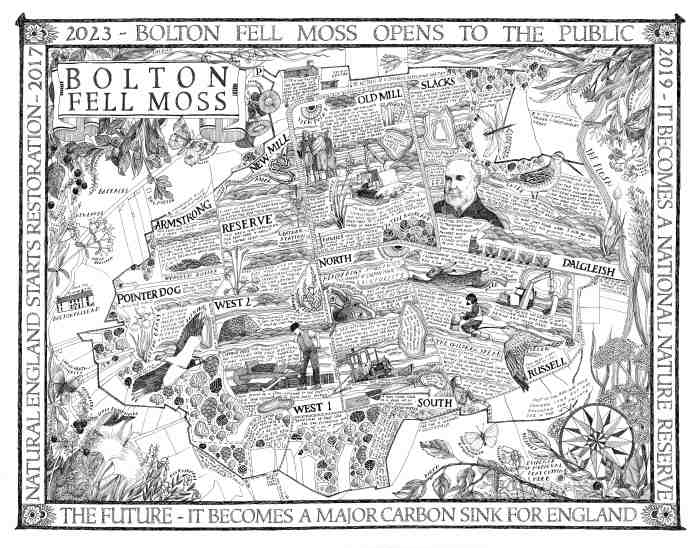
One of the main artistic outputs from the Moss of Many Layers project is the map of Bolton Fell Moss created by Helen Cann. This post put together by Harriet Fraser gives a behind-the-scenes look at Helen’s process, and how the map came into being.
Helen’s map not only shows the history of the moss, but also the present, documenting the ongoing upkeep of the Moss, and the hoped-for future as restoration brings rewards. The layers of time – past, present and future – were important in Helen’s thinking.
The map shares stories from local residents and insights from scientists, and portrays the wildlife communities that have returned to the moss since extraction ceased and are likely to thrive as their habitats improve. It’s a thing of beauty, something that draws you in.
When the original map was shared at the Wide Open Day it was like a magnet – people gathered around it, pointed out things they recognised, new information that surprised them, and used it as a catalyst to share further stories. The map is hand-drawn, in wonderful detail. When further infrastructure is in place on Bolton Fell Moss, and accessible via the boardwalk, a reproduction of the map will be in place. We can’t wait to see it there!
Helen’s process
Helen compiled the map over a number of months. As well as visiting the site (which she reflects on in her blog here), Other artist researchers in the team shared recordings with her, so she could listen to interviews with people who used to work on the site when peat was extracted and ecologists and rangers who are now monitoring recovery of vegetation, and the return of wildlife. And Helen had conversations with the scientists, restoration specialists and others on the Moss of Many Layers team. This approach is new to Helen, and it’s great to see how rewarding it has been.
‘I have rarely worked with an inter-disciplinary team before other than being given access to historian or curatorial research notes, for example. Moss of Many Layers gave me the opportunity to have face to face talks with experts. The site visit was fantastic and vital in understanding the land and being able to have conversations with experts in the field.’
The inter-disciplinary nature of this project impacted the approach of all the researchers, with a level of responsiveness that relied on iterative learning and conversations. ‘My experience as an illustrator means my practice involves following a brief and then delivering as near to the agreed brief as possible. In this case, I created my own brief and then followed through.’
When we talked about this, Helen reflected that this is quite unusual – but worked perfectly. Each artist began with a loose framework (in Helen’s case, to draw a map) and then let their work evolve according to ongoing learning from visits to the site and from other people. Helen’s visit to Bolton Fell Moss caused her to change some of her initial ideas (and do a fair amount of rubbing out!). This doesn’t happen often in her work. ‘In the future, it might be good to allow myself space for more ‘idea bouncing’ and the flexibility to change course from the initial brief if my thoughts develop or I’m inspired to go in other directions. In general, I’m not sure how acceptable this is for stakeholders if they’ve a been promised a particular outcome – I’d never do this as an illustrator but it’s good to know how/if this works within an art context.’ Perhaps this is a key difference between pure illustration and research-led illustrative artwork, where the shape, detail and overall feel of a piece, can alter along the way: it’s responsive. You can read more about Helen’s reflections on her process on her website here.
One of the aims of the Moss of Many Layers project was for the various pieces of artwork to reflect learning, rather than an aim for a predetermined outcome. We’re really happy that this is what happened – and when all the work is compiled and made available we’ll share a link to it through the project page.
Encountering the unexpected
I asked Helen if anything unexpected happened for her. This was her answer:
‘ – the realisation that the Moss was in a constant state of flux, was still a work in progress and that I’d need to adapt drawings made initially as thoughts and practice had changed over the months. I’m used to maps becoming anachronistic over time but never within such a short time, and I have to acknowledge that some elements of the map may be out of date by the time it’s actually printed as a sign!’
This might be a little unexpected in the context of creating an illustration, but it is an encouraging reflection: now that extraction has come to an end and restoration work is beginning to have a positive effect in the way water balance is shifting on the moss, the process of healing is showing quick results. It’s part of the positive story of this place – the geographical location won’t change, but a lot else will.
And a final word from Helen? ‘It’s been a blast. I learnt loads and am really pleased with how the map turned out. I wish I could have had some of that cake.*’
*The cake at the Wide Open Day was a 3D presentation of the bog.
Juliet Klottrup was one of the five artists who worked as part of the team on the Moss of Many Layers project – here’s the film she made after months of research. Click the link and enjoy – it’s a 15-minute watch.
The film now features in the COP26 Virtual Peat Pavillion – visit it there and find out more about peat, mires, mosses and bogs across the world.
To find out more about the project, and the extraordinary Bolton Fell Moss National Nature Reserve, visit the project page here.
Learning about bog life, restoration, carbon sequestration and arts-science collaborations … here’s a short film of Jack Brennand, PhD student at Cumbria University, talking about his research into bogs and peat and his experience working on the Moss of Many Layers project.
A quick post with a short piece of ad-hoc filming at Bolton Fell Moss back in December 2021. Dr Simon Carr, PhD student Jack Brennand and Natural England Senior Reserves Manager Emma Austin share their delight in the progress that’s being made. Looking over some of the peat milling fields, they explain what we can see. Restoration work has included the creation of bunds, where peat has been moved to re-profile the land so that water can begin to settle.
Slowly, mosses and grasses will begin to colonise but all this happens much more quickly with a little help. Jane Barker of Barker and Bland has been critical in this process, and some of the restoration work on Bolton Fell Moss has involved adding sphagnum moss and cotton grass back to the bare surface of the peat.
More about this process, the way peat works, and what’s needed to restore damaged peatlands, will be shared on the Wide Open Day, and in the work that Rob and Juliet are creating with their photographs and film.
A blog from Anne Waggot Knott, reflecting on the Moss of Many Layers project
a school minibus in the distance, driven by sideways rain
heralds the widening of eyes
and the blooming of minds
in the wilderness
As we reflect on the second of three creative activity sessions with young participants on Bolton Fell Moss, I realise we have now really begun to unpack the many layers in the title of the project.
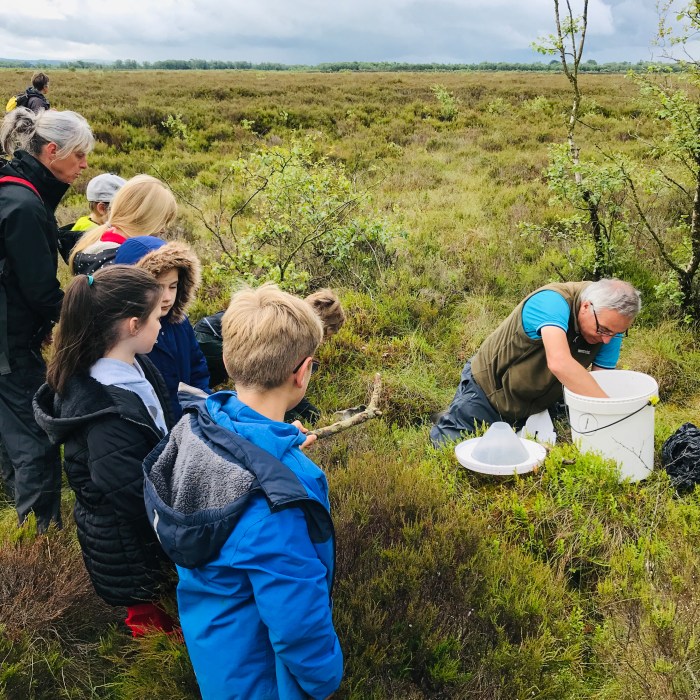
This visit was all about exploring what lives and depends on the moss: plants, insects, spiders, moths and birdlife.
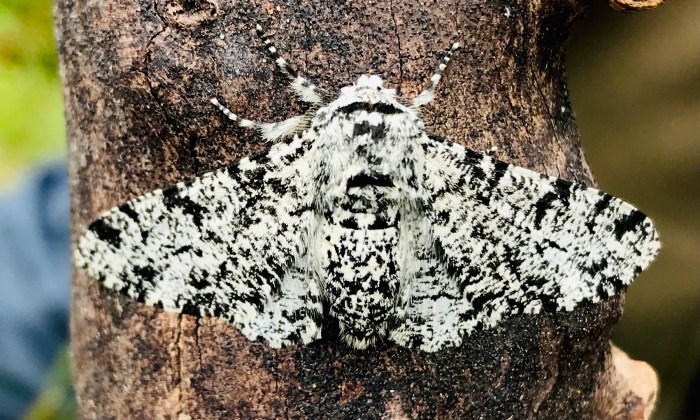
We unloaded moth traps, uncovering beautiful, fragile beasties camouflaged against lichen and logs. We foraged for slugs and beetles and squirmed as a mass of spider babies spilled from their mother’s egg sac. We wafted our sweep nets after butterflies and captured all of the breathless wilderness wonder we could find.
Looking in the moth trap
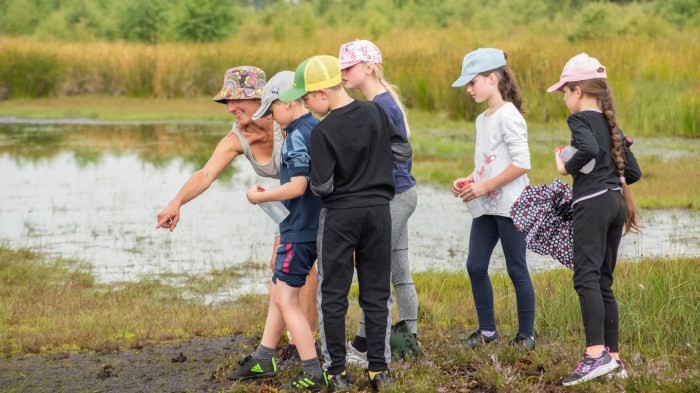
Our final exercise was to guard ‘curlew eggs’ (actually hardboiled chicken eggs), encouraging the students to understand the vulnerability of ground-nesting birds. I had to leave them at this point but the pupils each took an egg and spread out intrepidly to find their own nesting sites out on the reserve.
I turned to face the rain and my trudge to the car park. As I looked back across the vast expanse of heather, I could see little eight-year-old heads hunkered momentarily alone in the moss; sitting grounded like curlews on a nest, looking quietly around themselves with a new wonder and awareness, fully entrenched in their environment. They were totally absorbed, individually forming new ways of understanding the world.
Collograph plate
Reinforcing and embedding this experience through creative activity is a challenge, a layer of learning for me and for the other delivery partners too. This time we made collagraph printing plates inspired by the beasties we found, using recycled and repurposed collage materials, embedding another level of environmentally sensitive practice into the project.
One of the most rewarding things about truly multi-disciplinary science-arts engagement is that we can find ways of reaching every individual participant. As an accompanying teacher pointed out last time, literally everyone enjoyed it. A neurodivergent student was completely mesmerised by the insects and moths. This generated a new admiration from their classmates and helped them focus on the follow up creative session too as they were already hooked. Abstract printmaking is satisfyingly inclusive – it doesn’t matter if you ‘can’t draw’ – it’s just mark-making at the end of the day – and the vibrant effects look enticingly cool.
Also enticingly cool are these climate change faces produced during our reflective debrief. We hadn’t talked much about the bigger picture of carbon capture and storage during this session, focusing instead on flora and fauna on quite an intimate scale. But these expressive, striking images paint a thousand words and give me confidence that pupils have made the connection with the broader environmental catastrophe. I hope that by delivering sessions like this, we will help them develop a broad range of tools and knowledge to really make a difference.