
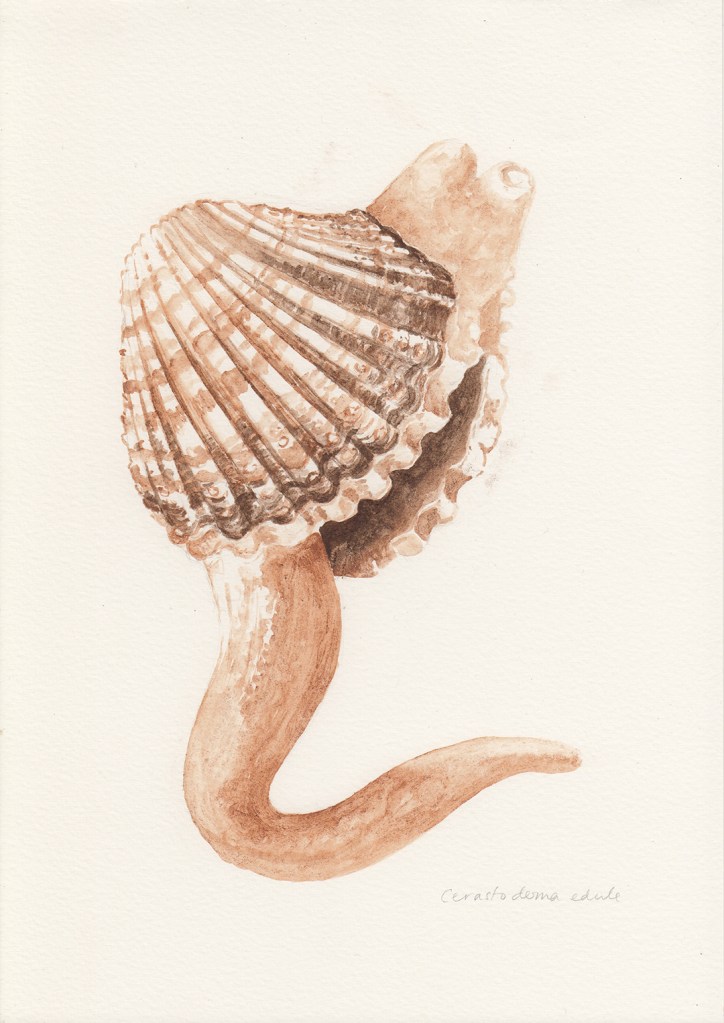
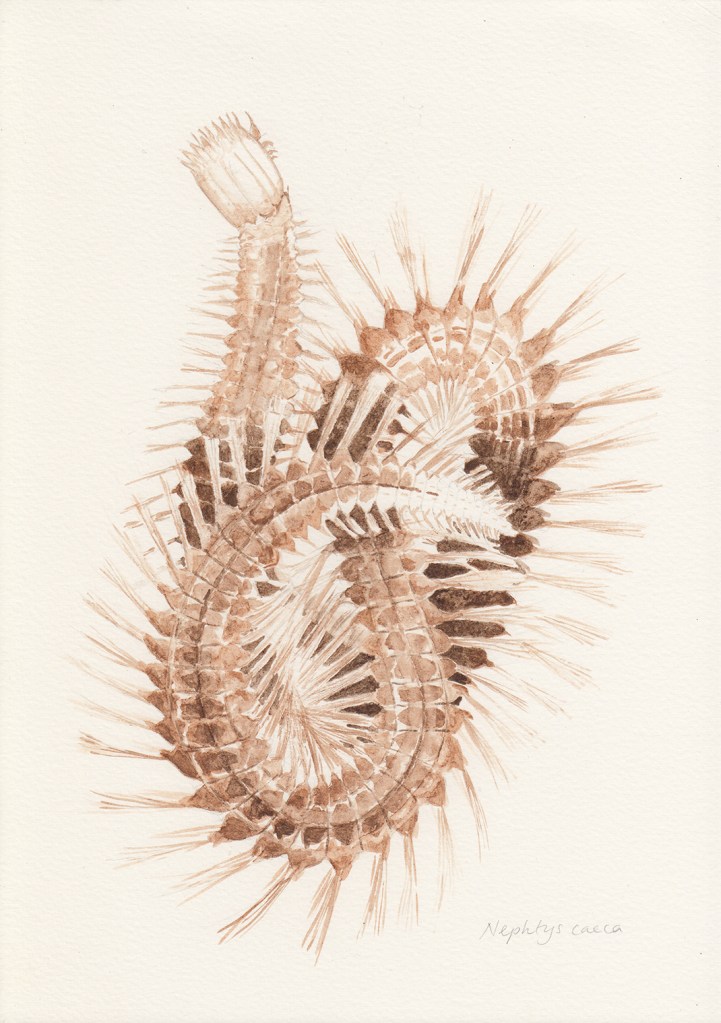
Naomi Hart is artist in residence with The Convex Seascape Survey, a pioneering collaboration of world-leading scientists working to quantify and understand blue carbon stored in the coastal ocean floor, the effects of marine life upon it, and how this might impact rates of climate change. Her paintings ‘Amphiura chiajei‘ (brittlestar), ‘Cerastoderma edule’ (common cockle), and ‘Nephtys caeca’ (catworm), will be on display at the SEE HERE NOW exhibition.
A team of researchers from the University of Exeter, alongside project collaborators at the University of Southampton, have been studying benthic invertebrates – worms, shellfish and similar creatures – that live in the mud beneath the sea. These invertebrates form a vital, but unseen ecosystem, which may be critically important in our fight against climate change. The tiny creatures create tunnels and burrows in seabed sediments, bioturbating (mixing) the mud, and moving nutrients and carbon within the mud to create a unique seabed habitat, the world’s largest carbon sink.
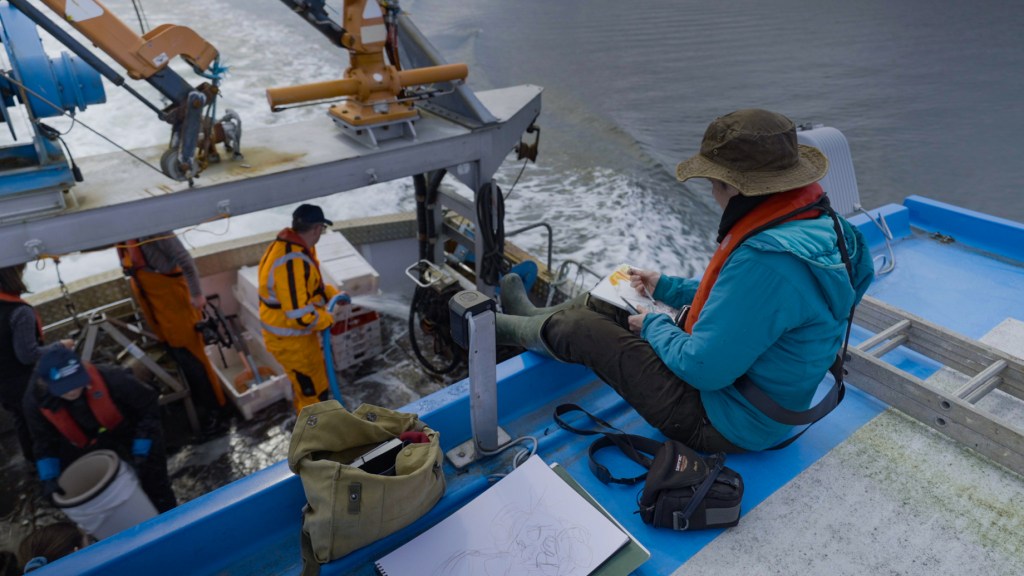
Naomi has been working alongside these researchers for two years, involved in and documenting all aspects of the research: hauling mud from the bottom of the sea, identifying sea creatures, and witnessing complex, delicate chemical measurements in the laboratory. She created action sketches of the researchers collecting samples of ocean bottom dwelling invertebrates while at sea.


Naomi studied the invertebrates under a microscope and then created pigment from the sea sediment, by heating it to different temperatures. This has led to a unique colour range completely specific to the waters around the Isle of Cumbrae, where the research took place, so with a nod to traditional earth colours like ‘Raw Umber’ and ‘Burnt Umber’, she has named the pigments ‘Raw Cumbrae’ and ‘Burnt Cumbrae’.
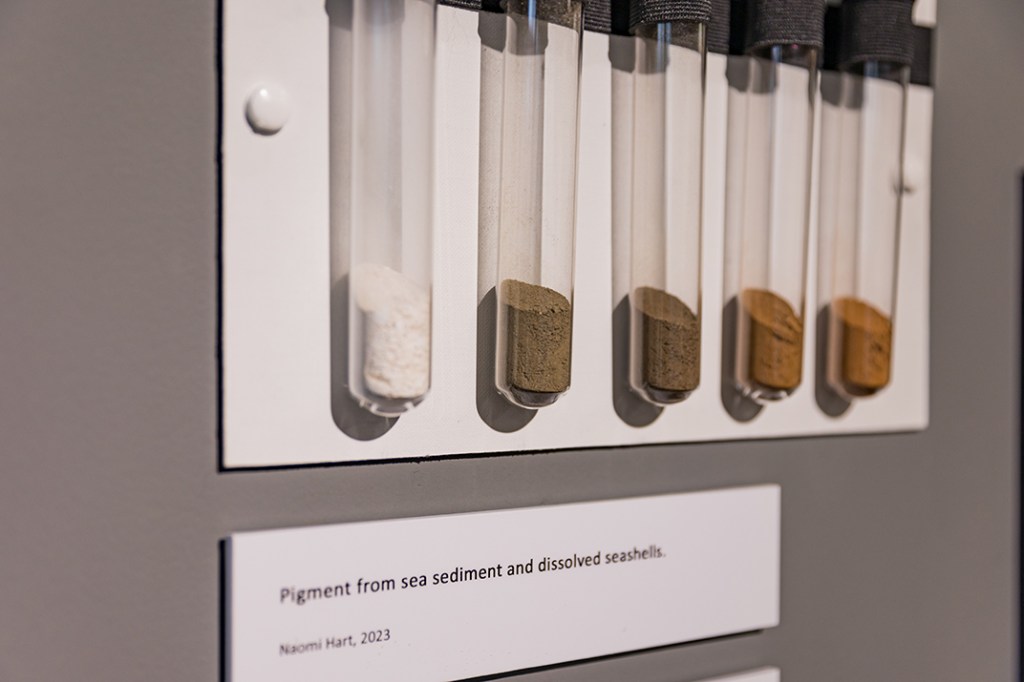
To extend the palette, she also experimented with white chalk made from dissolving sea-shells in acid/lemon juice – mimicking ocean acidification as the oceans warm – and has created highly detailed ‘portraits’ of the invertebrates out of the actual mud in which they live. Hugely magnified, these creatures may seem like aliens from another world, but they are found in our oceans, creating tunnels and burrows in the mud and drawing down nutrients and carbon in the world’s largest carbon sink. The colours themselves demonstrate the capacity of the sediment to hold nutrients and carbon: Raw Cumbrae is a mid-greybrown; as it is heated, the organic matter begins to burn and darken, and reveal the carbon stored within. Further heating burns off this carbon entirely to reveal the iron-rich red sandstone of the underlying geology.
Through these paintings, Naomi hopes to raise awareness of these incredible creatures and the vitally important habitat they create.

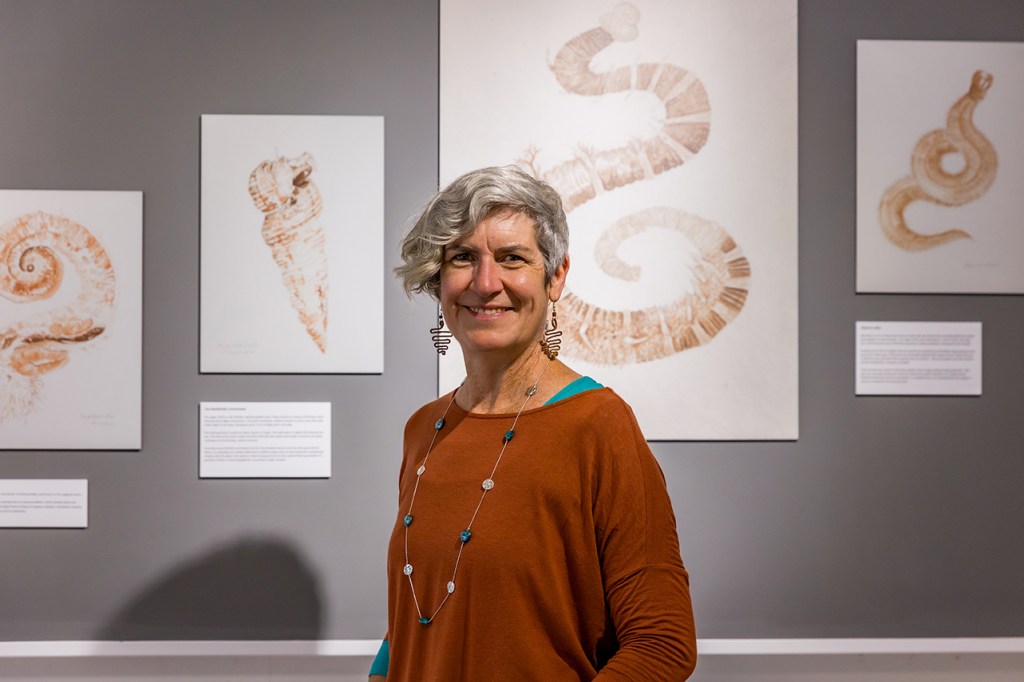
Naomi has also worked with The Convex Seascape Survey to run art workshops for adults and children, making muddy sea creatures in clay and with mud-paint, with researchers on hand to explain the science behind the project.
The work has been exhibited in Exeter, Penryn, Falmouth, Bristol and at the Royal Geographical Society in London. For more information about the invertebrates, you can read about them here.
The Convex Seascape Survey seeks to discover exactly how the ocean performs its vital role as the world’s largest carbon sink. Over five years, the project will not only scrutinise the carbon locked in the continental shelf seabeds but will assess the role of ocean life on carbon storage, as well as assessing human influences on seabed carbon. Funded by Convex Group Ltd., the project is facilitated by Blue Marine Foundation, with science led by the University of Exeter in collaboration with partners.
Find out more about Naomi Hart here: Naomi Hart.