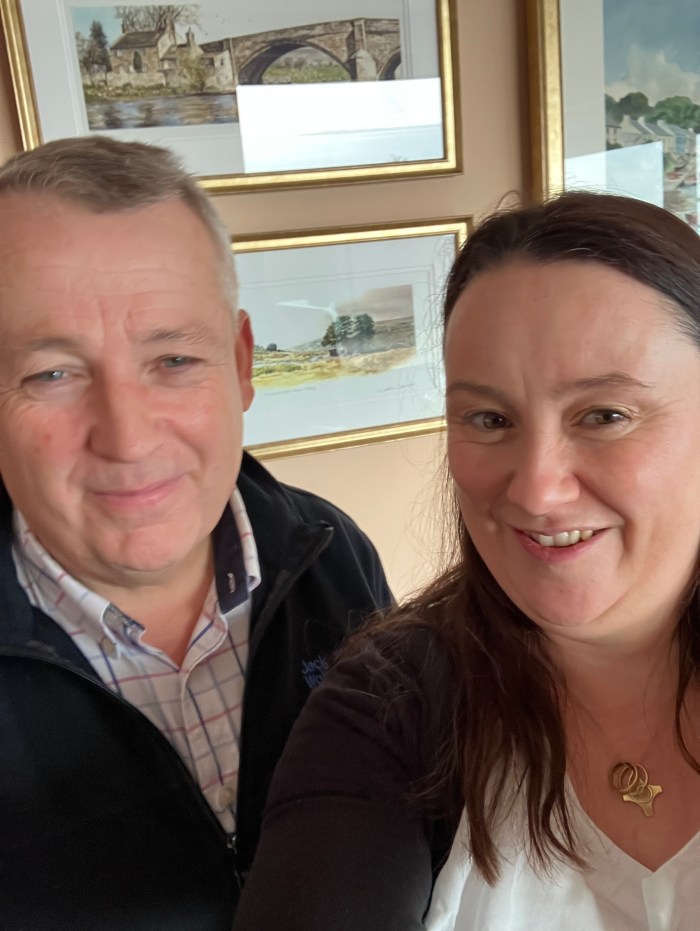
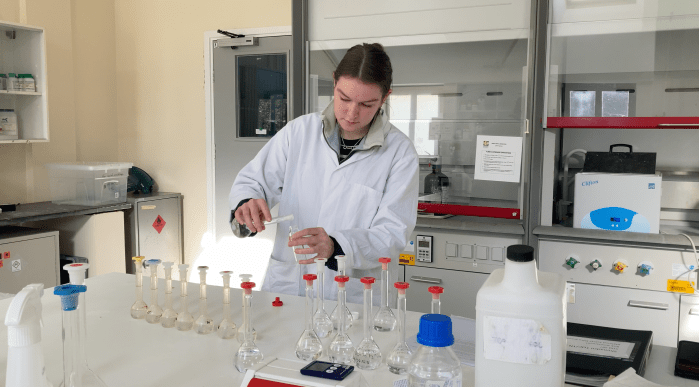
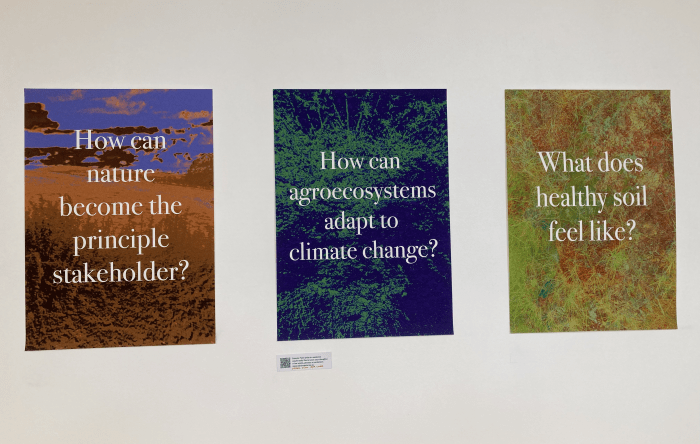
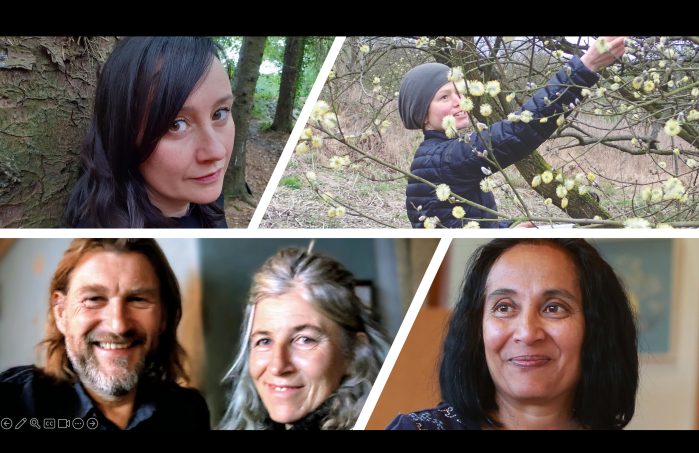
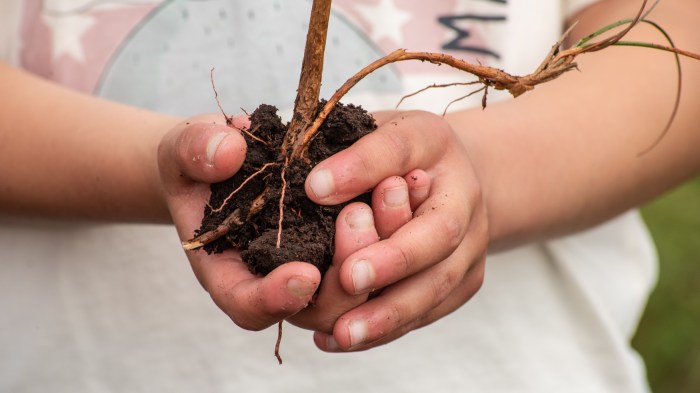
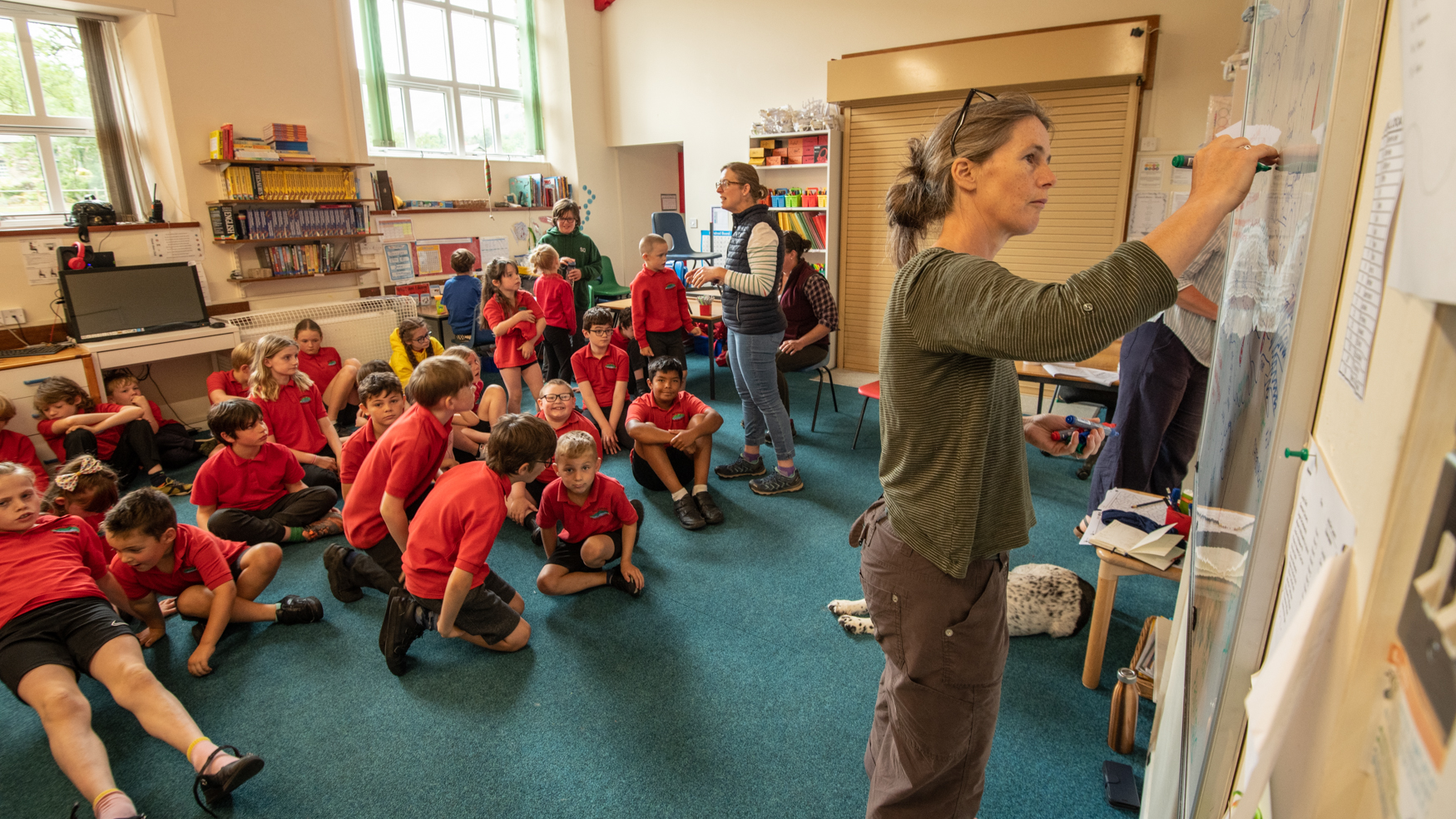
Tom Morton (Arc) and Becky Little (Rebearth) join the team of Creative Collaborative Placement artists. They will be working in Scotland, liaising initially with specialists at the James Hutton Institute, with an enquiry focused on soil.
Read on for more about the artists, and their placement focus.
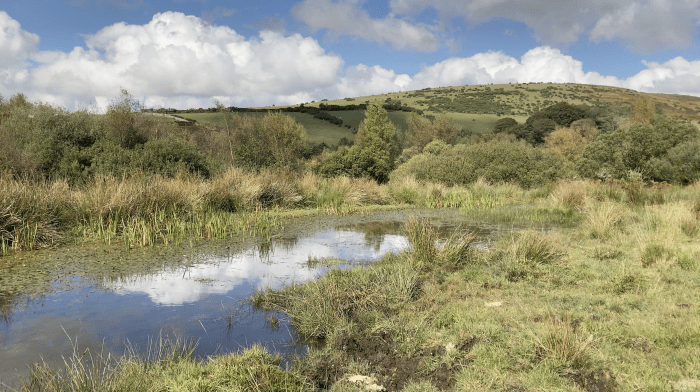
Welcome to the LUNZ Hub Creative Collaborative Placement artist in Wales: Jacqui Symons. Jacqui will begin her enquiry in conversation with a team from the Centre for Ecology and Hydrology (CEH) in Bangor.
Read on for more about Jacqui Symons and the placement focus.
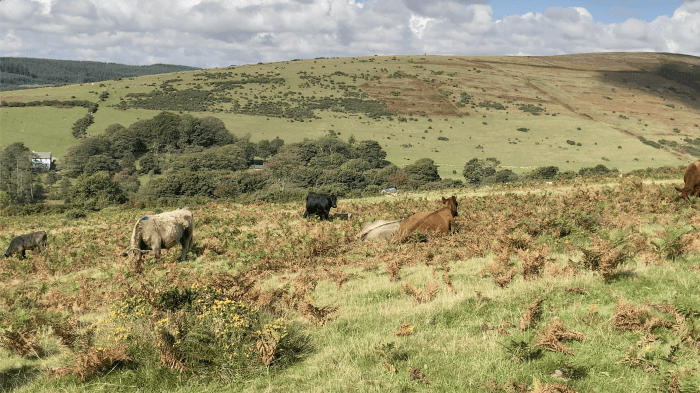
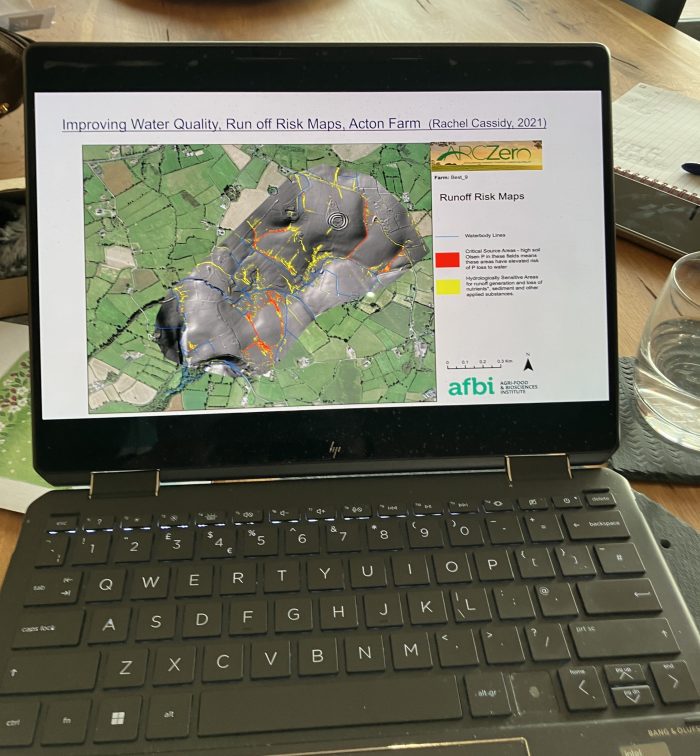
In Northern Ireland, poet Kate Caoimhe Arthur will be enquiring into Land, Livestock and Livelihoods, meeting with researchers at the Agrifood and Biosciences Institute and livestock farmers across Northern Ireland.
Read on for more about Kate Arther and the focus of this placement.
In England, the LUNZ Hub Creative Collaborative Placement artist Daksha Patel has begun her process of research with Rothamsted Research, working with an enquiry into agrosystems transition. Daksha has been liaising with Rothamsted to refine the direction of the enquiry and is underway with her research.
Read on for more about Daksha Patel, and the placement focus.
In the summer, the PLACE Collective put out a call for Creative Collaborative Placements with the LUNZ Hub, across the UK. There was a huge response and an extremely high calibre of applications – wow, there are so many brilliant artists out there – but after a long and thoughtful selection and interview process decisions were made.
We are delighted to announce the three new placements in Scotland, Wales and Northern Ireland, and the ongoing work in England.
Excited to announce an open call for artists based in Scotland, Northern Ireland and Wales to apply to join the Creative Collaborative Placement programme, which we’re running with the UK LUNZ Hub. If this is for you or someone you know, read on.
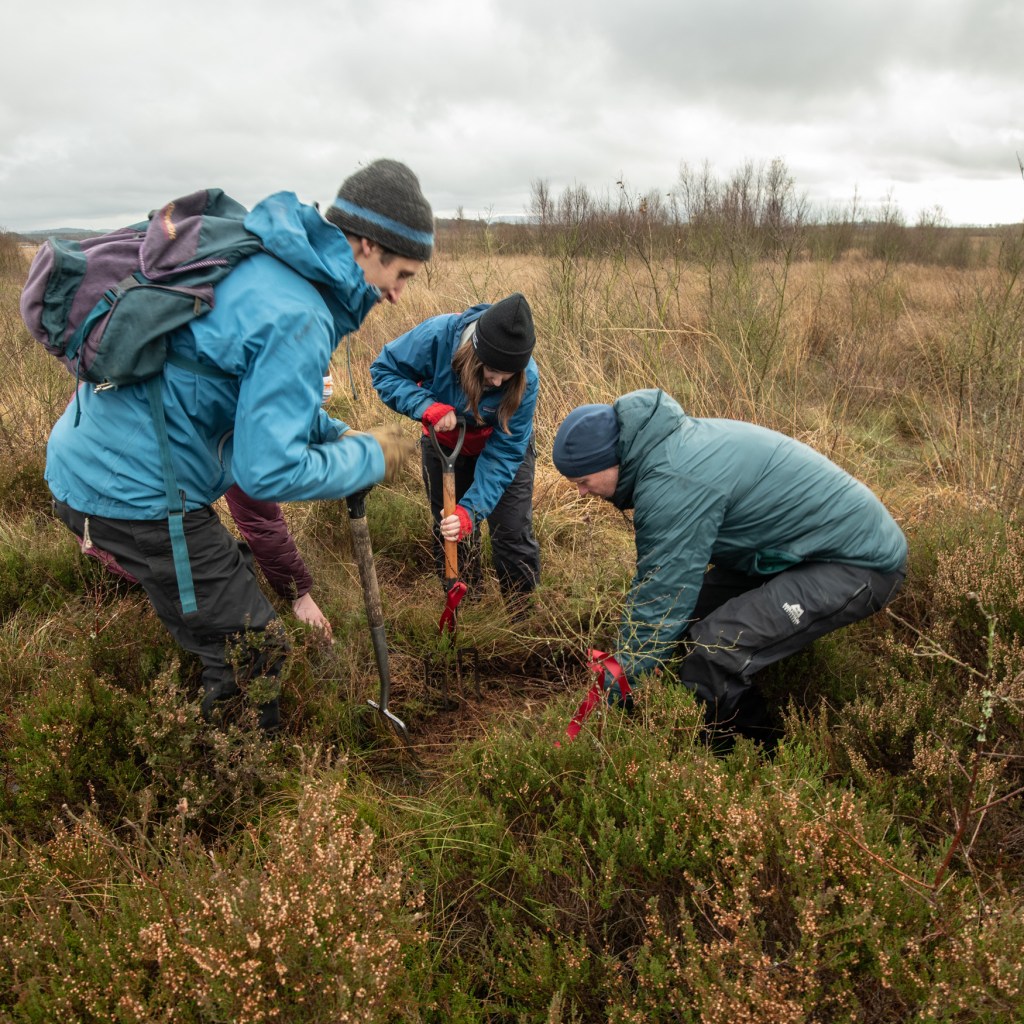
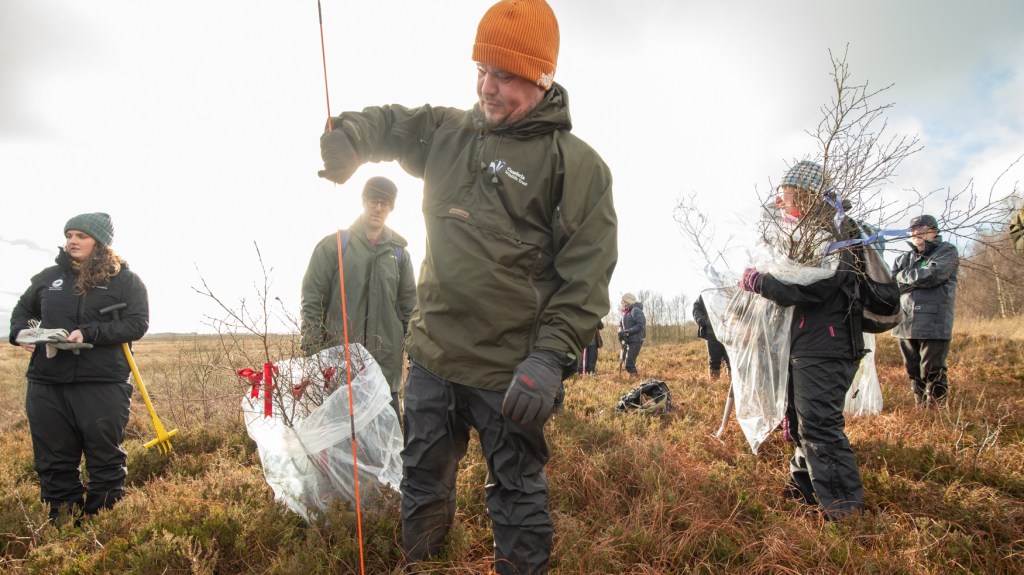
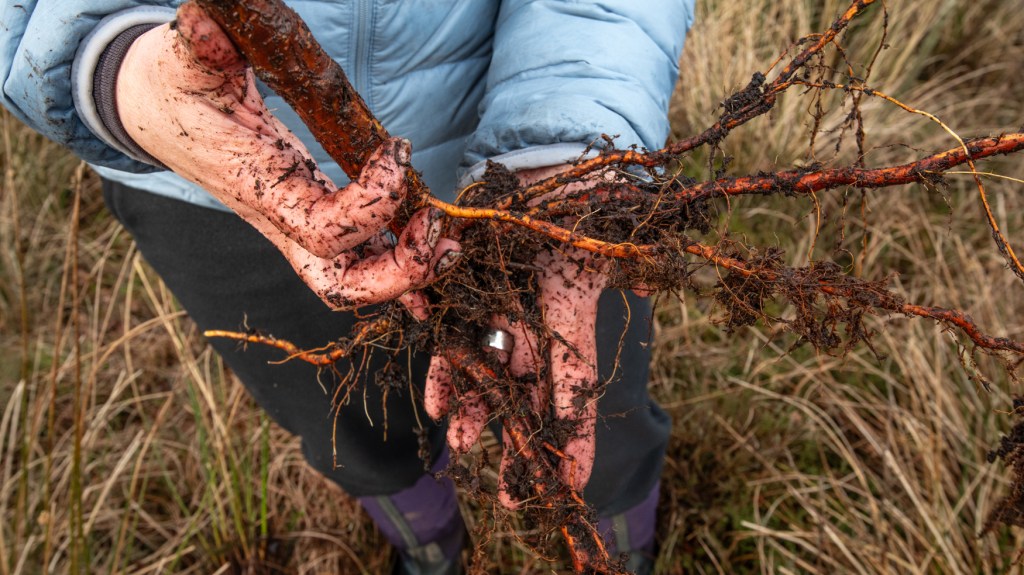
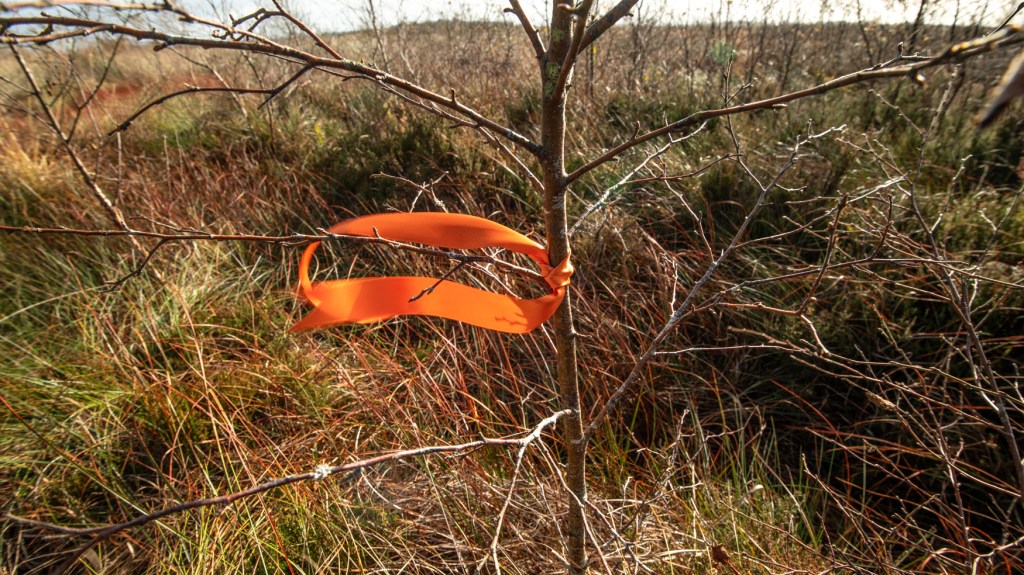
Since last November, the Resonance project has been moving on. It revolves around 49 silver birch trees, which have been collected from Bolton Fell Moss peat bog that’s in a process of restoration, and are being planted out in seven tight circles, each of seven trees, across the Lake District National Park.
This is part of the PLACE Collective’s work through the UK-wide Land Use for Net Zero, Nature and People Hub – or LUNZ HUb for short. Working within the LUNZ Hub team, we’re convening opportunities for people from across practice, research and policy to get together, share learning, and focus on actions; all part of a just transition in a time when changes in land management need to be big, and at scale, to mitigate impacts of climate change, nurture recovery of biodiversity and ecosystems, and embed resilience and natural regeneration in UK land use.
Head over to the project page for Resonance to find out more, and watch for updates – there are reflections on the Big Dig Day here, and a reflection on the key take outs from that event on the LUNZ Hub website.
What might farmers and other land users and land managers do in the quest to reduce greenhouse gas emissions and increase their sequestration of carbon? This is a pressing question. It’s nested within many actions spanning policy, practice, supply chains and consumer choices that will be required for the UK’s land use sector – and there certainly isn’t a one-size-fits-all answer. One of the many groups that is looking at this challenge is the Land Use for Net Zero, Nature and People (LUNZ) Hub – and recent films have been created as part of the PLACE Collective’s involvement with the LUNZ Hub consortium.
“There’s the stereotype that farmers are old boys with their trousers tied up with baler twine, but actually that’s not really the agricultural industry we’re seeing anymore. I think for young people it’s starting to look a really exciting place, and something that you want to get involved with.”
Martha Hayes, farmer, Lincolnshire
What land use change is needed … and how do we get there?
To kickstart discussions at the recent LUNZ Hub ‘Big Tent’ event in Edinburgh, where almost 100 people from practice, research and policy met to discuss challenges and opportunities around land use change, Rob Fraser created two short films. The films demonstrate a diversity of land use, land types, governance and policy in the four nations, and share some passionate calls to action from seven individuals.
The film-making journey took Rob around the UK, with Harriet Fraser (also from the PLACE Collective) conducting the interviews – asking each person the same set of questions.
The reason for optimism is that the changes that are necessary are actually positive: positive for the farming businesses and positive for the world in which we live.
Andrew Barbour, famer
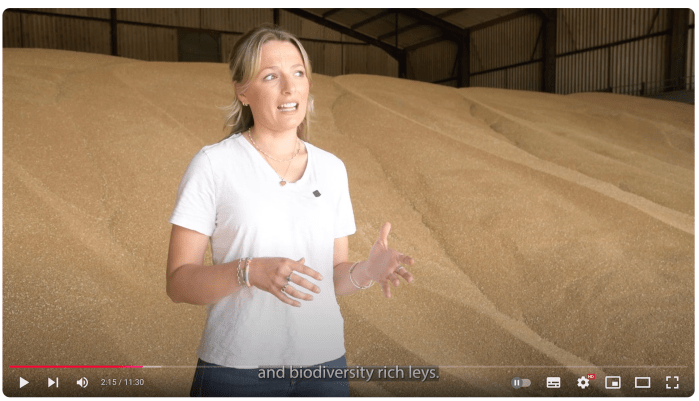
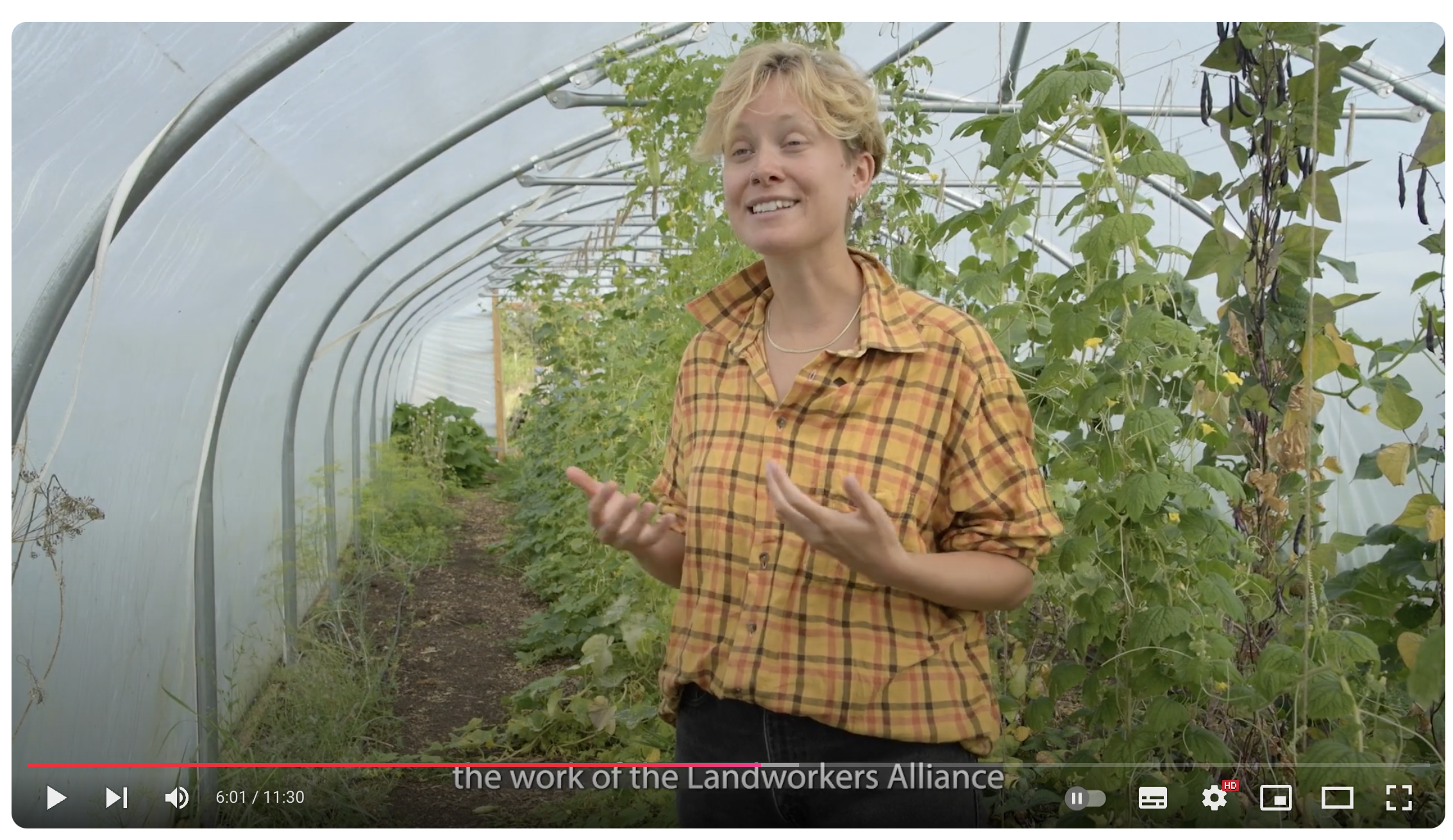
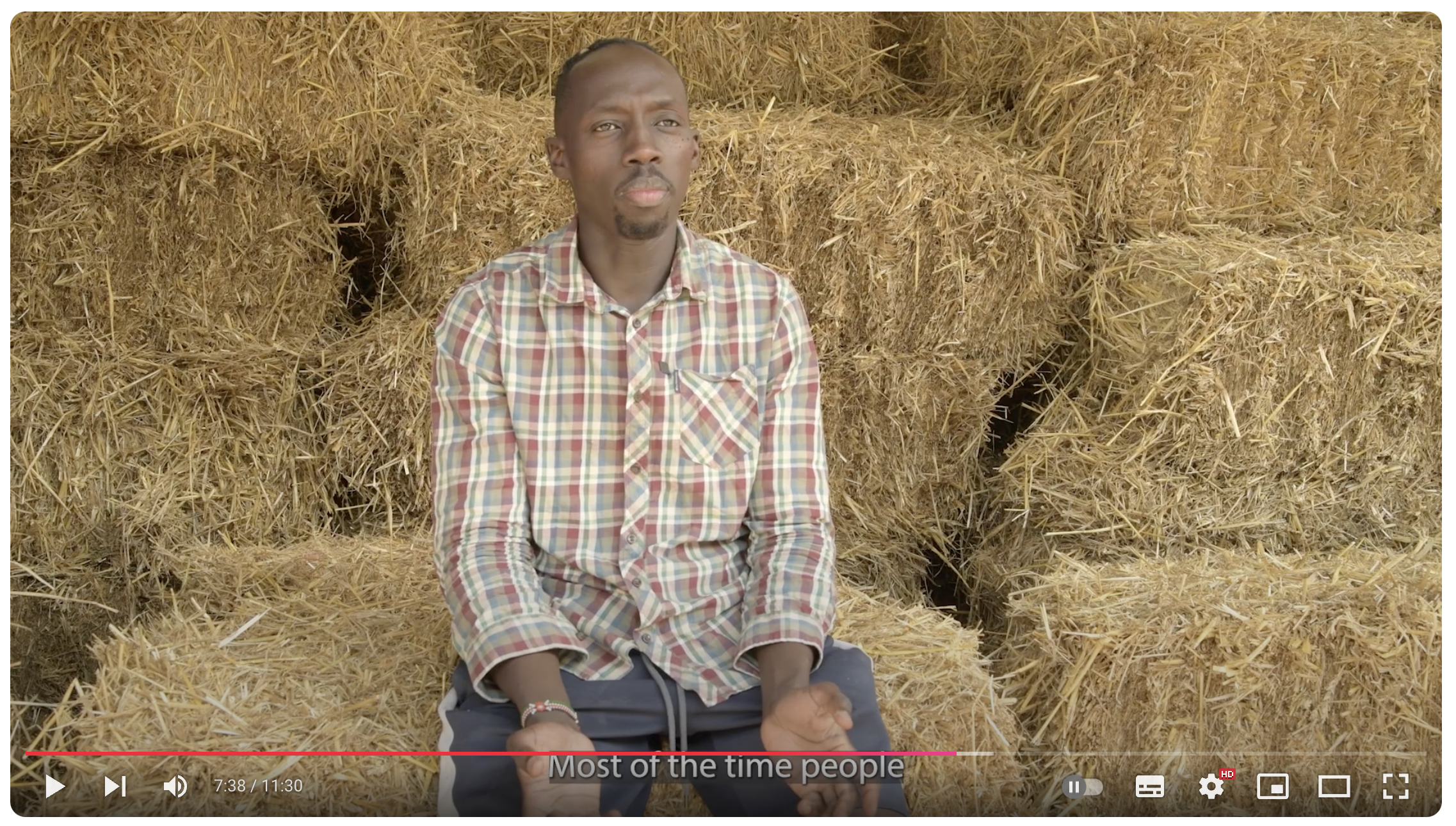
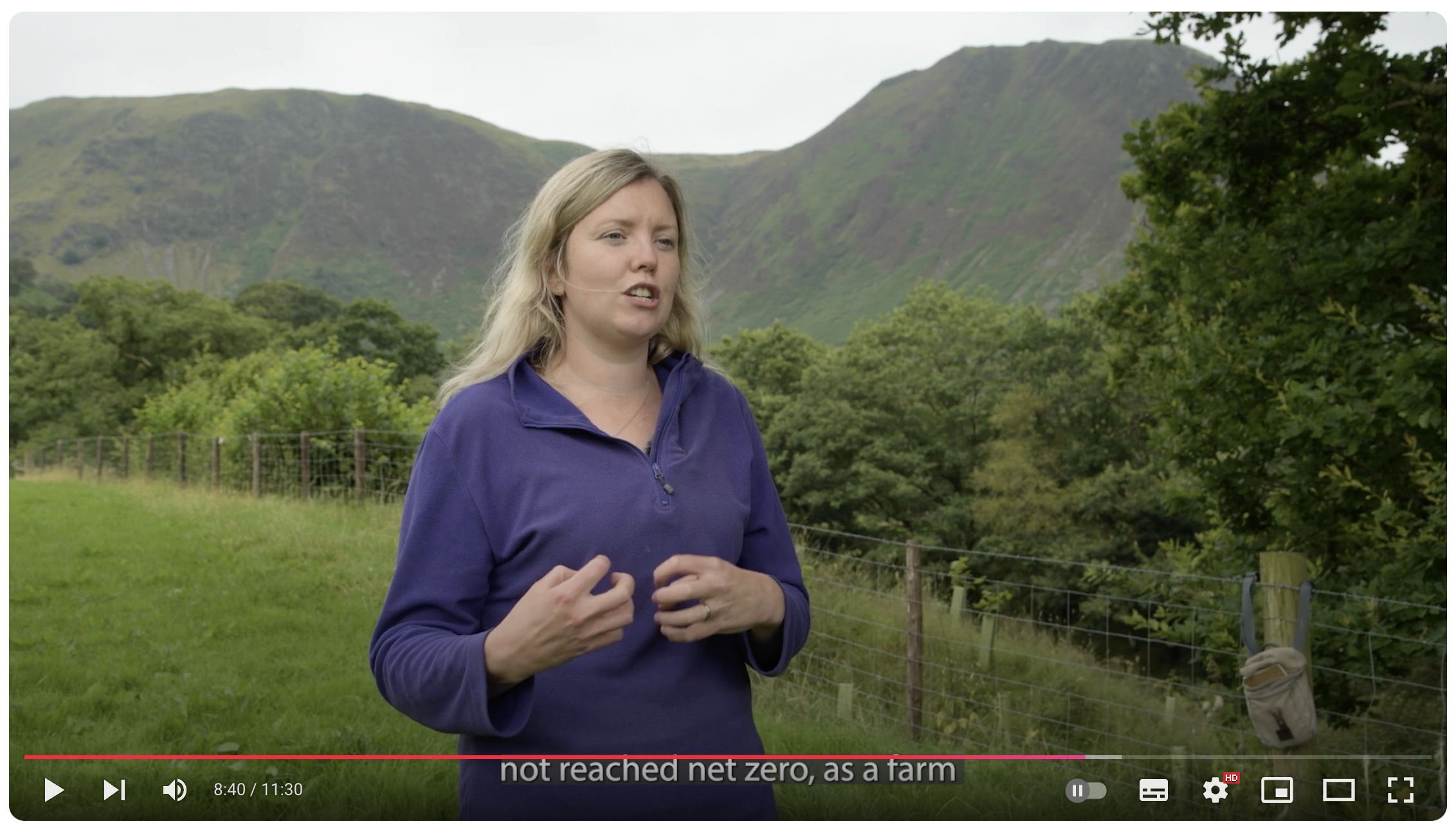
The Frasers went to the flat lands of Lincolnshire, where they met arable and beef farmer Martha Hayes; and to windswept peatlands and intimate valleys of Wales, to meet hill farmer Lisa Roberts. They spent time among rolling fields of Northern Ireland, where they met dairy farmer Hugh Harbison; and visited the small mixed farm of Flavian Obiero in southern England. In Scotland, the Frasers visited Andrew Barbour on his organic hill farm, which embraces woodlands, moorland and mixed-use land; they wandered through old and new woodlands with Balbeg Estate owner Andrew Sinclair; and chatted among cucumbers and tomatoes on an Edinburgh city farm with Land Workers Alliance Scotland Policy and Campaigns Coordinator Tara Wight.
“This is maybe not what you want to hear, but it’s not really financially worthwhile for us to go down the road of trying to get to net zero…. nobody’s going to pay us to be net zero. People pay us to produce really good quality milk.”
The films reveal different views about change, opportunities and challenges: and many commonalities too, including experiences of unpredictable, volatile weather and uncertainty around policies and markets. They share calls for more joined-up thinking among decision-makers, greater recognition of effective low-tech solutions, reform in land ownership, more trust in farmers, food sovereignty, and greater clarity about ‘net zero’ as well as carbon auditing and soil testing – among other things.
The interviewees discuss experiences of positive measures, including using Lidar scanning and soil testing to better understand a farm’s ability to store carbon, planting hedges and trees, changing grazing patterns and supporting resilient communities – and an enthusiasm for increasing understanding, skills and community efforts that can help in the move towards net zero.
“One of the things that brings me joy through working with the Landworkers Alliance is getting to see the work that our members are doing. They are literally growing beautiful things, producing delicious food, creating amazing habitats.”
Tara Wight, Scotland Policy and Campaigns Coordinator and Research Coordinator, Landworkers Alliance
Tara Wight
“It’s a challenge to select short excerpts from seven incredibly rich conversations,” says Rob. “And of course the conversations during each visit extended beyond the formal interview. I’ve tried to include the wider context by sharing footage from each person’s location. Everyone has been extremely generous with their time – there’s no better way to learn about a patch of land than to walk it with someone who knows it well, cares for it, and has a vision for its future.”
Favian Obiero
Climate, nature and people: together
The pressure is on for the Land Use sector to build on existing good practice and scale up transformative changes to contribute to the UK’s target of reaching net zero by 2050. But the focus is not exclusively on carbon or net zero. The voices in the films show that carbon sequestration is in an inseparable relationship with nature and people: and there’s emphasis that actions to reduce greenhouse gas emissions and increase sequestration need to be integrated with actions that improve habitats and connectivity in the landscape for wildlife to thrive, and will also support land use businesses, not just for the provision of food but also as foundations for rural communities.
“When you’re trying to get to net zero, you can’t do it in little silos. You can’t just look at farming, you’ve got to look at the whole food system. You’ve got to look at what the land can produce and therefore what should be supported in a sustainable fashion … You should stop trying to produce foods that are damaging to the world that we live in – simple as that. And just because it can be done, doesn’t mean that it should be done.”
Andrew Barbour, Fincastle, Scotland
Andrew Sinclair
The two films aim to highlight experiences of change among land users and provoke further discussions about finding ways forwards that are positive for nature, people, and the target of net zero. Their first showing at the Edinburgh event did just this; following on from a speech by Professor Mathew Williams, Chief Scientific Adviser (CSA) Environment, Natural Resources and Agriculture for Scottish Government outlining the link between science and policy, the views shared in these films spurred on some lively conversations in breakout sessions.
There’s an ambition to create more films to bring in a wider range perspectives, to feature other land managers, specialists in conservation and forestry, scientists, community movers and shakers, and those involved in shaping governance and policy. Watch this space!
Andrew Barbour
The PLACE Collective and the LUNZ Hub
The PLACE Collective is one of the consortium members of the UK-wide Land Use for Net Zero, Nature and People Hub (or LUNZ Hub for short) – an innovative research initiative whose focus is to bring people together and help drive the transformation of UK land use needed to achieve net zero by 2050. It aims to equip UK policy-makers, industry, civil society and communities with the evidence they need to drive transformational change in land use – and understand and present pathways of change, so that it’s not just about theory, but about practice.
Over the next few years, in collaboration with other members of the hub, PLACE Collective artists will be devising and delivering a suite of creative practices, interventions and presentations, to suit specific purposes, and, importantly, to open up questions and challenge preconceptions.
Huge thanks to the seven people who generously shared time with us and showed us around their places; and to the team in Wales who helped with accurate translations.
Andrew Sinclair, owner, Belbeg Estate, Ayrshire, Scotland
Martha Hayes, arable farmer, Lincolnshire, England
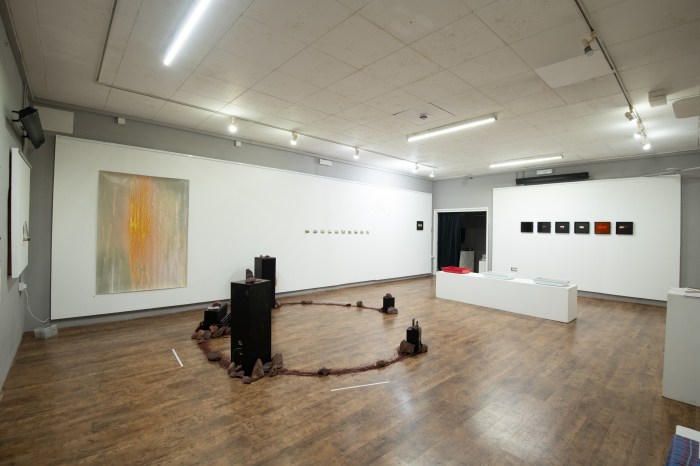
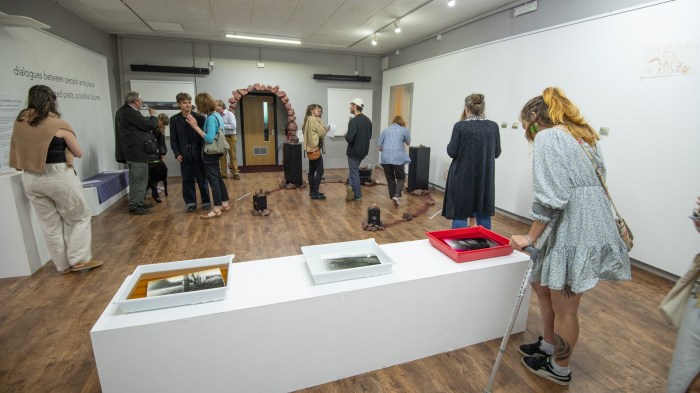
A few images of the exhibition in place at Florence Arts Centre: Half Lives / Gathering / The Flow, with artwork from Alistair Debling, Jamie Jenkinson and Cristina Picchi. Despite undertaking very different residency journeys, there’s a cohesion in their work – considering time, relationships to place, what’s seen and unseen. For more on their approaches, there’s background in our previous post here.
“Like layers of rock, these invisible and inaudible histories are within the foundations of these landscapes; hidden but not forgotten, lingering beneath our feet. The Flow raises questions about how we shape our environments and, in turn, how they shape us.” Cristina Picchi
“The installation not only portrays this process of collection but symbolises a convergence of people, landscapes and experiences, underscoring the communal essence at the heart of Jenkinson’s practice.” Will Rees
exhibition guide
For more, you can read reflections from each artist, with captions for each piece, in this exhibition guide, which has been put together by Will Rees.
ONE-DAY EVENT: PLACE, ART, RESEARCH
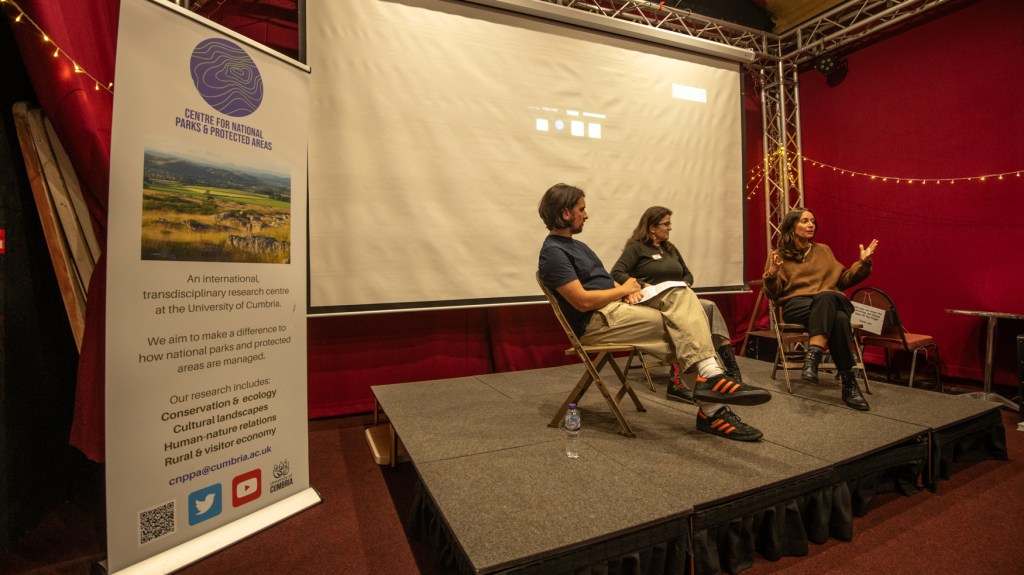
While the exhibition was on show a one-day event was held at Florence Arts Centre. This was an opportunity for the artists to talk about the process of their work, and join academics from CNPPA to reflect on the impact of their inter-disciplinary collaborations. Rich conversations explored the experience of artists working with scientists and specialists in other professions both in a panel discussion session, and in small groups.
The day was co-run with Dr Martin Fowler from University of Cumbria, and was attended by university students and by local artists. In breakout sessions, groups were invited to discuss the issues raised in the panel sessions, and talk about the role of artists today – both in West Cumbria and more widely.
It was a lively afternoon with one of those conversations that kept us all in the building longer than we planned to stay! There was a strong sentiment from the group about the necessity of artists – and other researchers and academics – to challenge current systems (including the education system), offer social commentary, and to contribute critical thinking to debates and discussions about caring for places, and the way stories are told, and by whom.
For students who attended the day, the discussions continued during their course with Dr Fowler and other lecturers, and have fed into their production of dissertations.
“Confronting the deep time of the nuclear industry gives us an opportunity to consider which parts of our culture are important to hold onto for future generations, and which areas might be radically reimagined.” Alistair Debling
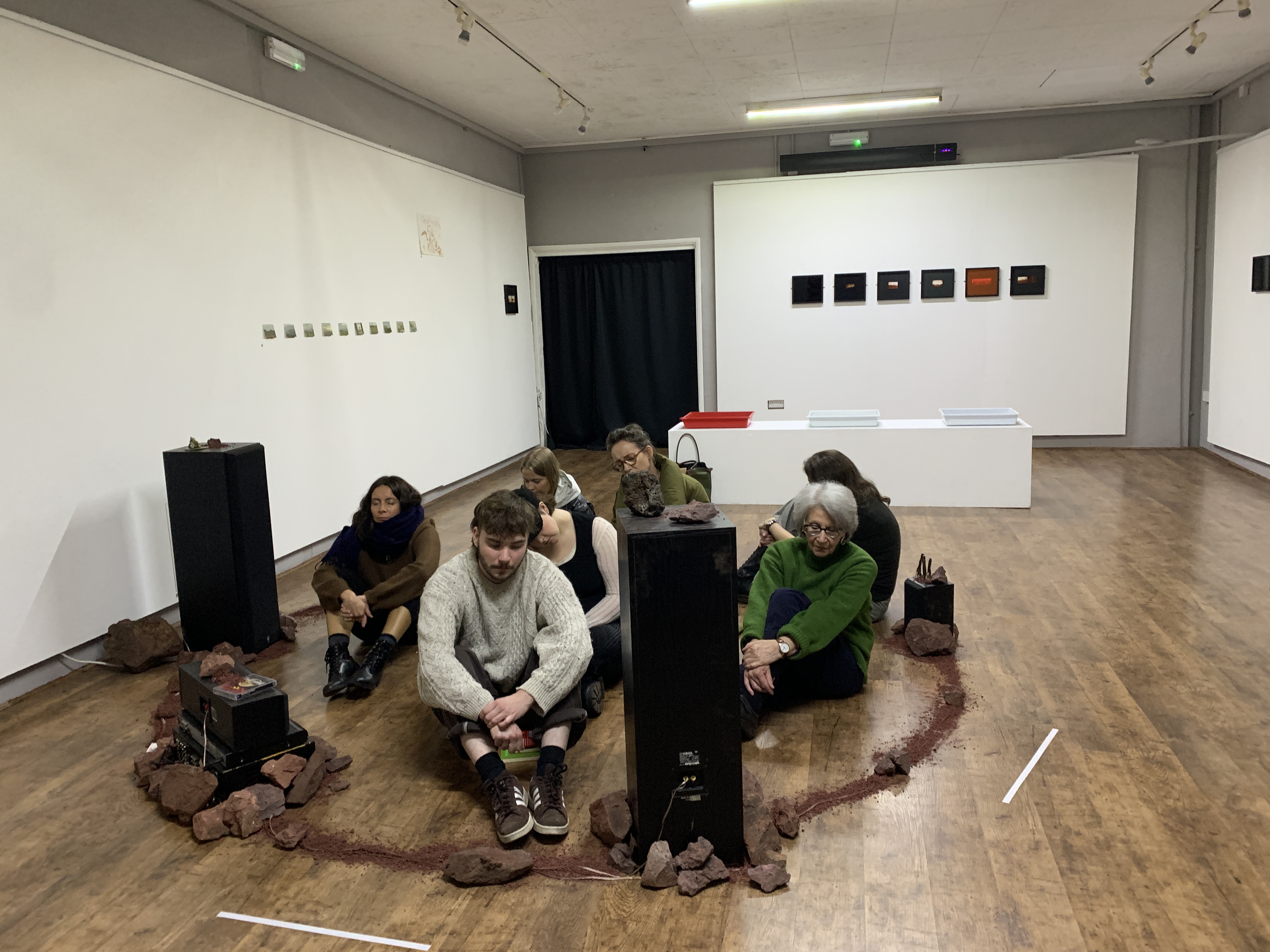
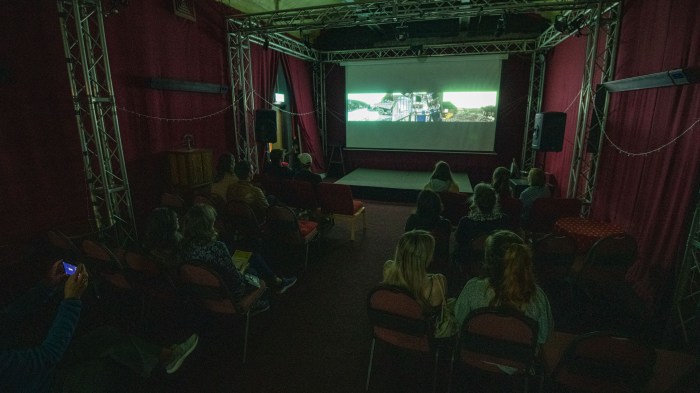
Attendees sit inside Jamie Jenkinson’s immersive 5:1 surround system audio installation, ‘Gathering’
The artists’ residency placements and the exhibition have been funded by Arts Council England and Cumberland Council, with support from the University of Cumbria and the Centre for National Parks and Protected Areas (CNPPA). The exhibition is curated by Harriet Fraser and Rob Fraser (somewhere nowhere) of the PLACE Collective, an environmental artists’ collective based at CNPPA. The event was run in partnership with University of Cumbria, Institute for Education – Arts and Society, and with support from Will Rees. The residencies and exhibition are part of Cumberland Council’s Coastal Programme.
How might we hear leaves speaking? What does it mean to share soil, water and air with trees and other living things? Can sound and technology open up new empathic relationships? Reiko Goto Collins (Collins + Goto Studio) will be sharing Hakoto performances, followed by a discussion, this June at Glasgow International Festival of Contemporary Art. She’ll be coming to Glasgow after performing in Vienna and Cologne.
Reiko’s work also features in the Peace Arbour: her creation of a fruit tree nursery alongside Yoko Ono’s Wish Tree and Zana Araki’s Diverse Beings – Feel My Frequency – Lines of Connection. The trio’s work responds to the themes of trees, hope and healing; it offers a space for discussions and the expression of wishes, needs and aspirations for peaceful futures.
Soils contain more carbon than in the atmosphere and all vegetation on the planet combined. In the UK, soils store over 10 billion tonnes of carbon in the form of organic matter; this is roughly equal to 80 years of annual UK greenhouse gas emissions. The health of soil is impacted by how land is used and managed – but when it comes to improving soil health, action and inaction are influenced by a range of economic, social and environmental factors …
finding ways forward, together
Making changes in land use that will help the UK reach its Net Zero targets, while boosting diversity and abundance in vegetations and wildlife species, and supporting thriving human communities is a huge challenge. There are many teams initiatives across the UK focussed on finding ways forward. And we’re delighted to be joining one of these: the LUNZHub – Land Use for Net Zero, Nature and People.
The PLACE Collective has joined the LUNZHub consortium with more than 30 organisations, and a wider network of 60+ partners. Artists with a diverse range of specialist interests, different media, and in different locations, will be joining people from across UK policy, academic, farming, forestry, food and community sectors.
The consortium includes a variety of stakeholders, ranging from those at the cutting edge of climate change modelling to farmers groups, advisory organisations, NGOs, social sciences and creative practice.
The Hub will address questions of land use, from renewable energy to green finance, and will help to inform policymakers what is needed to achieve net zero, for nature and people. It will play a role in communicating the critical importance of land and how it’s used as a major carbon sink or source.
Collaboration
We’re looking forward to being part of this novel approach to collaboration. It’s a huge opportunity to bring art and artists into conversations and the development of pathways, policy and actions that may have meaningful impact and legacy.
We’re at the start, and Harriet and Rob Fraser are joining meetings around the UK to learn from the wider team and get a feel for where and how art and artists will be effective. Artists from the PLACE Collective will be working within the LUNZHub team to encourage critical reflection and discussions that cross and connect different areas of knowledge, and we will be meeting and working with individuals and communities beyond the team who face the real-life impact of change and have valuable experience and ideas to share.
We’ll be imagining and creating spaces and opportunities for people to come together, and working with others to assist knowledge exchange, and to bridge the gaps between policy makers, science, and people ‘on the ground’, across all four nations. Not a small ambition … and it may not be smooth, but the Hub has many brilliant people in it and we’re all optimistic.
Leaders and funders
The LUNZHub – Land Use for Net Zero, Nature and People – is being co-led by the James Hutton Institute and the University of Leicester, with funding from UK Research and Innovation (UKRI), the Department for the Environment, Food and Rural Affairs (Defra, on behalf of England and Wales), the Department for Energy Security and Net Zero, the Department for Science, Innovation and Technology, and the Scottish Government. It has been co-designed with Defra and the Welsh and Scottish governments. (Website soon to be launched … and we’ll insert a link here when it’s live.)
Artist Rita Leduc has been co-imaging and co-creating with other humans and with a forest for some time now. In this blog, she reflects on the intersection – and coexistence of intelligences – and how her practice continues to ask questions. Including but not limited to, how can we be guided by the natural world, and how can we treat our work as something that’s constantly unfolding, not something that focuses on endings?
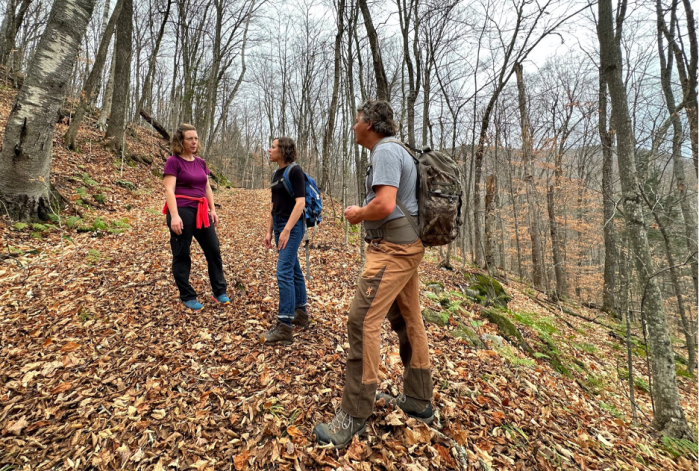
Rita Leduc and Dr. Rich Blundell in Hubbard Brook Experimental Forest (White Mountains, NH)
Keeping the “-ing” in Extending Ecology, by Rita Leduc
“The nature of nature is that it’s dynamic and relational. It doesn’t stop nor end, and it does not follow a linear trajectory.
The Oika project, Extending Ecology, is an ongoing collaboration between an ecologist (Dr. Rich Blundell), an artist (myself), and a forest (Hubbard Brook Experimental Forest). The methodology of our project is for the ecologist and artist to share their individual ways of understanding with each other and the forest through the lens of Oika: a philosophy of ecological intelligence. This philosophy includes concepts and practices that span science, deep natural history, creativity, and contemplation. The intention of the project is for the humans to function as emissaries of the forest, activating their own rigorous, multimodal participation to acutely absorb and prudently extend nature’s intelligence into culture.
The intention of the project is for the humans to function as emissaries of the forest …
Rita, Rich, and Hubbard Brook
Six months into this project, curator Meghan Doherty approached us to have an exhibition at the Museum of the White Mountains at Plymouth State University. Throughout the following eighteen months, the three of us had countless sessions to determine how this exhibition could hold, and be an extension of, the living, unfolding project – which is a direct extension of the living, unfolding forest.
Simultaneously nurturing the project’s development with the exhibition’s development required us to be on our most ecological behavior. We managed it with sensitivity and fluidity, allowing the exhibition to form within the context of the project…which, as stated, forms within the context of the forest. So as long as we could establish and maintain that continuity authentically, the forest would design the exhibition. And without diminishing the heroic efforts of human team members, being designed by the forest is actually exactly how I would describe the way in which this exhibition came about.
Curator Dr. Meghan Doherty with Rita and Rich in Hubbard Brook Experimental Forest
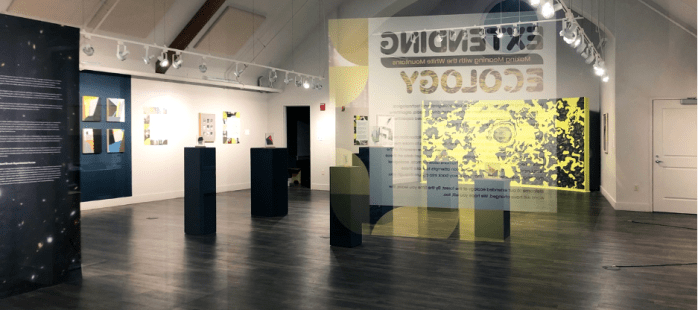
“Extending Ecology: Making Meaning with the White Mountains” opened at the Museum of the White Mountains on October 7, 2023. It was a celebratory moment, but as we paused to honor this achievement, I felt the not-so-subtle elevation of an ever-present consideration. If Extending Ecology is going to remain continuous with nature, then like nature it must remain dynamic and ongoing. Unlike many exhibitions, this one is not presenting a culmination but rather an ongoing sharing-thus-far. So, the project’s dynamism rose to the fore: as we present the project-thus-far to the public, how do we keep the exhibition from feeling like the project’s conclusion? How do we keep the project living and unfolding, like the nature from which it came? How do we keep the “-ing” in extending? It’s a question I’ve granted myself the duration of the exhibition to deliberate.
If Extending Ecology is going to remain continuous with nature, then like nature it must remain dynamic and ongoing.
“Extending Ecology: Making Meaning with the White Mountains,” exhibition documentation from The Museum of the White Mountains, Plymouth New Hampshire
Now halfway through the run of the show, my sense is that the above consideration is the same challenge as the exhibition but in reverse. Instead of taking a living thing and putting our fingers on it just enough to open a cohesive exhibition, we need to lift our fingers just enough to let it breathe, evolve, extend. So, much like navigating the forest without a trail, we have spent the last month looking up, scanning the landscape, and sensing the direction toward which the project wants to continue. Furthermore, we are trusting that sense, feeding it, and allowing it to feed us.
Feed us it is. Multiple directions have emerged, all brimming with possibility. There is a feeling of not just extension but motion. Extending and moving, all while necessarily remaining studiously (and joyfully) tethered to our firsthand relationships with this particular forest.
So what’s my point here, why is this worth examining? I believe this question is more than just an interesting challenge in an outcome-oriented world. Rather, I believe it is a challenge we should be taking on more often, in all spaces and across all scales. At the innermost core of my being is an impulse to participate with the living world. Not with the surface-level stuff slathered on top but rather with what Oika refers to as the creative life force from which we all come and are all made. Extending Ecology is a case study in Oika’s thesis that if we sincerely, deeply allow ourselves to be guided by nature, it will teach us how to cultivate life.
… if we sincerely, deeply allow ourselves to be guided by nature, it will teach us how to cultivate life.
There is ending and there is extending. One is narrow, determinate and final. The other is boundless, adaptive, and vivacious. In this moment of social, ecological, and technological precipice, honing the wisdom to feel the difference and choose the latter is well worth our time.”
Documentation of Extending Ecology extensions (Gallery talks and Oika Art+Science Leadership workshops at Hubbard Brook Experimental Forest and Clark Reservation)
Simon Carr talks to Harriet Fraser about monitoring greenhouse gases at Bolton Fell Moss .. carbon, climate and the living, breathing bog
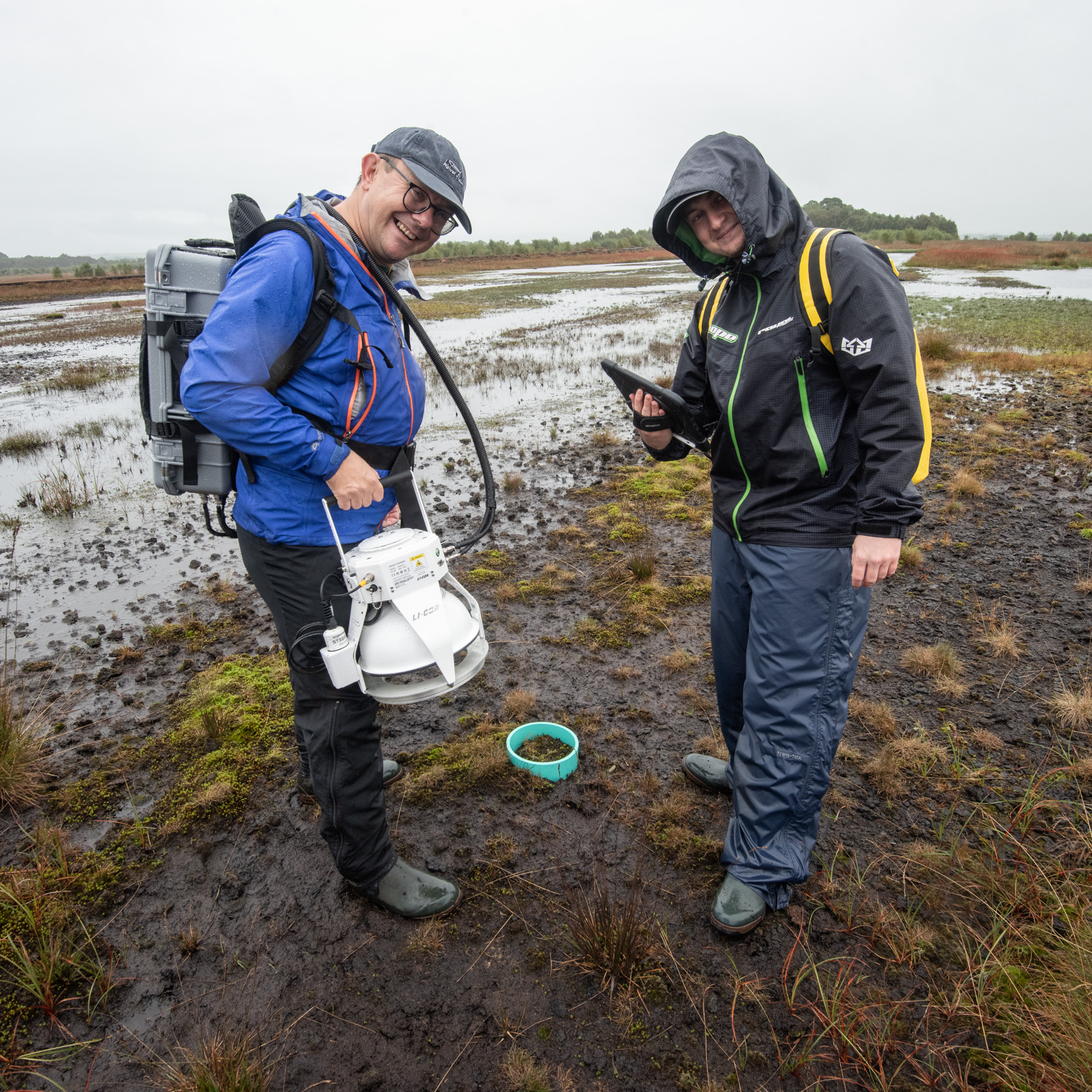
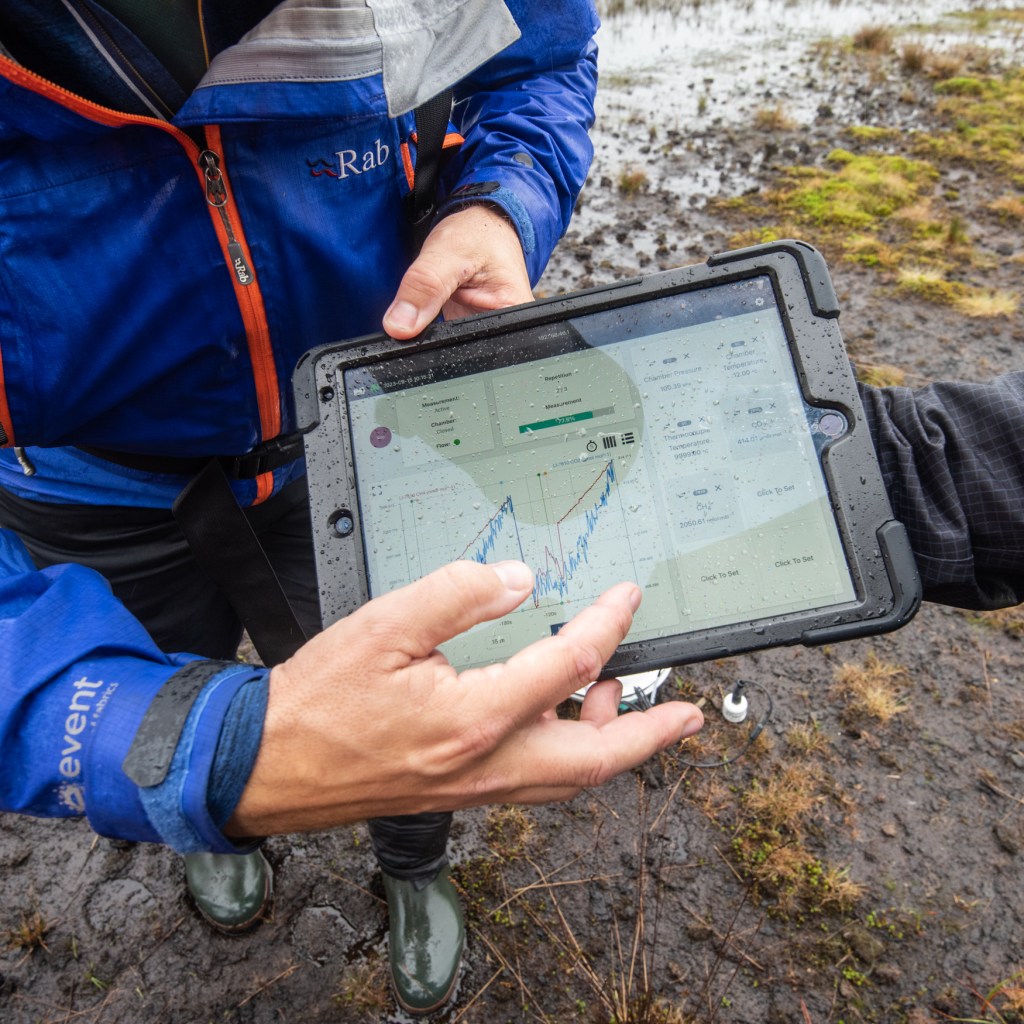
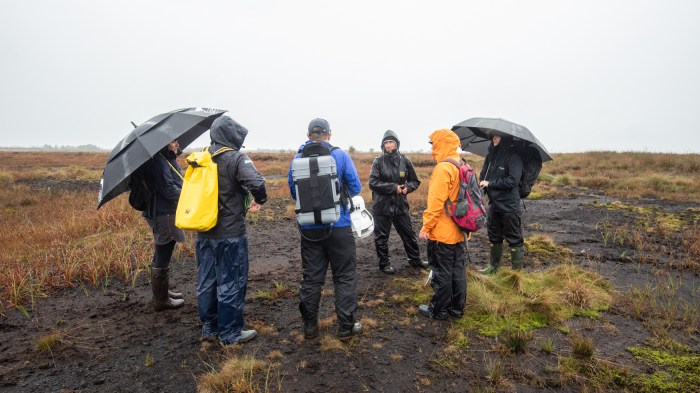
The bog is wide and grey, the rain is slashing down, and we’re all dressed in wellies and full waterproofs. We have umbrellas too – useful to protect camera equipment, and give a little shelter to Simon and Jack as they bend down and get busy with their tools to measure emissions of carbon dioxide and methane. Understanding how much of these gases the bog is emitting, and how more is held over time, is a critical part of the restoration work.
In this recording, Simon reflects on the current levels of greenhouse gases in the atmosphere, introduces the carbon flux monitor, and explains what he hopes to learn from monitoring the bog. Every month, he and Jack visit ten monitoring sites spread across this vast bog; and they walk 10km in the process. The white carbon flux monitor, which is aesthetically beautiful and almost personal, is continually taking in gases, and periodically it lets out a ‘burp’, which you can hear on the recording.
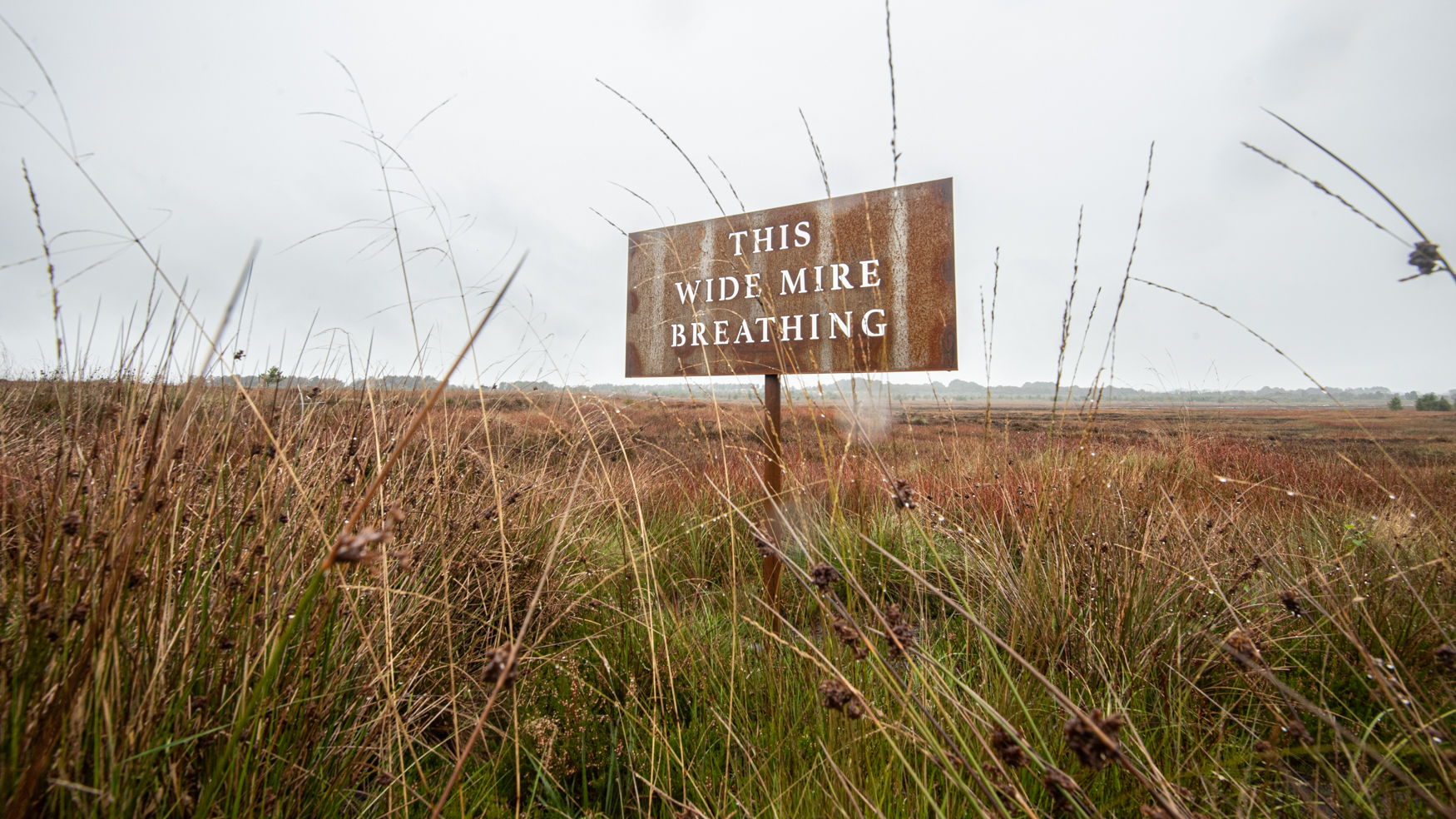
This Wide Mire Breathing – one of seven signs that complete a poem (Harriet Fraser) Lunch and a Moss of Many Layers meeting (almost) out of the rain
An exhibition comes to life when it’s installed, provoking conversations and offering food for thought. But that can’t go on forever. And the Watershed exhibition was a ‘pop-up’, in place for only a few days. So for those who didn’t catch it we’ve created a catalogue that you can view online or download as a PDF.
Head over to the Exhibition Catalogue page to access the PDF and discover the work of the five artists who took part in Watershed: Kate Gilman Brundrett, Harriet Fraser, Rob Fraser, Matt Sharman and Sarah Smout.
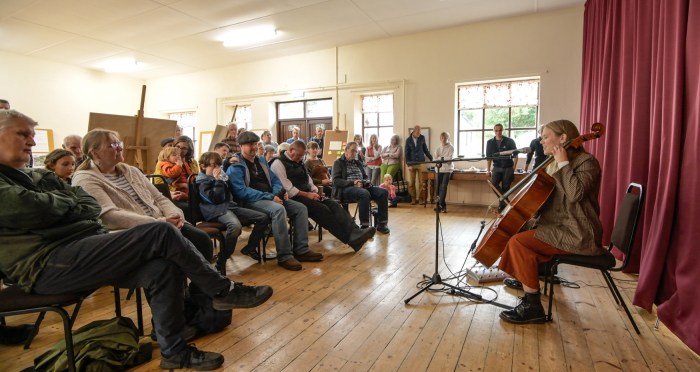
Sarah Smout’s new composition, inspired by the people she met, and the feeling of place, in the Ullswater Valley, is now up on the site. If you haven’t listened in, head over to her page now and let yourself drift. Sarah composed this song, combining cello, voice, and sounds of water, with inspiration from her conversations with people who live and work in the valley.
Head over to her page to listen in, follow the lyrics, and read about her process here.
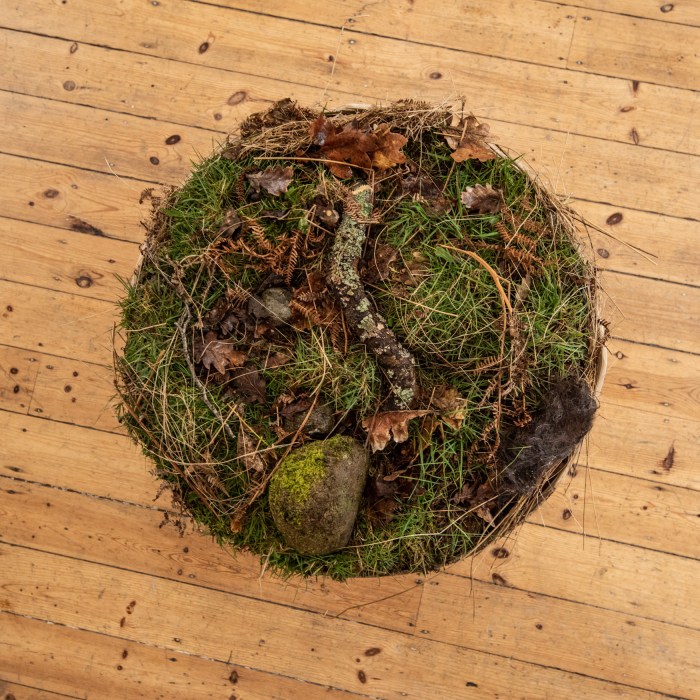
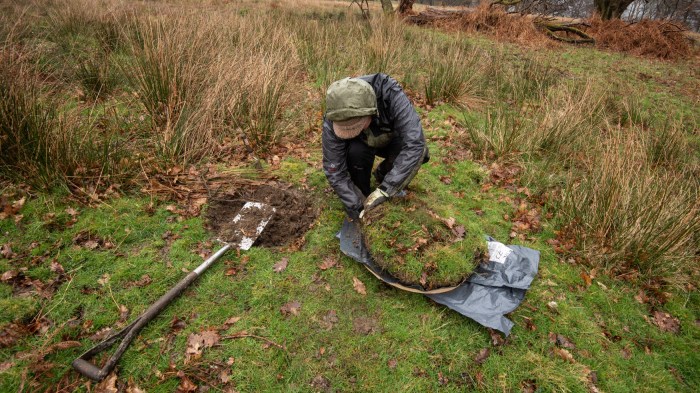
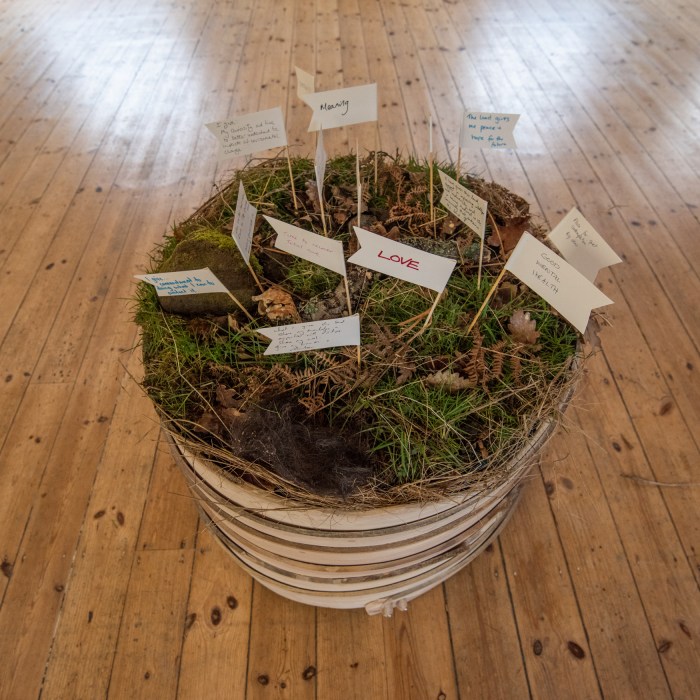
As part of the Watershed project, Harriet Fraser and Rob Fraser have been keen to include the land in conversations. They, and the other artists involved, have explored a number of ways to do this. And for group meetings in the valley, we have been including a ‘Circle of Earth’. This will feature at intervals over the coming year, each time featuring a circle of earth taken from the valley, for a short period. The Frasers developed the idea and worked with Charlie Whinney to realise it: Charlie used the process of steam-bending to create the piece out of ash.
The Circle of Earth has appeared twice so far. First, in March, at a group event in Glenridding Village Hall; and for a second time, in the village hall again, as part of the exhibition. On both occasions it has been ‘borrowed’ from Glencoyne Farm, with thanks to Can and Sam Hodgson.
Circle of Earth, March 2023
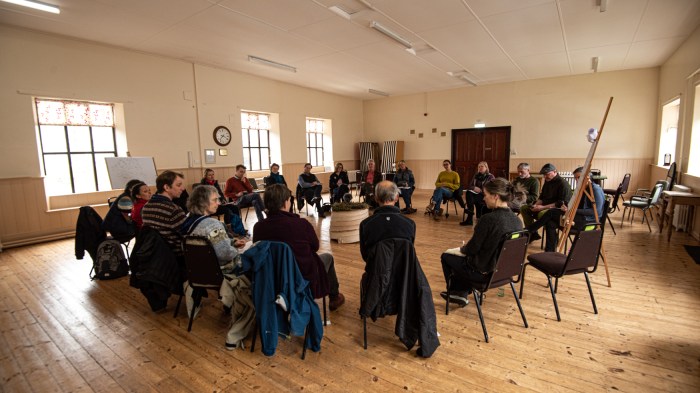
Meeting with the earth at the centre
Watershed: Circle of Earth. The flags hold thoughts from participants on our ‘give and take’ relationship with the earth.
The Spaces In Between
in between the names of places and the endless flow of water
love for what is treasured what has been lost what can be gained
in between the names of places mouthfuls of cloud the sound of water over rock hands in soil struggle and joy
earth at the centre of all we know and all we don’t yet know
earth at the centre of lives that are not ours but are ours to guard
in between the named and the counted things this breathing earth stories to be heard and told
in between us all a future waiting
Harriet Fraser, written for the Watershed event, March 28th, 2023
Circle of Earth, July 2023
Collecting a ‘circle of earth’ to reside for a few days in Glenridding Village Hall
Children bring something that we adults just can’t. Their way of seeing, their ideas and their concerns are all really important. So, as part of the Watershed project, which brings many perspectives on the Ullswater Valley together through art, it was essential to involve children from the Valley.
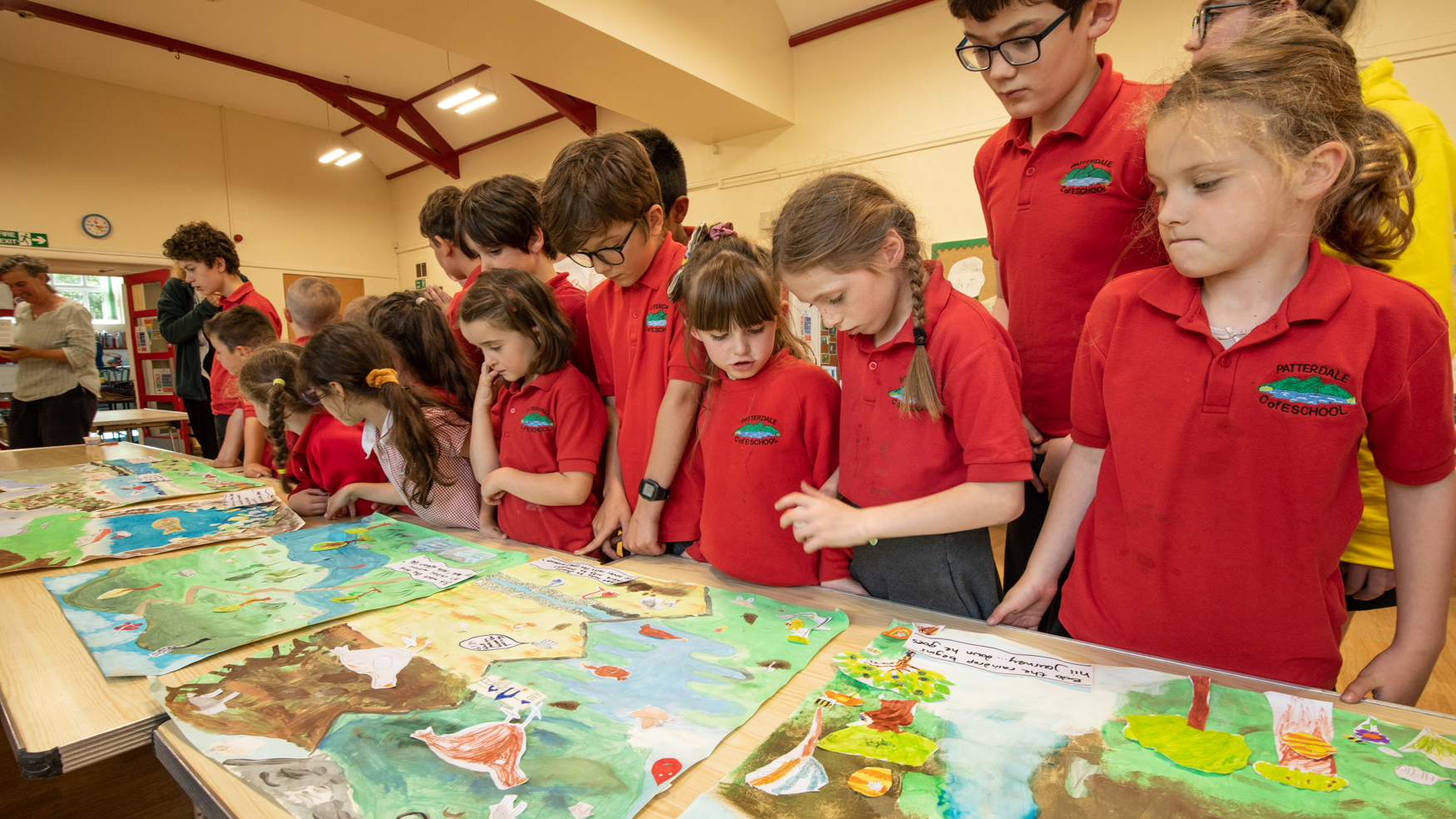
The children’s artwork will be shown at the exhibition in Glenridding Village Hall (July 19, 20 and 21, 10am – 5pm). Then it will return to the school to be mounted on a wall.
The children’s 7-part illustrative panel tells the story of The Marvellous Journey of Bob the Raindrop from the top of Place Fell, down into the lake, and all the way to Penrith. It allows us all to travel through a variety of habitats and consider what’s important in this place.
Harriet, Rob and Kate – three of the five artists on the Watershed team – started the day by taking the children outside. Lined up on a bridge straddling Goldrill Beck, they were able to look around them and discuss the different elements of the valley, and how they link up. They imagined what the fells, the sky, the water and other elements might be like if they were characters, and began to build the foundation for their story.
On the bridge above Goldrill Beck, with Place Fell in the background
The children are familiar with this valley: for most of them, it’s where they live. Most of them have walked to the top of the fells that rise above the lake, many of them come from farming families, all their hands went up when we asked who swims, paddles or sails here. They were able to weave all these experiences in; they shared their concerns about litter in the valley; they have experienced floods; they know the vagaries, and the impact of weather. We also talked about things that aren’t so easily seen, like the phytoplankton in the lake. Huge thanks to Ellie Mackay from UKCEH (Centre for Ecology and Hydrology) for helping Kate to explain this microscopic world to the children … it was easy to go from discussions about plankton to ideas of plankton-parties under water and the discussions that a water drop might have with schelly fish.
Introducing the children to microscopic phytoplankton that live in Ullswater lake
The work that the children has created, deciding every step of the way what they wanted it to be, brings together a delightfully playful element with a narrative of a place that is populated by many different species – the panels include birds, butterflies, fish, sheep, hens and dragonflies as well as people. And it offers some heartfelt observations – that this place is precious, and fragile, and needs to be cared for.
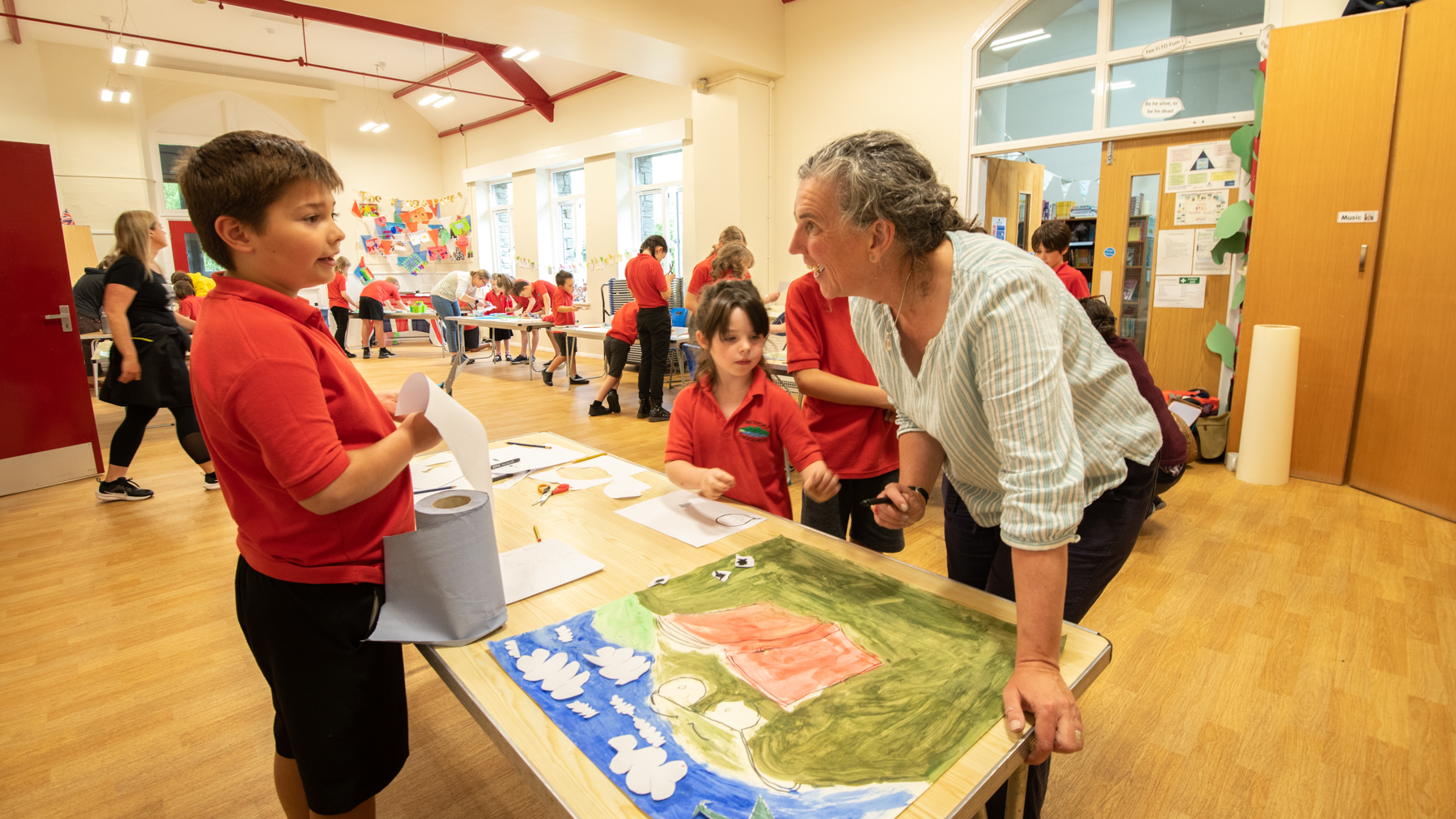
‘This is one of those pieces of work that just makes me smile,’ said headteacher, Nicky Steels. The smile comes not just from the finished piece, but the process that led to it. From choosing the central character of the story, to democratically selecting a name, and then working in 5 multi-age groups, the 34 children worked happily, energetically and respectfully. Quite aside from the piece that was created, what the day revealed to us all (and not for the first time) was the remarkable nature of relationships here, where a school is like a family, and where families connect with one another.
These connections are part of life in Cumbria and we felt it too – Rob and Harriet knew some of the children from their work with local farmers over the years, and Kate knows one of the teachers, whose mother taught Kate in primary school. These links, and ripples of relationship, help to knit a community together not just in a valley, but across the fells. The need for a strong community has been expressed by many of the people we’ve interviewed as part of this project as an important aspect of living well, and shaping a good future together. A strong, committed, and connected community is vital when it comes to caring for the valley.
Work in progress: Kate Brundrett takes notes from the children as they create their characters and weave a story
Cellist and poet Sarah Smout is one of five ‘Watershed’ artists. She is currently working on a musical composition that weaves together what she has learnt from speaking to people in the Ullswater valley.
Sarah says that she is interested in bringing the land’s voice into the composition through field recordings, extended techniques and improvisation. With this she hopes to convey the deep connection to Ullswater that these people have, and the urgency of the human task in caring well for a precious and fragile land. In this blog post, Sarah tells a story of her encounters with farmers Sam and Can Hodgson, from Glencoyne Farm, and skipper Christian Grammar, from Ullswater Steamers.
A tour round Glencoyne farm: view from the quad
if you give nature a chance …
“If you give nature a chance, it will come back,” says Sam, sitting opposite me in his farm kitchen. His hands are scarred and etched with lines that only a lifetime of working with the land will do. And that is exactly it: this land is his life. His and Can’s, and their family’s. And it is their preoccupation to make sure it is a life worth leaving for future generations.
So much joy glints in Can’s eyes as she tells me about the wildflowers returning – milkwort, butterwort, lousewort – and Sam’s newest revelation in life, swimming in the lake, makes him sit forward and gesture with his arms his feeling of being in his own air bubble, as he bobs in the water, looking back up the fell. They both agree: closing the gate at the end of the day is one of the wonders of being here – a moment when they can look out at the land, a day’s work done, and wander down the fell back to the farmhouse.
Can and Sam Hodgson have been at Glencoyne Farm for many years as National Trust tennants
—
It’s not every day you get to drive a boat across the lake … Sarah with skipper Christian Grammar, who has been working on the boats for decades
Before we set sail, Christian feeds his friendly rook, who perches on the bow of the Raven. It has learnt to say hello back to him, but Christian refuses to give it a name. As we motor out, I sit in the wheelhouse with my zoom recorder ready to catch any one-liners, any moments that might make it into my composition. But it doesn’t feel like an ordinary interview, because Christian’s connection to this lake runs deeper than the North Sea. He tells me how he belongs here, feels more at home here, on the water, than anywhere. He seems to know every ripple, and loves to show people this elbow-shaped bit of water.
We both notice how everyone enthusiastically waves at each other from the other boats, something that doesn’t happen on other modes of transport very often. Time always seems to enter a different realm out on water, and this seems to amplified for Christian when he tells me how his Synesthesia makes everything feel connected. It’s a type of hyper-sensitivity to sound. He drives the boat but his ‘elbow room’ is the side of the lake, he hears the engine but his listening stretches far beyond the edge of the boat, the wake, the wind, the people, the birds. Swallows swoop in front of us, and he tells me how he does a similar thing with the ripples that sometimes form in patches on the lake – cat’s paws, he calls them. And when he’s on his last sail home, he likes to weave through them, joining the dots, and then looks back to see what he has drawn. An artist in him yet. It makes me wonder, how through joining the dots, listening far beyond our reach, we might help this planet of ours heal faster its scars that we have etched – some that run deeper than a human lifetime, and may still be healing long after we are gone.
Sarah will be giving a performance of her piece, with cello, song and looped sounds collected during her research, at the exhibition preview; a digital recording of her composition will be shared through this website.
As part of the Watershed project, Matt Sharman has been meeting people in locations across the Ullswater Valley. In this blog, Matt shares his reflections, some images of the people he’s come to know, and how he’s settled into what feels like an unusual process.
Trust the Process …
Five people – my ‘interviewees’ – have generously given their time and insight. The conversations have been ranging, heartfelt and interesting – I’ve learnt a lot. We moved through many different perspectives but some key ideas have been constant. Everyone, including me, holds the hope that any visitor to the exhibition space in Glenridding village hall leaves with a deeper understanding of the many living layers the Ullswater catchment has. This is an exceptionally beautiful environment and many people visit for this reason alone, but there’s also a rich cultural heritage, tightly-knit and hard-working communities with a strong sense of belonging, working with the land and connected to it. Everyone, in a variety of ways, is of this place.
This process continues to be an interesting creative journey for me. Usually, with film making, there’s more clarity about the form and shape the finished material will take. This project is different, and is a fascinating way of working – it’s far more organic, the connections and subject matter have been given the space to grow naturally from the conversations we’ve had. In this way it’s been more collaborative, and less directive. I’ve found myself relaxing into the complexity. I’ve been discovering and learning as I go, and it’s not over yet …
Animals have featured in many of Matt’s interviews. Here’s farmer Claire Beaumont, with Lilly (and piglets).
Gordon Lightburn, Chair of the ‘Friends of Ullswater’ and local Blue Badge Guide.
With Kate Gascoyne from Cumbria Farmer Network, looking across the Ullswater Valley.
Matt met Kerry Rennie, from Natural England, and chatted in an area of woodland pasture
Suzy Hankin, from the Lake District National Park authority
Matt, who lives in the Ullswater valley, is one of five artists taking part in Watershed, with each artist meeting five different people and creating work in response. The film will be part of the exhibition in Glenridding village hall, July 19, 20 and 21, 10am – 5pm.
Guest Blog from Colin Riley – sharing reflections on using field recordings, and news of the premier of ‘Hearing Places’ in performance with the BBC National Orchestra of Wales.
For the last ten years most of my work as a composer has sprung from two interconnected themes; ‘the environment’ and ‘place’. In other art forms there is a way to weave in a direct message, but with music alone you are really just dealing with patterns and implied emotions. It’s inevitably more oblique. Since I love collaborating and interdisciplinary work, this has all fitted together quite naturally for me, and involving other art forms has been common practice.
In 2017 I released an album and toured the UK with a project called In Place. This involved commissioning new texts from a range of writers engaged with place including Robert Facfarlane, Richard Skelton, Jackie Morris, Nick Papadimitriou, Paul Farley, and Selina Nwulu. These texts ranged from nature writing to psychogeography and ideas around our personal place in society. This ever-evolving project began as a song cycle, mutating into a concept album, radio podcasts, music videos, remixes and education projects.
In 2019 I was commissioned to write Earth Voices, a large-scale orchestral work for a Swedish orchestra. Earth Voices is a celebration of noticing the magnificent and fragile things in our natural world. It was pure orchestral writing with no texts, and I attempted to portray different natural phenomena in each of the movements. There were bird murmurations, sunlight through trees, majestic mountains, and a slow twilight.
Filming and recording in Central Square, Cardiff
I have just finished composing a second orchestral work Hearing Places, which is in many ways an amalgam of the previous two pieces. Instead of using text or just orchestral colour, Hearing Places blends field recordings and video clips into a multi-sensory experience for the concert hall. Again it celebrates the noticing of our surroundings, engaging the listening with a close affinity with place in both nature and man-made environments. The specific locations are all in Wales: Port Talbot Steel Works, Porthmadog Harbour, Dylan Thomas’s writing hut in Laugharne, Solva Woollen Mill, a stream in the Brecons, Cardiff Central Square, and Llanfwrog Church, Ruthin.
Porthmadog Harbour (left); Llanfwrog Church, Ruthin at twilight (right)
With this suite of seven movements I am aiming for a new kind of symphonic experience. It involves immersive listening, and a way of sharing in the noticing of often inconsequential, yet hugely-beautiful sounds. The music aims to capture both the delicate fragility and massive power of our world, and to illustrate simply what we stand to lose in the environment crisis we are now in. It is my view that through the act of noticing our surroundings, we can begin to value our world more. Natural elements are frequently referenced in the music (weather, times of day, natural phenomena and the seasons), as are the human imprints left in our world (machinery, vehicles, pattern-making, conversation).
Stills from video
Hearing Places celebrates the rich audio and visual patterns found all around us, and I’ve spent the last year travelling to all corners of Wales collecting field recordings and video clips of interesting places that have captured my imagination.
These small building blocks of pitch, rhythm, and pattern in turn then became the materials for the creation of the music itself. Sometimes I simply made a natural emotional response in terms of mood and feeling, and at other times took a more forensic approach. The audio forms a strand of the orchestral fabric, woven differently in each movement, and is ‘played’ from within the orchestra by the keyboardist. Similarly the video clips form an additional textural layer for the audience, and likewise are triggered by the keyboard in different ways. Sometimes a place may be recognizable, but very often it remains abstract and mysterious.
Hearing Places is premiered on Friday 17th February in the Hoddinott Hall Cardiff by the BBC National Orchestra of Wales.
Colin’s routes, mapped; and images of work in progress.
Colin has also written about his process in three blogs: